American roads: safer, but still dangerous



Dive into the future of mobility at CoMotion MIAMI ‘26, “Urban Mobility in the Age of AI”, on April 28-29 at Miami Dade College. Register now - limited passes available.
The good news is that traffic deaths, like homicides, have sharply declined in the U.S. from their Covid peak. The bad news is that further progress will continue to be stymied by political leaders who instinctively oppose anything that inconveniences automobiles. Exhibit A are the Trump administration and Congress’s efforts to undo safety measures taken by Washington D.C., such as protected bike lanes and automatic traffic cameras. Meanwhile, in Michigan some are pushing a new licensing requirement to ensure elderly people are still good to drive. It’s an emotional debate that autonomous vehicles may one day make obsolete.
What you need to know
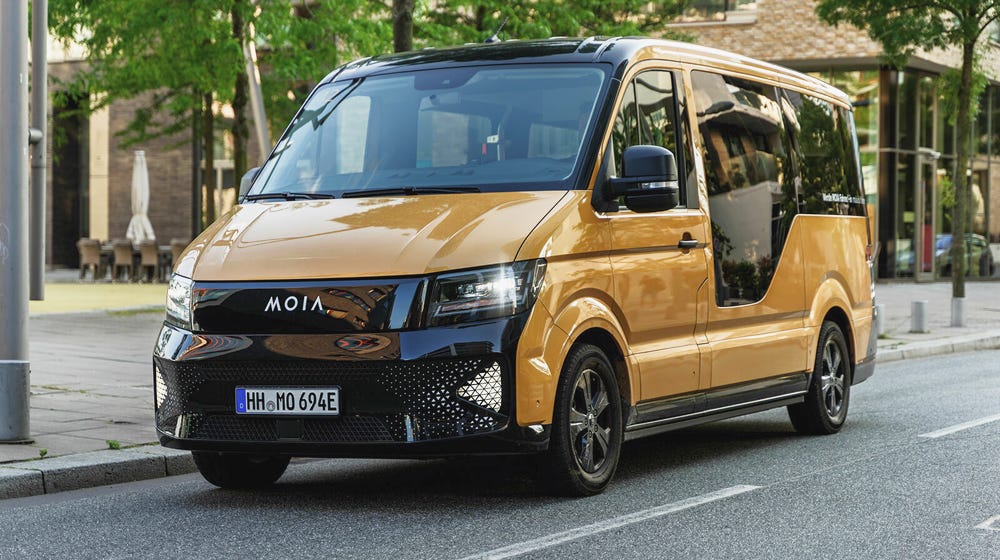
More autonomy for Angelenos: VW subsidiary MOIA America begins testing autonomous minivans in Los Angeles before launching ride-hailing operations through Uber later this year. They’re starting out with 10 autonomous VW ID.Buzzes but hope to ramp up to 100 by next year, at which point they also plan to ditch the human safety operator who will be on board in the early months. What’s not clear is whether these vehicles are intended for pooling or private rides.
Trump vs bike lanes: As part of an effort to “return common sense to city planning,” the Trump administration has announced plans to remove a segment of a protected bike lane in Washington D.C. that carries 4,000 cyclists a day. Congressional Republicans are also pushing legislation to force D.C. to get rid of its automated traffic cameras, whose introduction has coincided with a big drop in traffic fatalities in the district.
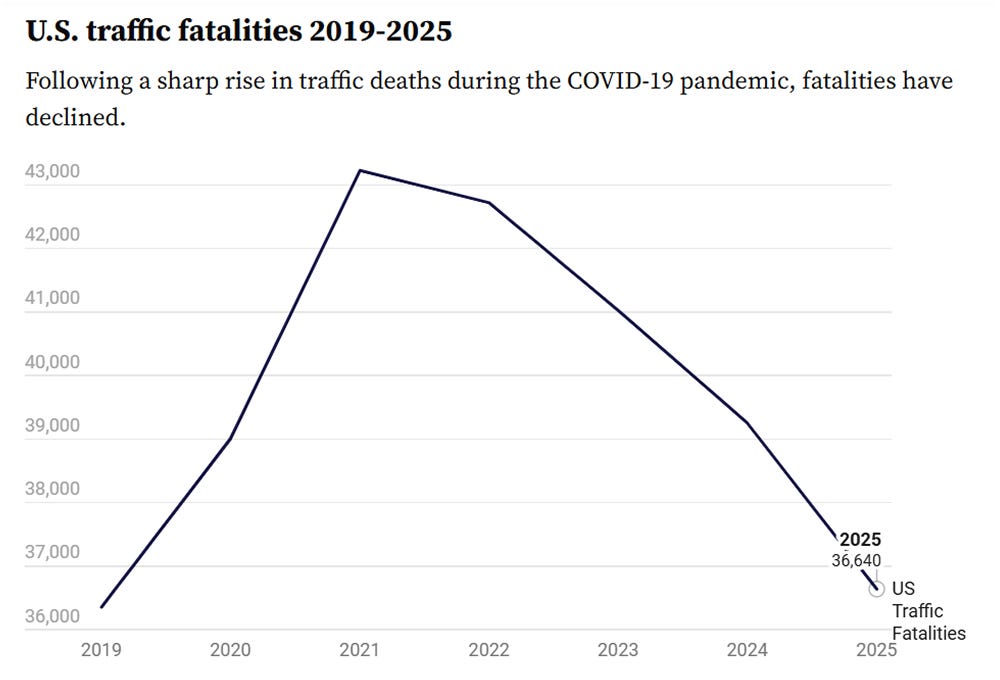
Traffic deaths continue post-Covid decline: Road deaths in the U.S spiked during the pandemic but have since been in continuous decline. 36,640 people died in traffic crashes last year, down from a peak of 43,230 in 2021. America’s roads remain far more dangerous than those of western peers. Americans are more than twice as likely to die on the road as Canadians and three times as likely to die on the road as Germans or Spaniards.
Could vehicle autonomy save human autonomy? A Michigan lawmaker introduces a bill that would require older people to show they are still competent to drive. Starting at 75, they’d need to get tested every four years. After 85, they’d need to get tested every year. In much of the world, particularly the U.S., giving up driving is a significant surrender of autonomy. This is hopefully a situation that autonomous vehicles can help prevent.
California might mandate human assistance: A bill proposed by legislators in California would require robotaxi operators to hire at least one human technician for every three autonomous vehicles so that they can be quickly serviced in the event of a breakdown or other emergency. Lawmakers point to a power outage in San Francisco that left a number of Waymo vehicles frozen in place, unable to move. In some cases, first responders struggled to move vehicles out of the way because they needed assistance from the company. AV companies are opposing the bill, calling the proposed regulations “arbitrary” and arguing that it will serve as a “de facto ban” on robotaxis.
What we’re reading
It’s not just the gas prices: In TechCrunch, Kirsten Korosec highlights another big factor that helps explain the upswing in EV sales in the U.S.: hundreds of thousands of formerly leased EVs are entering the used car market and pushing down prices.