Is Tesla’s slow rollout really about pets?


6 Days Left to Save Big!

Join us for CoMotion LA ‘26 this November 18-19: Cities on the Move: Mega-events, AI & Shaping What’s Next — featuring the OMF Summit Track.
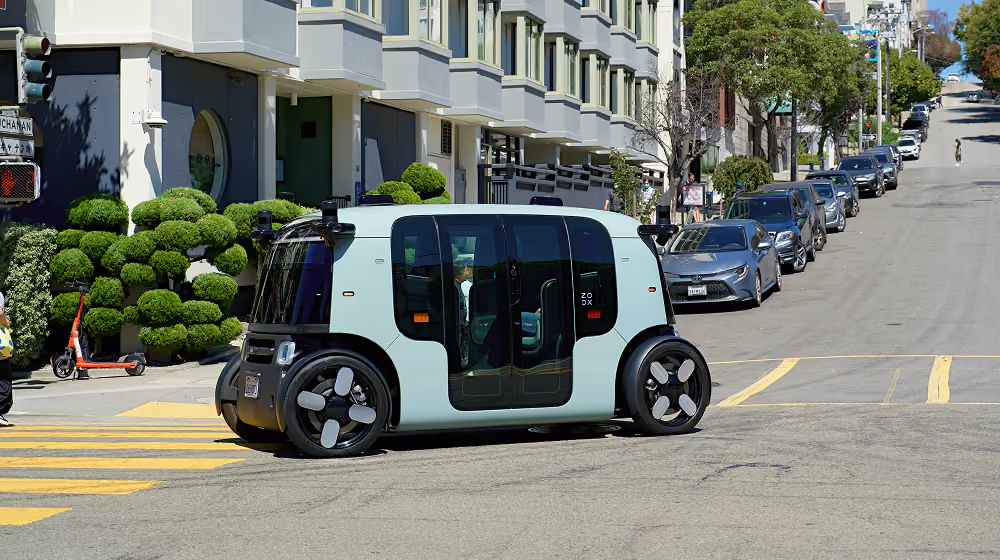
Elon Musk has an explanation for why Tesla Robotaxi isn’t operating at all hours in any market yet: it doesn’t want to be a “pet destroyer,” like Waymo. That doesn’t pass the smell test, but something else he said about the automaker’s caution in expanding its autonomous service makes more sense: a crash that kills even one person could kill Tesla Robotaxi.
Meanwhile, a well-funded startup seeks to disrupt GPS, the Hollywood-Burbank Airport builds a new terminal in comparatively breakneck speed, Flock Safety announces major layoffs as it deals with backlash to its surveillance technology, cities are building homes on top of libraries and one of our own writes about the benefits of homes without parking.
Finally, if you’re a startup in the mobility space, you need to sign up for the LA New Mobility Challenge for a chance to present your company or product to a panel of industry-leading experts at CoMotion LA ‘26 next month!
What you need to know
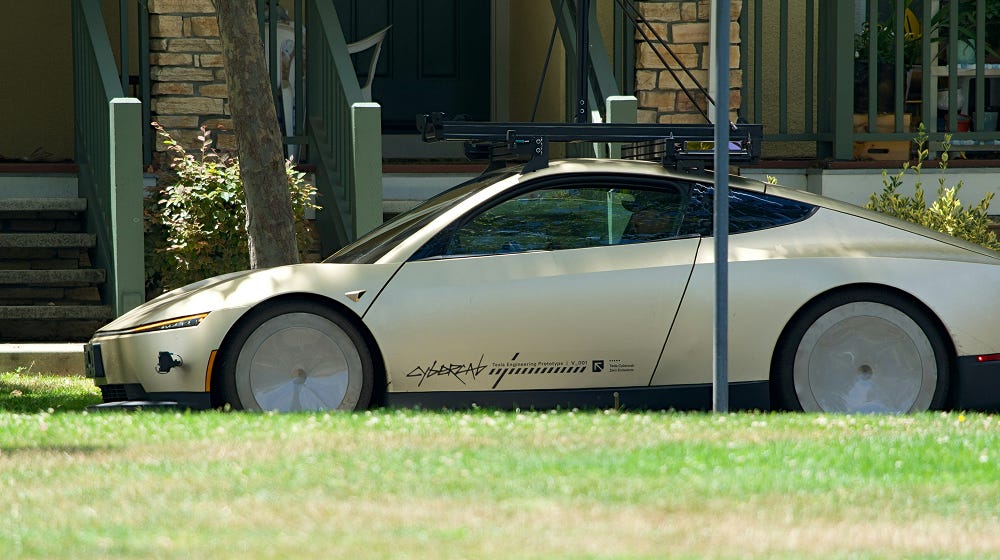
Is this really about pets? Last week Tesla extended its robotaxi hours in Austin from 10 p.m. to 11 p.m. Elon Musk said the company was taking a slow approach to nighttime hours out of a desire to avoid hitting animals, specifically “gray kittens on a gray tarmac in the dark.” But if that is the case, why are they operating at 11 pm (or even 10 pm), long after sunset in Texas? This week, however, Musk tells a crowd of Tesla owners the company has figured out how to spot gray kittens while Waymos are “pet destroyers.”
A challenge to GPS supremacy: Xona, a Bay Area space startup that has attracted $300 million in venture backing (including $20 million from U.S. Space Force), has developed an alternative to GPS that offers centimeter-level precision. GPS’s meter-level precision might be more than enough for your daily navigation needs, but in the autonomous era there are likely a lot of commercial entities that will be interested in even greater precision.
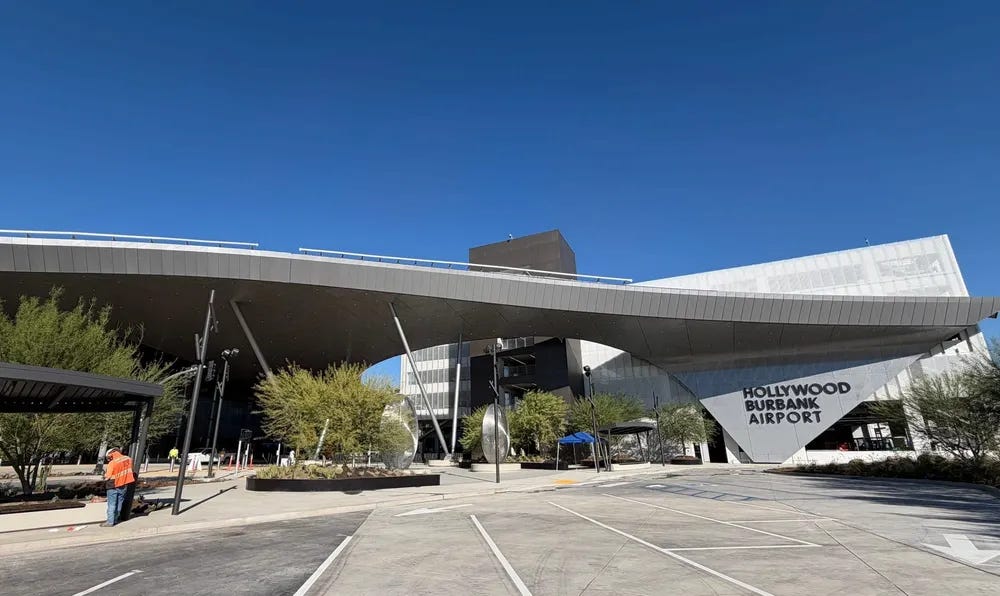
SoCal’s builds a new airport terminal –– fast: In a refreshing departure from America’s well-established struggles to build infrastructure cheaply and quickly, the Hollywood-Burkbank Airport took less than three years to build a new terminal, which opens today! It’s a heartening development for LA transportation observer Alissa Walker, who also gives the new terminal props for the design, including shaded outdoor seating. However, she’s less impressed by the new terminal’s connections to transit service.
Flock cuts staff amid backlash: The grassroots campaign against AI-powered surveillance cameras and license plate readers that has spread like wildfire across the U.S. in recent months has clearly come at a cost to Flock Safety, America’s most prominent surveillance contractor. The company has laid off 270 employees, or about 18% of its headcount. Local and state government leaders across the political spectrum have begun expressing concerns about Flock and either halting new contracts or scrapping existing ones.
A bookish spin on mixed-use: An increasing number of cities are building housing on top of libraries. Because libraries tend to be (or at least should be) in walkable areas with good access to transit, they are a natural fit for affordable housing. The most recent example is a new library being built in Boston’s Chinatown, which will include 110 income-restricted homes on top of the 17,000 sq ft public space.
What we’re reading
A home without parking: CoMotion’s own Jack Craver writes in his personal newsletter, Neighborhood Matters, about the privilege of being able to buy a home without off-street parking and why eliminating parking requirements is one of the easiest things a city can do to enable lower-cost housing and greater walkability.