The virtue of the Good Old Bus


Today we’ve got a mix of exciting news in business and some sobering news about the climate and government. Uber is snatching up more competitors in Asia and partnering with rental giant Hertz to service its future robotaxi fleet. Meanwhile, a new paper says one of America’s most storied cities is on its deathbed due to climate change. And we’ve got a couple interesting takes from CoMotion speakers: one says it’s time for New York City to reconsider paying bounty hunters to report idling vehicles and another urges government to recognize new technology as a supplement, not a replacement, to good old fashioned bus service.
What you need to know

Uber’s many international moves: The ride-hail giant, which has been on a spree of acquisitions, investments and partnerships, buys Hong Kong e-hail startup FlyTaxi. This comes just a few years after buying another Hong Kong rival, HKTaxi. Meanwhile, Basel, Switzerland becomes the first European city to get Uber Moto, a service Uber operates in a number of markets in Latin America, Asia and Africa where you can book a ride on the back of a motorcycle. In a congested city, it can be both cheaper and faster than a car ride.
…and its new pit crew: Rental car company Hertz is setting up an affiliate, Oro Mobility, to handle charging, maintenance, cleaning, and depot staffing for Uber’s upcoming robotaxi fleet of Lucid vehicles powered by Nuro tech. The service is expected to debut in the Bay Area later this year, extending a long-running partnership between Uber and the rental-car company into the driverless era.
Who sprawls the most? A new analysis by researchers at the Johns Hopkins School of Public Health ranks U.S. metro areas by compactness. The most compact metro is the San Francisco Bay Area, followed by New York and Philadelphia, no surprises there. What may surprise some is Miami coming in at #4. As for the sprawliest metro, that distinction belongs to the Riverside-San Bernardino-Ontario area in Southern California, followed closely by the Atlanta and Nashville metro areas.
Giving up on the Big Easy: A paper published in Nature Sustainability argues that New Orleans must begin planning for the significant erosion of its coastline; the city “may well be surrounded by the Gulf of Mexico by the end of this century.” The paper argues that the city has reached a “point of no return” and the government should begin preparing people to relocate further inland.
Driverless trucking expands in Texas: Aurora Innovation, the Pittsburgh-based autonomous trucking company, inks another deal. This time it is with food distribution giant McLane to deliver goods autonomously between Dallas and Houston, with plans to expand to other McLane routes across the Sunbelt in the coming year. These trucks are making the trips on highways without any human on board.
In the latest episode of Fast Forward, we look back at some of the best moments from CoMotion MIAMI and the dominant themes of 2026 in urban mobility, with special conversations hosted by Mobility Matters’ Javier Betancourt.
Conversations with:
- John Rossant, Founder & CEO, CoMotion
- Ron Thaniel, Senior Director for Policy & Regulatory Affairs, Zoox
- Jose Clavell, VP of Transportation, US South, EXP
- Faisal Hameed, VP of Infrastructure, EXP
What we’re reading
Don’t forget the Good Ol’ Bus: CoMotion MIAMI featured all kinds of exciting new technology and analysis of how it will transform the future of getting around, but we were also proud to platform voices like Javier A. Betancourt, executive director of the Citizens’ Independent Transportation Trust in Miami-Dade County, who stressed the importance of achieving “the things we’ve been talking about for 30 years.” Too many American cities are still not delivering quality public transit and pedestrian infrastructure due to poor land use policies, bad road design and, of course, a lack of investment in anything besides car-centric infrastructure.
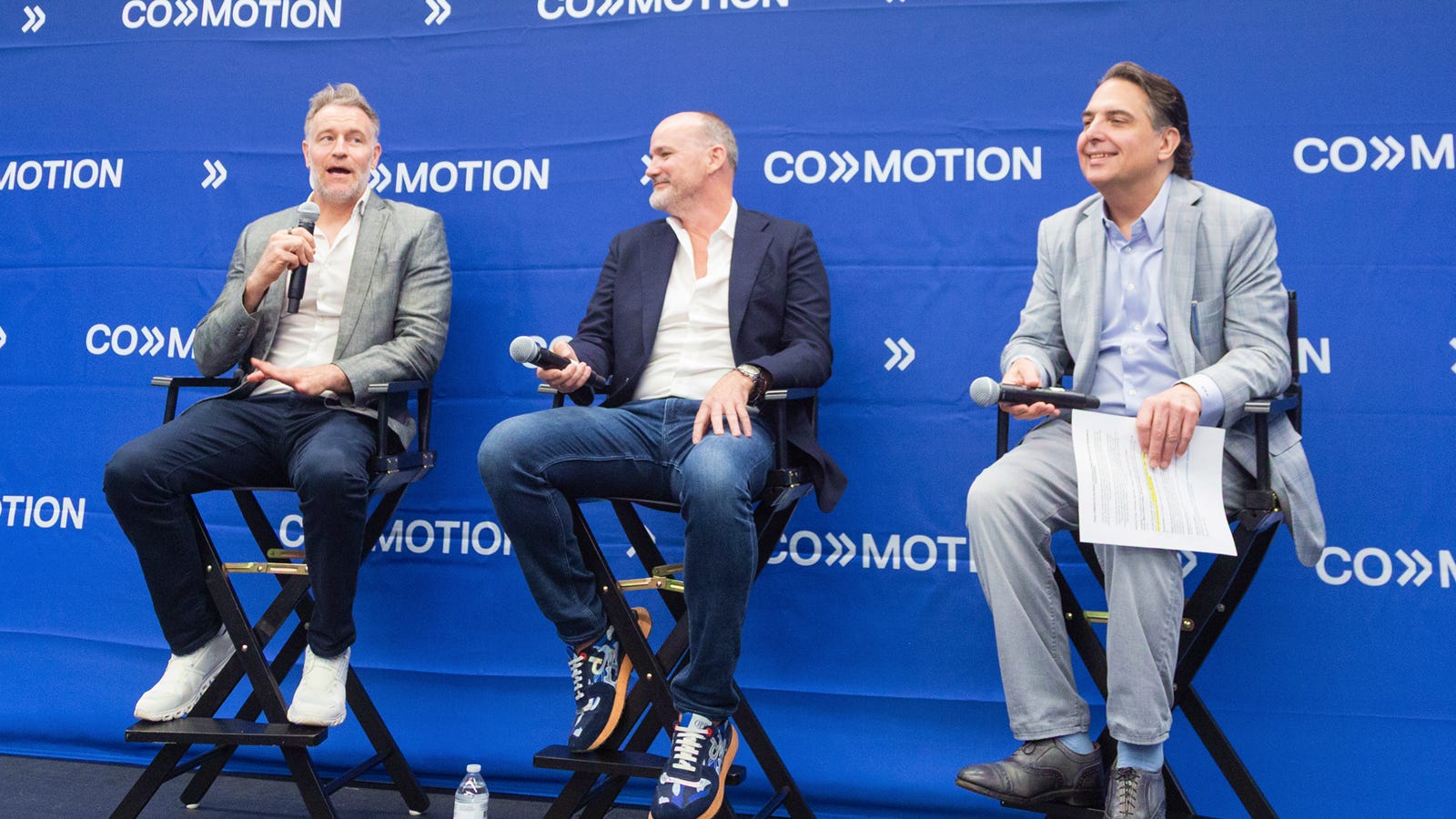
Should idling enforcement be left to “bounty hunters”? Matt Daus, Transportation Technology Chair at the City University of New York’s Transportation Research Center and a member of the CoMotion Global Council, voices concerns about New York’s Citizen Air Quality Complaint program, which allows private citizens to earn bounties for reporting vehicles violating the city’s laws against idling. It has “distorted enforcement priorities” and doesn’t account for the need for private bus companies to keep their passengers warm in the winter or cool in the summer.
Daus, who is also chair of the transportation practice at Windels Marx and is President of the International Association of Transportation Regulators, moderated the panel “CoMotion on the Water: Unlocking Urban Waterways for Passenger & Freight Mobility” at CoMotion MIAMI ‘26 last week alongside Adam Triolo from REGENT and Neill Etheridge from The Twenty Five. Watch on demand.
“As cities continue advancing multimodal transportation strategies, water-based mobility presents exciting opportunities to expand connectivity while supporting sustainability and resilience goals.”