Wait... who's driving this Waymo?


Less Than 80 Days to Go!
CoMotion MIAMI ‘26 isn’t just an event, it’s where investors, public agencies and industry partners align on funding, pilots, deployments, and policy. Don’t miss out on the 7th, and most impactful edition yet: Urban Mobility in the Age of AI, on April 28–29.
We’ve got some good news and bad news for Waymo. The good news for Alphabet’s autonomous driving unit is that it just raised another $16 billion. The bad news is it has to explain to regulators and the public that it still employs a big team of people in the Philippines to “assist” its autonomous vehicles in various situations. So just how autonomous are these cars?
Meanwhile, as the U.S. government and major U.S. automakers continue to turn away from EVs, China is happy to pick up the slack. Many Europeans don’t want the automotive future to be Chinese, but they’re finding it harder to resist it as traditional alliances with the U.S. falter. Plus: a new startup aims to make flying even safer, Chinese company AutoFlight develops a new and unusually big eVTOL, Indian logistics company Drivn raises big bucks to support electric buses and trucks, Wales finally consolidates its myriad private bus companies, and a study outlines how New York could dramatically expand its subway system at a fraction of the cost of recent projects.
What you need to know

Waymo’s “Ghost” Drivers in the Philippines: Congressional testimony revealed that Waymo relies on a massive team of contractors in the Philippines to help its robotaxis navigate tricky spots, like construction zones or weird intersections. While Waymo is quick to point out that these workers aren’t “remote driving” with a joystick but rather just giving the AI a “thumbs up” to proceed, the news has sparked a massive debate over safety and transparency - Sen. Ed Markey (D-MA) described the use of foreign contractors as both a security risk and a threat to American jobs.
But still: way mo’ money for Waymo: Alphabet’s autonomous driving unit raises $16 billion in a massive funding round to accelerate the international expansion of its driverless ride-hailing service. With plans to launch in over 20 new cities this year—including major hubs like London and Tokyo—Waymo is shifting from a domestic “proof of concept” to a global commercial powerhouse. Some believe that Tesla has serious potential to eventually deliver a better and cheaper robotaxi product at scale, but at this moment Waymo is the undisputed leader in the west.
Stellantis’s 22-billion-euro “EV Brake-Turn”: The Franco-Italian auto giant books a staggering €22.2 billion ($26.5 billion) writedown in the second half of 2025 as it makes a hard pivot away from EVs. The company, whose vast auto holdings include Fiat, Peugeot and all of the former Chrysler brands (Jeep, Ram, Dodge), has fallen far short of its EV ambitions and the current political landscape in the U.S. doesn’t make it optimistic about the near-term future of the EV market.
The perfect storm for Chinese EVs: The retreat of the U.S. government and much of western industry from EVs only makes it more likely that China’s burgeoning auto industry will dominate in the coming years. Also working in China’s favor are the poor state of America’s relationships with traditional western allies, who may be less inclined to resist Chinese industrial dominance if they no longer can count on the support of Washington. Last year China exported $70 billion of cars: Belgium, the United Kingdom and the United Arab Emirates were the top buyers.
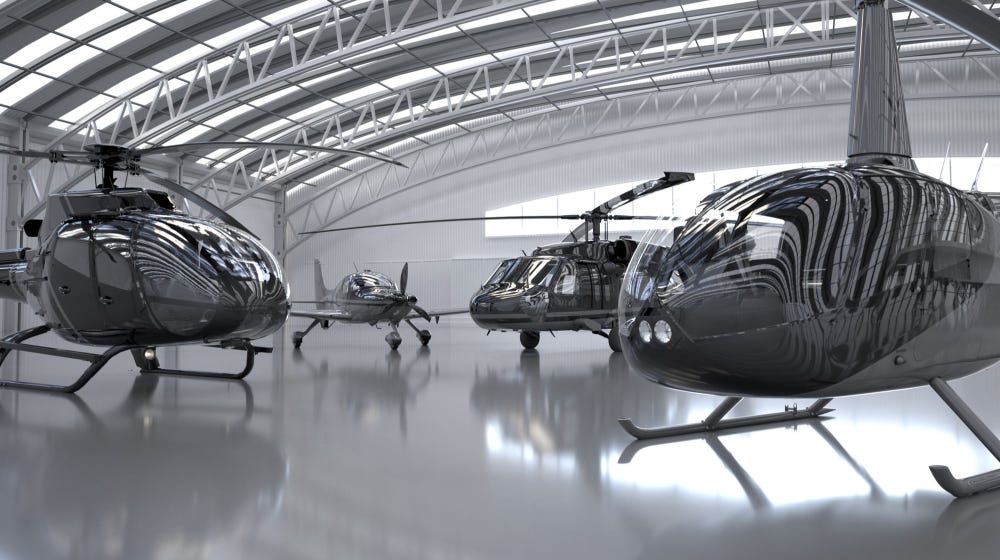
Making flying even safer: California startup Skyryse raises $300 million in a Series C round to support technology that automates many of the most challenging aspects of flying. Flying is typically far safer than driving, but there’s always room for improvement, particularly for small, private aircrafts, from helicopters to electric air taxis.
Diving deeper into ocean data: California-based Apeiron Labs raises $9.5 million in a Series A round to deploy fleets of autonomous underwater vehicles that can monitor ocean conditions far more affordably than traditional ship-based methods. The startup’s three-foot robots dive hundreds of meters to gather temperature, salinity, and acoustic data, with applications ranging from fisheries management to submarine detection. By bringing the cost of ocean data down 100-fold—and targeting a 1,000-fold reduction—Apeiron aims to become “the CubeSat for the ocean.”
Heavy-lift eVTOL hits a new milestone: Chinese developer AutoFlight successfully completed a public transition flight of its “Matrix” aircraft, the world’s first 5-ton class eVTOL aircraft. By proving that a larger, 10-seat aircraft can smoothly switch from vertical lift to wing-borne cruise, AutoFlight is challenging the notion that eVTOLs are limited to small payloads and short city hops.
A reform to Wales’ wild west bus system: For the first time in 40 years, the schedules and fares for buses in Wales will no longer be set by a variety of private bus operators. The government will set the schedules and fares and contract routes out to different companies.
Big bet on electric trucks in India: India's electric mobility startup Drivn secures $80 million in financing commitments to roll out nearly 1,000 electric buses and trucks across the country's inter-city and heavy transport corridors. By owning, leasing, and managing the full lifecycle of commercial EVs—including charging infrastructure and battery management—Drivn is positioning itself as the institutional backbone for India's heavy transport electrification.
Applications are now open for the 8th annual Transit Tech Lab, an accelerated innovation program founded by the Partnership Fund for New York City and the MTA to improve public transit in the NY metro area.
This year’s Lab is seeking technology companies with solutions that can help transit agencies advance infrastructure systems or modernize data and operational workflows. Selected companies will participate in an eight-week proof of concept with the MTA, Port Authority of NY & NJ, and NYC DOT.
Applications close Feb 27. Apply now or attend an info session on February 6 at 1pm ET to learn more about this year’s challenges.
What we’re reading
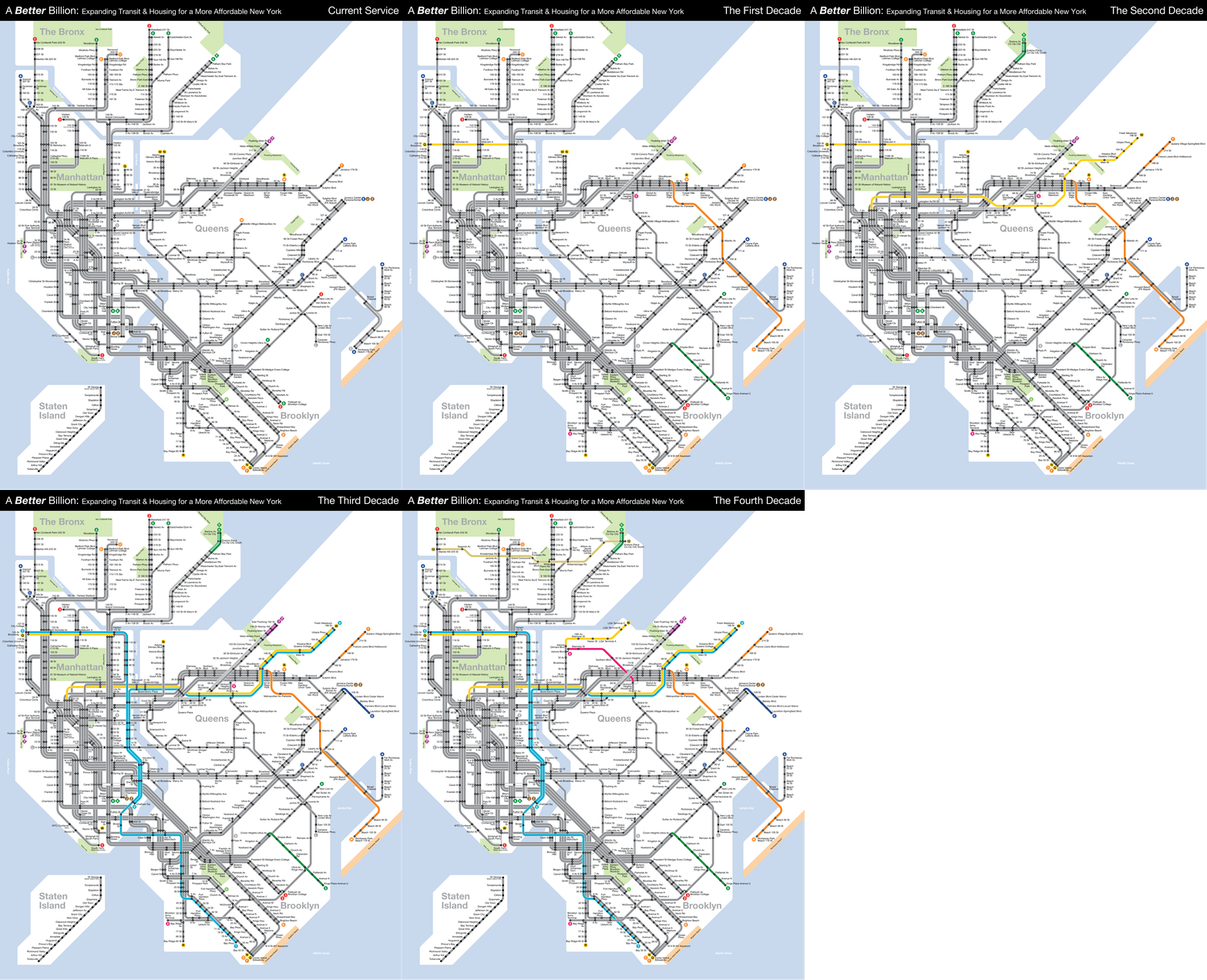
Instead of free buses … more subway? Benjamin Schneider argues in CityLab that, instead of spending roughly $700 million per year to make buses free, New York would be better off spending $1 billion a year to add dozens of miles of subway lines in the coming decades. A new analysis by the Transit Costs Project says it could be done – but only if the MTA embraces major changes to the unnecessarily expensive way that it has built recent projects, most notably the insanely expensive Second Avenue Subway.
How did Uber become profitable? Andrew Miller, author of the Changing Lanes newsletter, recalls that it was only a few years ago that many believed Uber was a “bezzle” — essentially a long con that would never achieve sustainable profits and would collapse once the spigot of VC subsidies dried up. But Uber has now reported profits for 10 consecutive quarters. What happened? Miller explains.