Is Tesla for real this time?

Save the Date

Dive into the future of mobility at CoMotion MIAMI ‘26, Urban Mobility in the Age of AI on April 28-29. Register now and benefit from our Super Early Bird pricing.
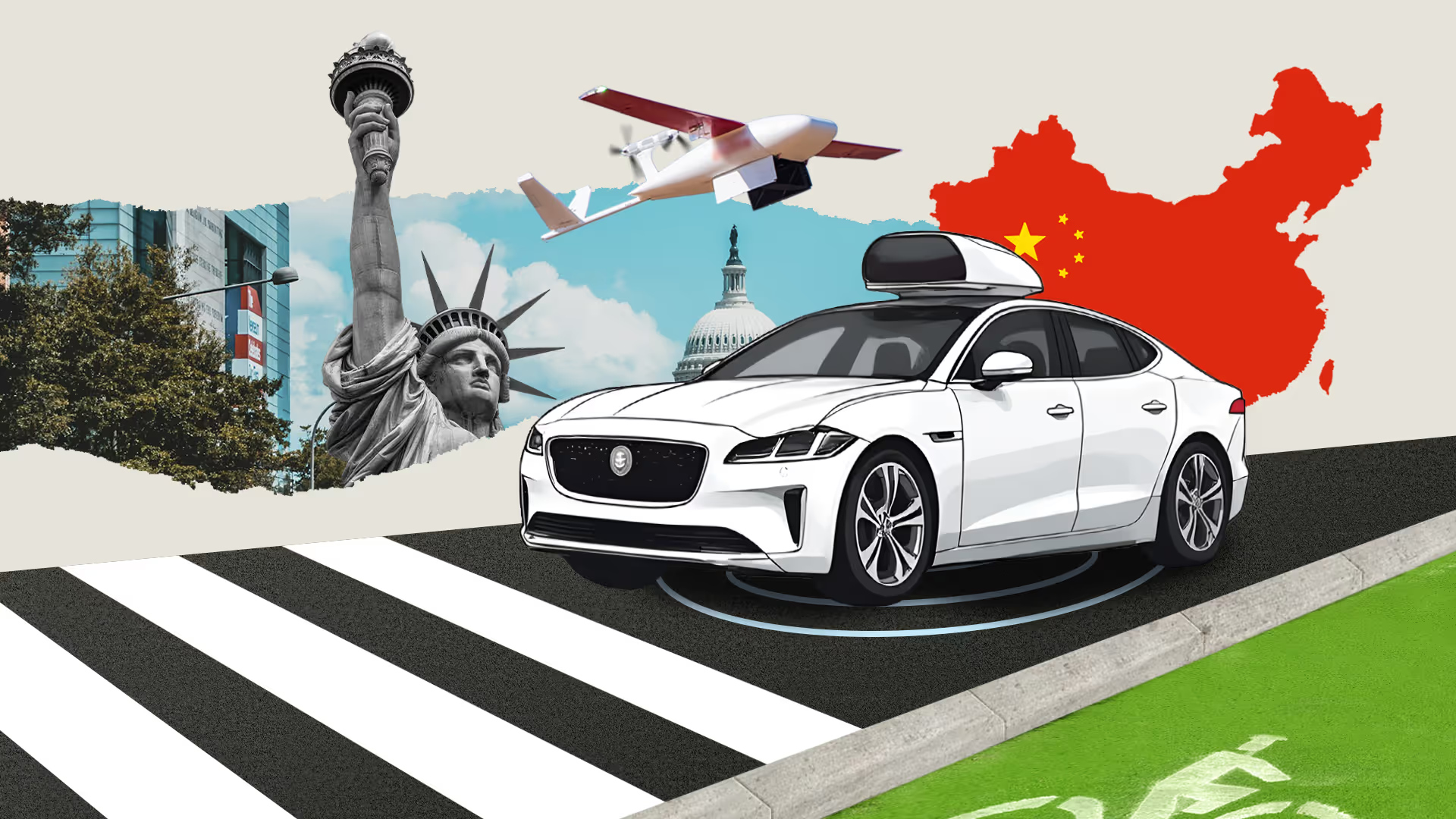
If Tesla actually becomes the world’s leading autonomous ride-hail provider, we will look back at last week as a critical turning point. For starters, the company began offering (a few) truly driverless paid rides in Austin, marking a small but significant step toward the promise of full autonomy that Elon Musk has been promising for over a decade. The same week, a Model S made an entirely autonomous trip from LA to New York. Insurance provider Lemonade has seen enough: it’s now offering 50% discounts to Tesla owners who use FSD.
But for now, the top dog in the U.S. robotaxi game is still Waymo, which expanded its robotaxi service to Miami. Meanwhile, New Jersey imposes insanely strict licensing and insurance requirements on e-bikes (even the slow ones!) drawing sharp criticism from advocates who see the move as a major setback for non-car mobility.
Also: GM once again gives up on producing a low-cost EV, Zipline zips into new markets and a group of volunteers in Atlanta do what the city won’t: build a sidewalk (sorta). On the infrastructure side, Europe’s ambitious continent-spanning transport network faces major delays and cost overruns, raising questions about whether its historical advantage over the U.S. in building new transit is eroding.
What you need to know
Another step towards robotaxis for Tesla? Tesla finally begins offering paid rides in autonomous vehicles without any human safety monitor present. So far it looks to be operating the service on a small portion of the overall fleet. Meanwhile, a group of AV experts manage to make a completely hands-free trip from Los Angeles to New York in a Model S.
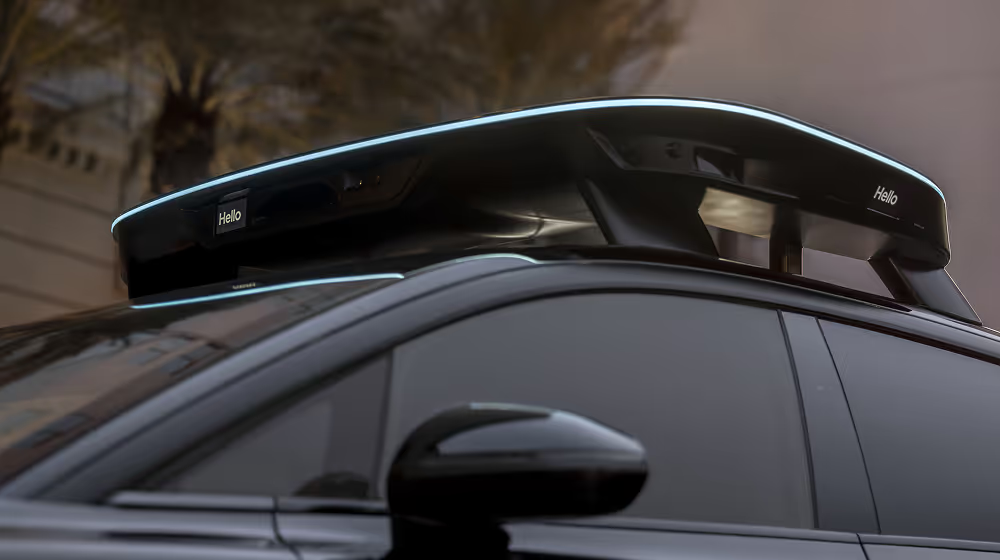
Unsurprisingly, Tesla’s progress on autonomous ride-hailing has lagged far behind Elon Musk’s promises, but there are increasing indications that it may be within striking distance of competing with Waymo, which has been operating fully driverless vehicle fleets for years. Online insurance provider Lemonade just announced that it is offering 50% discounts to Tesla owners when the Full Self Driving is engaged, prompting a bullish analysis from Morgan Stanley about Tesla’s autonomous future. The theory for Tesla eventually triumphing over Waymo? Tesla relies on much cheaper, mass-produced technology, and scaling is the most significant challenge in AV deployment. Undeterred for now, Waymo’s fully driverless rides are now open to the public in Miami, its sixth U.S. market.
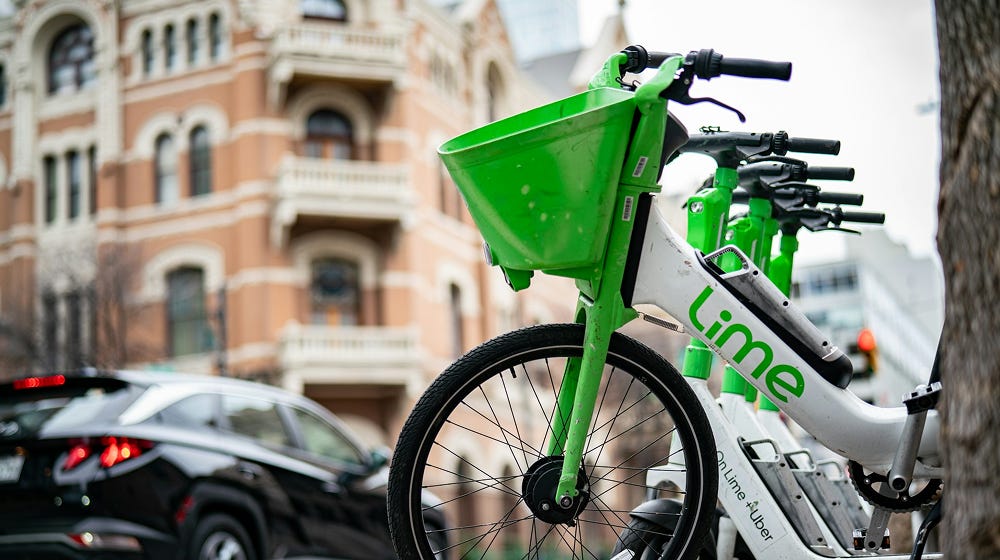
New Jersey’s crackdown on e-bikes: The Garden State approves one of the strictest regulations on e-bikes, requiring licenses and insurance for even low-speed pedal-assist e-bikes and barring use for those under 15. Devin McCody, editor of Bike Magazine, calls the bill’s rapid passage despite vocal opposition from mobility advocates “shocking,” and some are already working on draft amendments to narrow the law’s scope or clarify definitions.
Big raise propels Zipline into new markets: Zipline, the drone delivery startup that got its start delivering blood in hard-to-reach rural communities in Rwanda, raises $600 million to expand operations to Houston and Phoenix later this year. Zipline has been moving into commercial operations in the U.S., partnering with retailers and food outlets like Walmart, Chipotle and Panera Bread to make home deliveries in parts of North Texas and northwest Arkansas.
$150M for Eve: Another eVTOL startup, Eve Air Mobility, raises $150 million to further research and development.
The CoMotion GLOBAL 2025 Impact Report is here! Revisit standout highlights, gain key insights from H.E. Dr. Rumaih Al Rumaih, Vice Minister of Transport & Logistic Services, Acting President of Transport General Authority (TGA), Saudi Arabia, Mate Rimac, Founder & CEO, Rimac Automobil, Valerie Labi, CEO & Co-Founder, Wahu Mobility, Dr. James Yu, Chairman & CEO, QCraft, Prof. Carlo Ratti, Director, MIT Senseable City Lab, and discover all the attendees and exhibitors that made the event so special.
Innovation drives mobility forward — and CoMotion GLOBAL ‘25 brought together the the next generation of urban transport leaders together in heart of Riyadh.
GM ditches the Bolt (again): Only weeks after resuming production of the Chevy Bolt, GM signals that it will likely soon again abandon its low-cost EV. The Kansas plant where the Bolt is being manufactured will shift to producing the Buick Envision, which is currently made in China. It’s a familiar story for the Big Three, which has killed and brought back the Bolt, its small-profile, low-cost model, once before.
Europe’s transport stumbles: The EU is far behind on building the ambitious Trans-European Transport Network, according to a new report published by the European Court of Auditors. The road, rail and water infrastructure plan, adopted in 2013 and intended to be completed by 2030, has suffered from major cost escalations linked to the pandemic, Russia’s invasion of Ukraine and general inflation. In recent decades, Europe has performed far better at building new transportation infrastructure than the U.S. — is that changing?
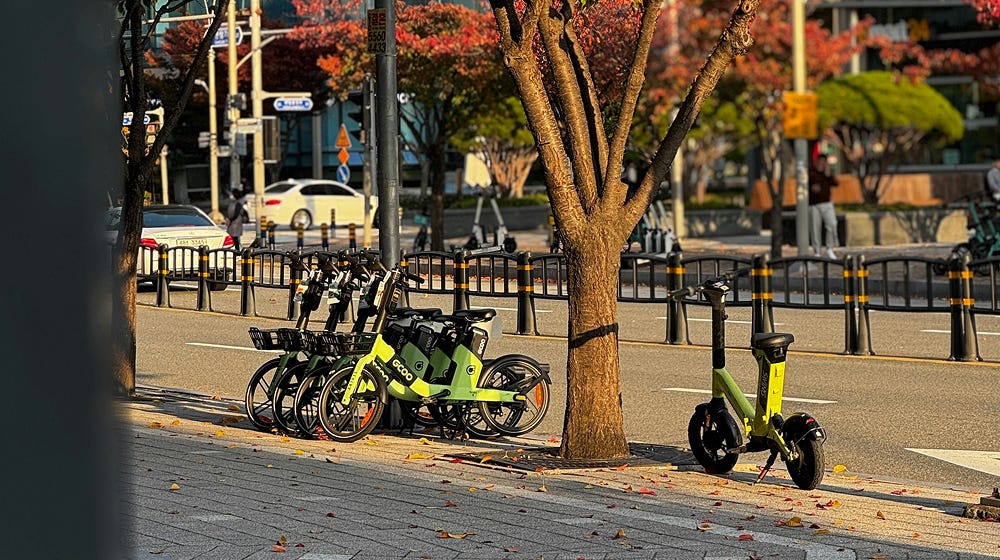
Korea hits record number of scooter trips: South Koreans registered on one of the country’s four micromobility services took 98 million trips on e-scooters in 2025, fueled largely by young people filling gaps in the nation’s robust public transit network.
Honda hydrogen partnership, but not hydrogen: The Japanese automaker announces it will wind down production at its Michigan fuel-cell joint venture with General Motors by the end of 2026, ending work at the first dedicated automotive fuel-cell plant. The company says its plans to pivot toward independently developed next-generation hydrogen systems.
Tactical urbanism for the win: Frustrated with inaction from the city, residents of an Atlanta neighborhood take matters into their own hands and build a protected walking lane on a street without sidewalks. May it inspire others to act!
Judge rules against Uber and DoorDash on New York tipping law: A federal judge declines to halt a New York law that requires delivery services to offer customers the option to tip before or during the order –– rather than afterwards. Uber and DoorDash argue the law threatens their relationship with customers due to “tipping fatigue and high costs.”
Applications are now open for the 8th annual Transit Tech Lab, an accelerated innovation program founded by the Partnership Fund for New York City and the MTA to improve public transit in the NY metro area.
This year’s Lab is seeking technology companies with solutions that can help transit agencies advance infrastructure systems or modernize data and operational workflows. Selected companies will participate in an eight-week proof of concept with the MTA, Port Authority of NY & NJ, and NYC DOT.
Applications close Feb 27. Apply now or attend an info session on February 6 at 1pm ET to learn more about this year’s challenges.
What we’re reading
The man hired to make New York’s buses fast and free: The New York Times profiles Mike Flynn, the man Mayor Zohran Mamdani has hired to head the city’s 6,000-employee transportation department with the goal of making the city’s buses faster and free and redesigning hundreds of streets to improve pedestrian and cyclist safety.