5 Takeaways from CoMotion LA


Dates to remember
- CoMotion GLOBAL in Riyadh on Dec. 7-9: Register now and get your complimentary pass, limited spaces available! Senior public officials, accredited media, and other key stakeholders are invited to register here for a complimentary ticket. Registrations will be reviewed by our comittee.
Welcome to CoMotion NEWS, your weekly roundup of news and analysis of the mobility revolution. If this email was forwarded, you can sign up here for NEWS.
If you made it to CoMotion LA last week, we hope you had as much of a blast as we did. If you didn’t make it, we hope to see you in Riyadh in December or Miami in April! From It’s Electric’s announcement of their expansion into LA to first looks at the results of zero-emission delivery zones, the event continued to be a thriving and exciting place for the intersection of technology and urban mobility.
The autonomous vehicle industry is having a moment—and not necessarily a good one. Tesla finally releases real safety data for its Full Self Driving system, showing it’s significantly safer than human drivers but still far from perfect. Waymo, meanwhile, should be celebrating a major milestone as it expands to freeways in three cities, potentially cutting travel times in half. Instead, the company can’t escape the shadow of KitKat, the beloved San Francisco cat it killed three weeks ago.
Elsewhere, the post-pandemic e-bike hangover deepens as Rad Power Bikes warns employees it might permanently close, Pennsylvania’s legislature once again abandons its transit agencies, and Chicago’s micromobility scene is crushing it. Plus: a Boston startup raises $150 million for a sensor it claims is better than lidar and radar combined, Bloomberg bets big on Brazilian e-buses, and FedEx backs an electric truck startup you’ve probably never heard of.
What you need to know
5 more takeaways from CoMotion: Regina Clewlow, CEO of Populus, a platform that helps cities manage their data, covered the latest edition of CoMotion Los Angeles. The takeaway? Cities are finally moving past the effervescent pilot phase and getting serious about scaling stuff that actually works. She points out that big events on the horizon are forcing cities to upgrade and stress-test their systems in a way they can’t put off anymore. In short: urban mobility is getting more coordinated, more practical, and more grounded.
Tesla releases FSD safety data: After being chided by Waymo’s CEO to be more transparent, Tesla releases data on crashes involving its Full Self Driving system. The automakers says vehicles operating in FSD are involved in a major collision every 5 million miles and a minor collision every 1.5 million miles. That is significantly safer than human-operated vehicles in the U.S. Brad Templeton, who has advised Waymo and other Tesla competitors, says Tesla’s new figures appear to be “more honest” than its previous data disclosures.
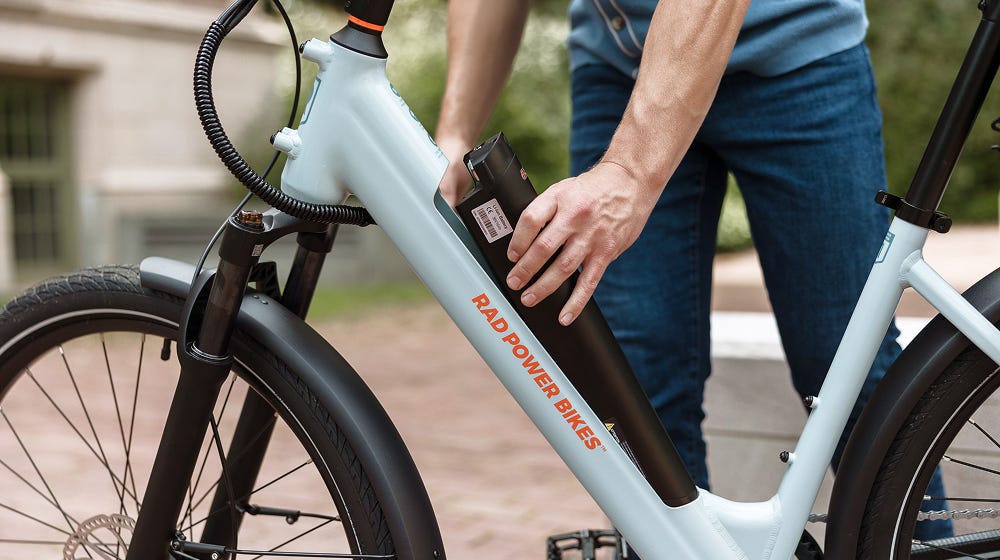
Image credit: Rad Power Bikes
The post-pandemic e-bike hangover: Rad Power Bikes is one of a number of bike manufacturers struggling to stay alive after riding high during the pandemic. The surge in demand at the onset of Covid (297% increase in demand in May 2020) and subsequent funding rounds turned the Seattle company into a unicorn and one of the most recognizable e-bike brands. Now, as it tries to pivot in response to falling demand and higher prices, Rad has warned employees it is at risk of permanently closing.
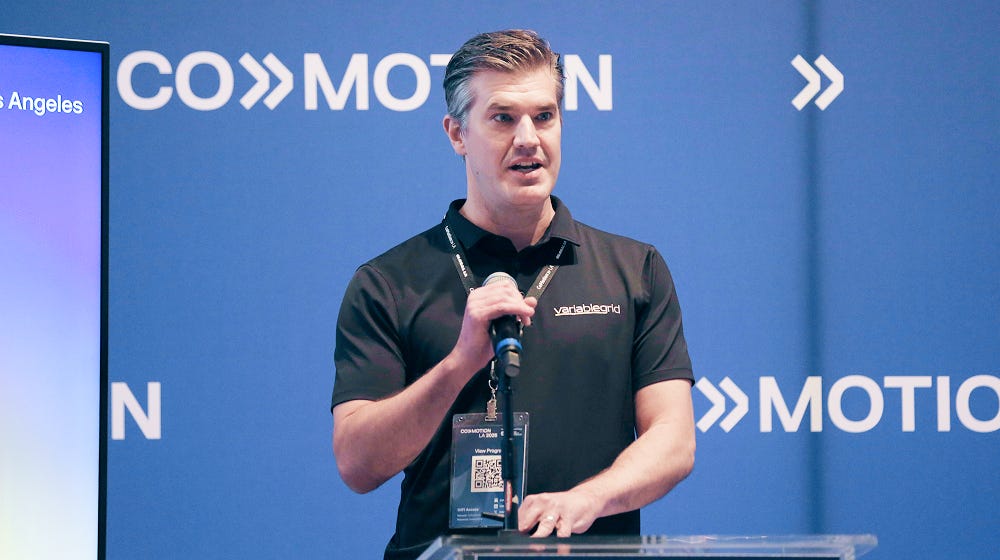
Variablegrid wins LA New Mobility Challenge!
A huge Congratulations to Dan Lafferty, CEO of Variablegrid, the CoMotion LA 2025 New Mobility Challenge Winner, in partnership with Los Angeles Cleantech Incubator.
Variablegrid is the intelligence layer between the home, automotive OEM, and grid. Their edge controller measures real-time electrical capacity, manages EV charging, and delivers full-speed Level 2 charging without costly service upgrades. They enable faster, lower-cost electrification for homes and commercial buildings while integrating directly with OEMs and utilities to create a scalable, grid-aware platform for the future of clean energy.
Waymo gets on the highway: The Alphabet-owned robotaxi service begins driving on freeways in San Francisco, Los Angeles and Phoenix. The change could reduce travel times by as much as 50%, the company says.
…but the KitKat story won’t stop: It has been three weeks since a Waymo vehicle killed KitKat, a beloved neighborhood cat known for charming patrons at bars in San Francisco’s Mission District, but the tragedy continues to fuel an anti-robotaxi movement in the Bay Area and online. It has drawn coverage in the New York Times, Rolling Stone, the Guardian and many other international outlets.

Join the visionaries shaping transportation, technology, and urban innovation across every continent at CoMotion GLOBAL on Dec. 7-9 at the KAFD Conference Centre in Riyadh.
From global policymakers to urban innovators, these voices are shaping the next era of urban mobility — smarter, more sustainable, and more connected than ever before.
- Majid Mufti, CEO, NEOM Investment Fund
- Diana Caiza, Mayor, Municipality of Ambato
- Dr. Nasiphi Moya, Executive Mayor City of Tshwane
- Gunnlaugur Erlendsson, CEO, ENSO
- Hashim Alfatayerji, Founder & CEO, Cararak Ventures
- Steve Adler, Former Mayor of Austin, Texas
Register now and get your complimentary pass, limited spaces available. Senior public officials, accredited media, and other key stakeholders are invited to register here for a complimentary ticket. Registrations will be reviewed by our comittee.

Image credit: Teradar
Better than lidar and radar? Boston startup Teradar raises $150 million for a solid-state sensor that uses the terahertz band of the electromagnetic spectrum. The goal is to produce a system that provides the high resolution of lidar with the all-weather capabilities of radar –– at a much lower price point. At this point it seems too good to be true, but founder Matt Carey insists it’s not.
Bloomberg bets on Brazilian e-buses: A coalition led by Bloomberg Philanthropies is putting $92 million into a new fund designed to make it easier for Brazilian cities to switch to electric buses. The effort is expected to unlock far more money from public and private sources and could speed the rollout of more than 1,700 zero-emission buses nationwide.
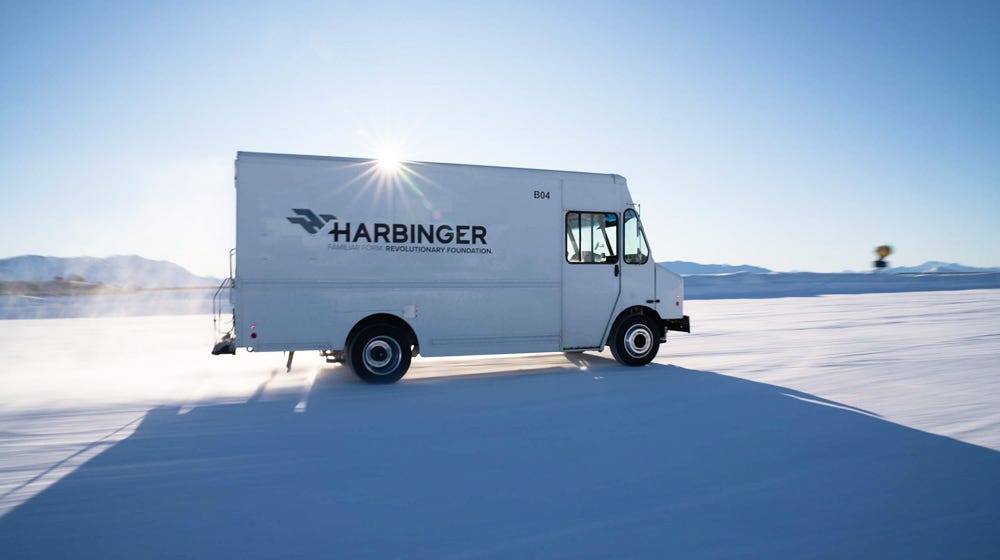
Step Van - Image credit: Harbinger
A Harbinger of electric delivery: Electric truck manufacturer Harbinger raises $160 million in a round led by FedEx, which also puts in an order for 53 vehicles.
Pennsylvania forgets about transit: After months of partisan gridlock, Pennsylvania’s legislature finally reached a deal on a state budget, but without the much-needed boost in funding for the state’s embattled mass transit agencies. Philadelphia’s SEPTA recently averted catastrophic cuts by digging into a fund intended for capital improvements, but both SEPTA and Pittsburgh Regional Transit still lack a permanent funding source. This is not sustainable.
Chicago’s big micromobility moment: At the end of October, the Windy City’s two principal micromobility operators, Lime and Divvy Bikes, had already recorded 12 million rides in 2025. That is up from 11 million during the entire year of 2024 and 8.7 million in 2023.
What we’re reading
How Biden’s EV policy failed and succeeded: David Ferris, Politico’s transportation reporter, digs into the many ways that President Joe Biden’s ambitious EV infrastructure goals failed, highlighting the bureaucratic red tape that prevented shovels from breaking ground during his presidency. And yet, key parts of Biden’s EV legacy will live on, facilitating the transition to EVs despite the fierce opposition of President Donald Trump.