Do Robotaxis Dream in Color?


Save the Date

Dive into the future of mobility at CoMotion MIAMI ‘26, “Urban Mobility in the Age of AI”, on April 28-29 at Miami Dade College. Register now - limited passes still available.
Catch a preview of what’s to come next week, along with a look back on some of last year’s best panels, on this week’s edition of Fast Forward.
It’s hardly surprising that many are betting on Elon Musk’s vision of Tesla as a robotaxi company. If his company showed the world how to build electric vehicles, then why shouldn’t it be the one that figures out autonomy? And yet, recent behavior is not inspiring confidence. The company’s small fleet of robotaxis (with human monitors) in Austin crash at higher rates than human drivers. It just announced that it will begin deploying robotaxis in Dallas and Houston, but so far those efforts look very small. There are still no signs that Tesla is on the cusp of a Waymo-like scalable robotaxi operation.
Meanwhile, Lucid is raising big bucks to launch its own robotaxis, China’s Hesai has developed a LiDAR product that can see color and EV sales in Europe are soaring. Also: a look at bike infrastructure in the global south, where cycling is both very popular and very dangerous.
What you need to know
Is Tesla finally expanding its robotaxi service? Tesla says on social media that it is rolling out robotaxis in Dallas and Houston, but offers no more details on the operation. Fred Lambert of Elektrek points to data hinting that the operation is extremely small: “It looks like Tesla deployed a car or two in each city and called it a launch.”
Although Tesla’s massive valuation is largely premised on it eventually becoming a dominant robotaxi player, it has yet to prove that it can do fully autonomous ride-hailing at scale. Its small operation in Austin appears to have experienced an above-average number of crashes and its hesitance to expand suggests it is not quite confident that its AVs are ready for prime time. And just this week a Tesla owner in Dallas reported that his car, while in Full Self Driving mode, suddenly plowed through a railroad barrier and just narrowly missed being crushed by an oncoming train.
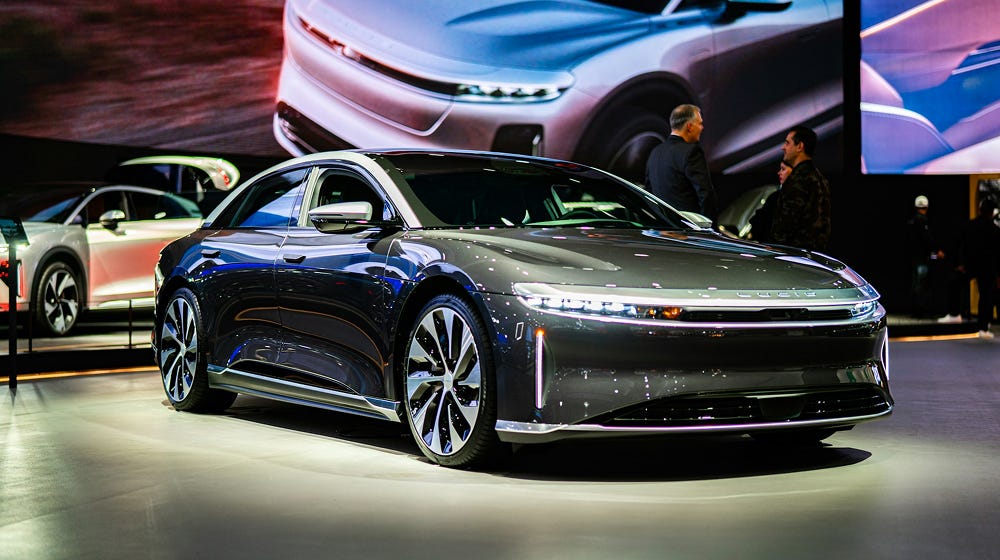
Uber & Saudis pump money into Lucid: EV maker Lucid scores a $200 million investment from Uber as well as a commitment from the ride-hail giant to purchase 35,000 of the robotaxis it is developing. Also joining the party is Saudi Arabia’s Public Investment Fund, which pumped $500 million into Lucid.

Urban Mobility in the Age of AI
We are just 7 days away from CoMotion MIAMI ‘26 on April 28-29 at Miami Dade College.
Join 35+ interactive sessions, talks, workshops, demo’s, and sizzling evening receptions — and hear from industry leaders on Smart Cities, Mega-Events, AI, Innovation, Funding, Policy, Autonomy, AAM, Freight & Logistics, and more.
Join the likes of: Alstom, City of Fort Worth, City of Miami, City of Hollywood, City of Philadelphia, City of Orlando, Elavon by U.S. Bank, EMT Madrid, HNTB, ICEX (Invest in Spain), Jacksonville Transportation Authority, Leitner-Poma of America, Miami Chamber of Commerce, Miami Parking Authority, Miami-Dade County DTPW, PortMiami, Serve Robotics, Texas Department of Transportation, Uber, Visa, Wing, Waymo and Zoox.
Don’t wait until the last minute — secure your spot, limited tickets available.
Betting big on personal pods: Glydways, the San Francisco startup that develops personal autonomous pods that operate on dedicated lanes in cities, raises $170 million in a Series C round and is in discussions to raise another $250 million. In February the company broke ground on its first project, a half-mile guideway between the Georgia Convention Center and the nearby Gateway Center Arena; it is planned to begin operations in December. Glydways says that at scale its autonomous pods will be able to move 10,000 people per hour per lane at an infrastructure cost 90% lower than rail. Does that mean “dedicated pod lanes” will be the thing urbanists are arguing about in the 2030’s?
A car that’s not color blind: Hesai Technology, a Chinese LiDAR company, says its newest product can detect color, a major milestone.
EV sales jump by a third in Europe: Sales of electric cars in Europe’s 15 largest markets are up 33% from the same time period last year. Sales were up 51% in March, likely boosted by the rise in fuel costs following the beginning of the Iran war.
What we’re reading

Lots of bikers, no bike lanes: Biking is very common in cities across the Global South, but you wouldn’t know it based on the infrastructure. A recent paper published in Nature explores the biking situation in Dhaka and Deli, where the researchers find that the vast majority of cyclists are low-income men but that the fledgling efforts to build bike infrastructure has mostly focused on affluent areas. Bloomberg CityLab’s Micah Barkley interviews the paper’s authors about what these cities should be doing to making biking safe and affordable for those who most depend on it.