Is resistance to Chinese EVs futile?


Save the Date

Dive into the future of mobility at CoMotion MIAMI ‘26, Urban Mobility in the Age of AI on April 28-29. Pre-Register your interest now and to be the first to know of updates and Super Early Bird pricing.
Western efforts to resist the growing dominance of the Chinese auto industry are weakening. Last week Canada agreed to nearly eliminate its tariffs on Chinese EVs and the European Union is similarly moving towards a trade deal that will allow the likes of BYD, Li and Geely to compete with VW, Peugeot and Fiat.
In other news, Israel is poised to fully embrace Uber and Lyft while Japan still relegates them to the boonies. Waymos may be safer than human drivers (it’s a debate) but they still can’t figure out school buses. Seattle is the rare post-pandemic bright spot for transit, both due to its expanding rail network and a mayor who isn’t afraid to move cars out of the way for buses. Finally, there are good arguments against free buses, but if you’re going to do them, follow Dunkirk’s lead.
What you need to know
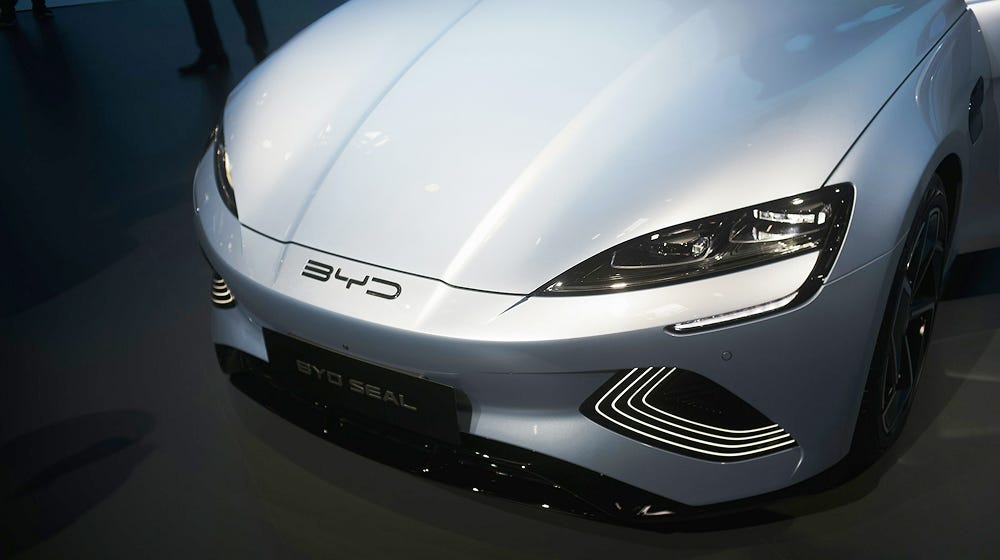
Canada embraces Chinese EVs : Canadian Prime Minister Mark Carney announces that the government will slash the tariff on Chinese EVs from 100% to 6.1%. Initially, however, Canada will cap imports at 49,000 a year, rising to 70,000 by year five, a small share of the roughly 1.8 million vehicles a year purchased by Canadians.
To be clear, it’s not only Chinese companies that will benefit from the reduced tariffs. Tesla will now also be able to import cars manufactured at its Shanghai plant.
Powered Up: E-Bikes and the Future of Shared Mobility with Laura Krull
In this episode of CoMotion’s Fast Forward podcast, Nick Perloff-Giles sits down with Laura Krull, Senior Policy Manager at Lyft Urban Solutions, to discuss the rapidly changing world of electrified bikeshare. Bikeshare is suddenly becoming half mobility service, half distributed battery network - how should planners, policymakers, and riders be thinking about the change?

The Trump administration is sending mixed signals: Transportation Secretary Sean Duffy said Canada would regret the move, while the president himself said, “That’s OK…If you can get a deal with China, you should do that.” Meanwhile, some Democrats say the deal is a consequence of the damage Trump has done to the U.S.-Canada alliance.
What about the rest of the west? The other major players in the global auto industry are striking a surprisingly conciliatory tone: the EU has said that it is willing to reduce its own tariffs on Chinese EVs (currently 35%) if the companies agree to sell at minimum competitive prices. Even the usually combative Trump administration is sending mixed signals: Transportation Secretary Sean Duffy said Canada would regret the move, while the president himself said, “That’s OK…If you can get a deal with China, you should do that.”
Waymo still doesn’t get school buses: Waymo’s robotaxi fleet in Austin, Tex. has continued to blow past school bus stop signs even after the company said it had addressed the issue. This comes on the heels of a growing conversation about Waymo’s safety record, though the company insists software fixes should address the issue.
EXIM bets on eVTOL: The U.S. Export-Import Bank and Private Export Funding Corp. back Embraer’s Eve Air Mobility with a $15 million loan to cover U.S.-supplier costs for batteries and engineering as it advances its electric air taxi program. The financing supports Eve’s eVTOL development following a recent hover test as the company moves toward full flight testing.
Uber and Lyft may come to Israel: Israeli lawmakers have long resisted allowing Uber and Lyft to compete with the country’s existing taxi providers, but a ministerial committee has green lighted legislation to allow the U.S. companies to enter the market.
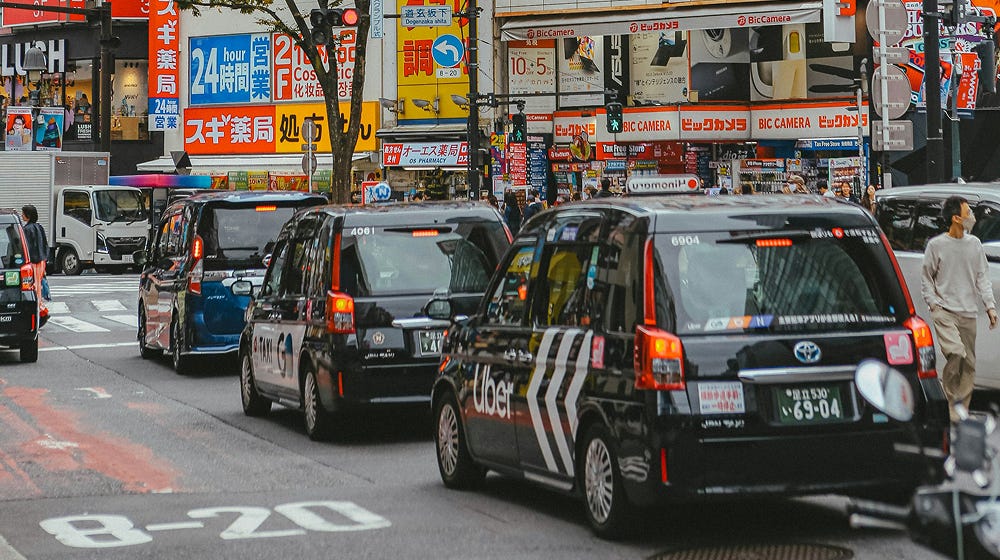
…meanwhile, Japan proceeds cautiously: The New York Times reports on Japan’s reluctant embrace of Uber in small towns, where population decline has left many elderly residents with few transportation options. Japan is adamant, however, that Uber will not get a bite of its major urban markets, where public transit is abundant and ride-hailing remains the realm of domestic operator, GO.
Bumps in the roads for e-bikes: After a glorious pandemic boom, e-bike manufacturers face slowing demand and policy challenges, from 50% tariffs on imported parts to draconian restrictions on e-bike use by local governments. But make no mistake: e-bikes are here to stay, and that’s a good thing, argues David Zipper in Bloomberg CityLab.
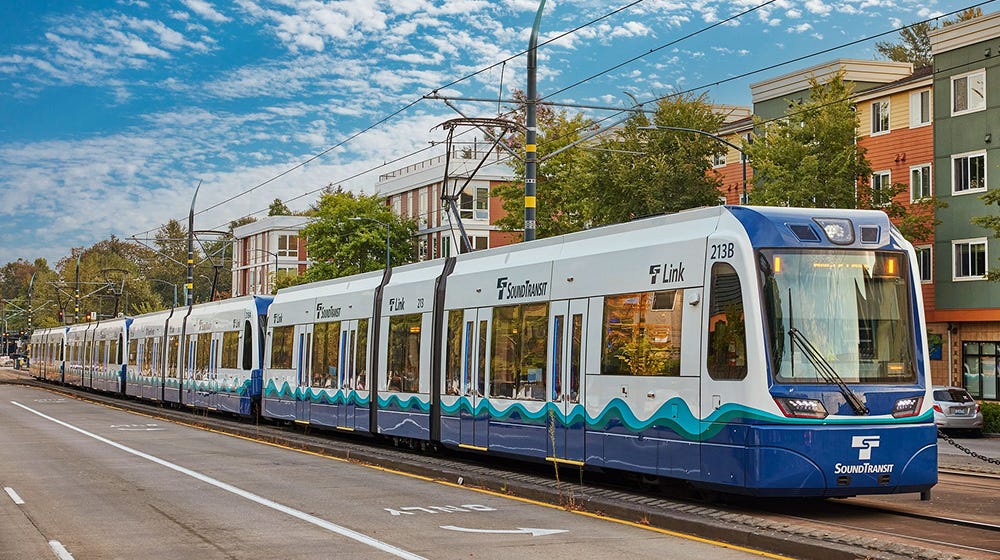
Seattle’s rapidly expanding rail network: Ridership on Seattle’s Link rail system is up 24% from 2019, making it the only rail system in the U.S. to be doing better than before Covid. The headline growth numbers bely the dramatic expansion of the rail network, however, whose financial challenges may be exacerbated by the Trump administration’s hostility to public transit.
Faster buses, faster shelter: Incoming Seattle Mayor Katie Wilson, a longtime transit advocate fresh off a nail-biter victory over incumbent Bruce Harrell, signs an executive order telling city staff to put in place dedicated bus lanes on Denny Way, a key east-west corridor where buses are often delayed due to traffic. Another executive order instructs staff to fast-track more shelter for the homeless, including by reducing regulatory barriers and using city-owned land. Like Zohran Mamdani, Wilson is a self-described democratic socialist who draws inspiration from the “Sewer Socialists” who ran Milwaukee during much of the first half of the 20th century and were known for implementing effective social services.
JetZero’s big raise: The aviation startup, which aims to develop all-wing aircraft that consumes 50% less fuel than current options, announces it has raised a total of more than $1 billion in funding, including a recent $175 million Series B round to accelerate development of its full-size Z4 all-wing airliner. It is aiming for a first flight in 2027.
What we’re reading
Dunkirk’s success with free buses: The French port city of 85,000 implemented free buses in 2018 and has seen ridership increase 165%. It also ensured 10-minute headways, a frequency unheard of in similarly-sized cities in the U.S. There are still good arguments against free buses, but if you want to go that route, follow Dunkirk’s model.
Waymo is way safer: In a recent column for Bloomberg, David Zipper wrote that “we still don’t know whether robotaxis are safer than human drivers.” In a rebuttal for the Argument, Kelsey Piper writes, “We absolutely do know that Waymos are safer than human drivers.”