Microtransit: From Hype to High-Impact


The Basics: What Is Microtransit?
Microtransit first emerged as a promising innovation to address first- and last-mile connectivity, reduce reliance on personal vehicles, and expand transit access in underserved areas. Early on, it generated excitement across a wide range of stakeholders — equity advocates, car-free urbanists, suburban commuters, and tech-forward cities alike.
As the industry has matured, both standout successes and notable missteps have helped refine our understanding of when, where, and how microtransit works best.
The Microtransit Lifecycle: Hype, Misses, Learnings, Successes
Similar to many emerging technologies, microtransit has followed a familiar lifecycle. This pattern mirrors the “Hype Cycle,” popularized by Gartner, which begins with an innovation trigger, moves through inflated expectations and a trough of disillusionment, and ultimately settles into a slope of enlightenment and a plateau of productivity.
In its early days, headlines promised an “Uber for buses” and a complete reimagining of public transit. Cities launched pilots, media attention surged, and expectations ran high. Over time, challenges emerged — not because the concept itself was flawed, but because some services were deployed without clear alignment to community needs or broader transit goals.
In some cases, microtransit stretched beyond its strengths. Efforts to replace longer-range fixed routes, serve overly large coverage areas, or scale too quickly without operational guardrails often resulted in high costs, reliability issues, or program pauses. These moments fueled a more nuanced industry conversation about what microtransit is and what it isn’t.
The dot-com era offers a useful parallel. At one point, investors rushed to buy anything with “dot-com” in the name. Then came the correction, the hard questions, and widespread skepticism. Out of that period, however, emerged companies like Amazon giving proof that the technology wasn’t the problem, but rather how it was applied.
A More Mature Phase
Today, microtransit has clearly entered a more mature phase. Agencies and providers are asking sharper questions: When does this work? For whom? How should it be designed? And at what cost? Instead of chasing novelty, cities are leaning into what’s working and applying lessons learned from earlier experiments.
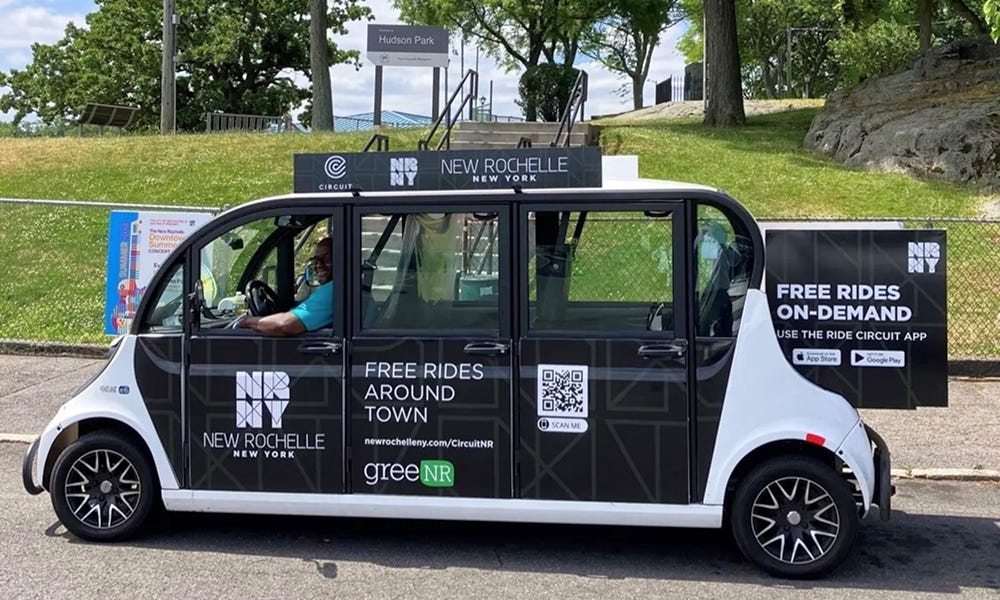
Recent programs illustrate this shift. In New Rochelle, New York, what began as a pilot in 2019 has evolved into a core part of the city’s transit network.
“By expanding this highly-popular service, we enable more New Rochelle residents to take advantage of a convenient, sustainable transportation option”
Noam Bramson, Executive Director, Sustainable Westchester; Former Mayor, New Rochelle
Like many early microtransit programs, ridership is anchored in everyday needs, with top destinations including grocery stores like ShopRite and Stop & Shop, along with the local train station. By continuously refining the service area based on real usage data, the program has moved beyond its initial trial phase to become a dependable part of daily life.
Similarly, in Los Alamitos, California, the launch of the Los Al Link service was met with strong adoption from the senior community, reinforcing how thoughtful service design can unlock demand.
As one local leader put it, “When innovation starts with community needs, the results speak for themselves.”
Where Microtransit Works Best
Experience across regions shows that microtransit performs best in clearly defined zones with strong operational controls and clear connections to existing transit. While often associated with on-demand service, microtransit frequently works well in combination with fixed routes, not in competition with them.
It is particularly effective for:
- First- and last-mile connections to transit hubs or remote parking
- Rural or low-density access
- Hyper-local gaps where traditional fixed routes are impractical or cost-prohibitive
The real value lies in how microtransit complements the broader network. When properly integrated, it can improve access, increase ridership, and help reduce per-passenger costs — all while supporting shared goals like lowering vehicle miles traveled (VMT).
For many agencies, ridership is more than a performance metric. It directly affects funding. Formula dollars are tied to how many people step onto a vehicle, and even modest increases in ridership can help unlock long-term sustainability. In that context, last-mile connections matter.
The Role of Cost Per Rider
As cities evaluate newer transit models, one metric carries significant weight: Cost Per Rider (CPR). At its simplest, CPR is the cost of operating a service divided by the number of riders moved. In practice, it reflects much more.
CPR captures whether a service is well designed, whether vehicles and technology are functioning efficiently, and, most importantly, whether riders are choosing to use it regularly. Without demand, even well-intentioned programs struggle to achieve strong cost performance.

Communities that have introduced flexible, on-demand services to better serve short trips and connect key destinations have seen meaningful improvements in both ridership and cost efficiency. In one coastal city, Hollywood, Florida, a microtransit program designed around real travel patterns and high-demand areas helped drive strong adoption while lowering cost per rider by more than 70 percent, ultimately bringing CPR far below typical industry averages.
While CPR is often a reliable barometer of success, context matters. A higher CPR in a low-density rural area, for example, may still be more cost-effective than building new fixed routes. The key is evaluating CPR alongside a program’s goals, service area, and alternatives — not in isolation.
Ultimately, rider experience remains one of the most telling indicators of success. Strong demand paired with reasonable costs signals that a service is meeting real needs and delivering value.
Success Factors in U.S. Microtransit Programs
Across the country, effective microtransit services tend to share a common set of characteristics:
- Clear connections to existing transit
- Pooled rides and electric vehicles to improve efficiency and reduce emissions
- Well-defined service zones that balance coverage and reliability
- Ongoing community engagement
- Strong day-to-day operations
In some cities, microtransit routes are designed to connect neighborhoods directly to bus or rail lines. In others, services focus on busy downtowns where parking is scarce and shared rides can reduce congestion.

Programs that succeed over time are the ones that continue to evolve. In Bellevue, Washington, an award-winning service called the BellHop has become a reliable connector for thousands of riders traveling between neighborhoods, light rail stations, downtown jobs, shops, and medical appointments. This kind of integration allows microtransit to function as a true extension of the larger transit network by improving access without displacing existing service.
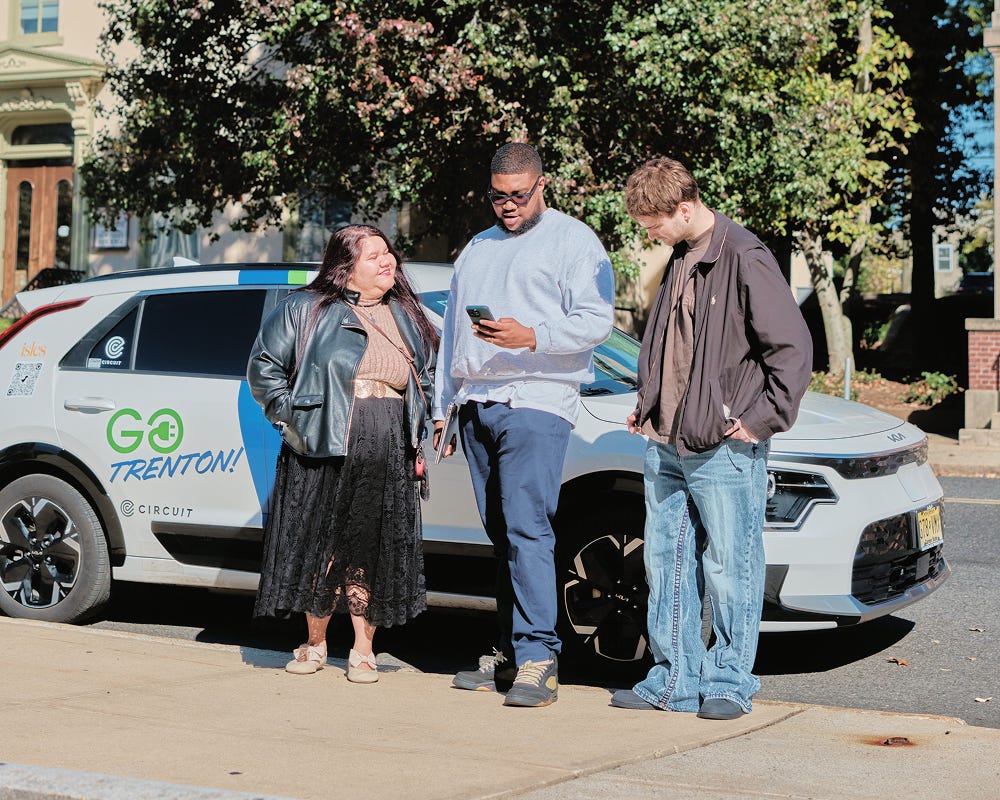
Other programs, such as citywide access services like GOTrenton! in New Jersey, demonstrate how ongoing adjustments can help microtransit better serve daily needs in urban environments.
Alongside service design, operations play an equally critical role. Even the best tools fall short if vehicles aren’t available, wait times grow, or riders aren’t aware the service exists. Dedicated vehicles, higher-capacity fleets, and creative funding models, including employer partnerships or advertising,can all strengthen long-term viability.
Flexibility is Key
One of the most consistent themes across successful microtransit programs is flexibility. Services that adapt to changing demand, rider feedback, and city priorities tend to perform better and grow more sustainably.
Common adjustments include:
- Introducing nominal fares to reduce cancellations
- Reallocating vehicles toward high-demand hubs
- Using electric and higher-capacity vehicles to control costs and emissions
- Adding fixed-route elements to serve major destinations more efficiently
- Adding Autonomous for fixed route services in controlled settings (e.g. Mizner Park in Boca Raton), and aligning those services with on-demand microtransit zones.
Regular performance reviews help agencies make targeted changes that keep programs aligned with community needs.
Looking Ahead
Microtransit will continue to evolve as cities rethink how people move. Deeper integration with bus and rail networks, seamless trip planning and payment, and hybrid service models are already taking shape. Experiments with autonomous vehicles are beginning to surface as well.
While technology will continue to advance, the foundation of successful microtransit remains the same: reliable service, responsive operations, and designs rooted in real community needs.
When deployed thoughtfully, microtransit can serve as the connective tissue of a multimodal transit system — improving coverage, enhancing rider experience, and expanding access. As congestion, parking constraints, and fuel costs continue to challenge commuters, demand for shared transportation options is only growing.
The post-hype phase may ultimately be the most impactful. Microtransit isn’t a silver bullet, but when applied in the right context, it is a powerful tool. With the benefit of hindsight, claims that “microtransit doesn’t work” are increasingly starting to sound a lot like “dot-coms are bad.”