Ride-hailing is never enough


Save the Date

CoMotion LA ‘26 is back November 18-19 for a very special 10th edition: Cities on the Move: Mega-events, AI & Shaping What’s Next — featuring the OMF Summit Track.
Explore how major global events and emerging technologies are accelerating mobility innovation. Be in the room with the right people. Get your ticket now to secure the best pricing before rates jump.
Join the likes of LA Metro, SCAG, Open Mobility Foundation, LADOT, Schneider Electric, Alstom, Serve Robotics, Los Angeles World Airports, HNTB, SenSen, Elavon, Zoox, WSP, PayByPhone, Red Hat, LA28, MOVE LA, City of Long Beach, City of West Hollywood, Federal Aviation Administration, Monocle, Tranzito, Cities Today, The Transportation Channel, and many others.
In 2026, robotaxis are an unavoidable reality. For years now Waymo has been operating in some of America’s largest cities and the evidence strongly suggests it is operating more safely than human drivers. And yet, the public — and many of its political leaders — still isn’t sold. Many of America’s biggest cities remain off-limits. If robotaxis prove far safer than human drivers, then cities are wrong to resist them. But they should also remember that there will always be somethings that robotaxis can’t do — like transporting 60,000 soccer fans in an hour.
What you need to know
Uber isn’t enough: Hundreds of fans waited up to three hours for Ubers after the Brazil-Morrocco match at MetLife Stadium in New Jersey as the vehicles got stuck in traffic and couldn’t reach the pick-up spots. Nevertheless, event organizers said their strategy to steer people onto public transit — including by deploying school buses to shuttle 16,000 fans away from the stadium –– was largely a success. Uber spokesman Josh Gold was proud to note that Uber transported 6,500 people from the game but reiterated that “public transit must be the backbone of World Cup transportation and people should rely on it.”
Mobileye joins robotaxi fray: Mobileye, the Israeli-based Intel subsidiary that makes autonomous vehicle technology, announces plans to begin operating its own robotaxis next year. The company hasn’t said which U.S. city it will initially target but has said it will begin with a fleet of 100 vehicles and hopes to eventually scale to 17,000.
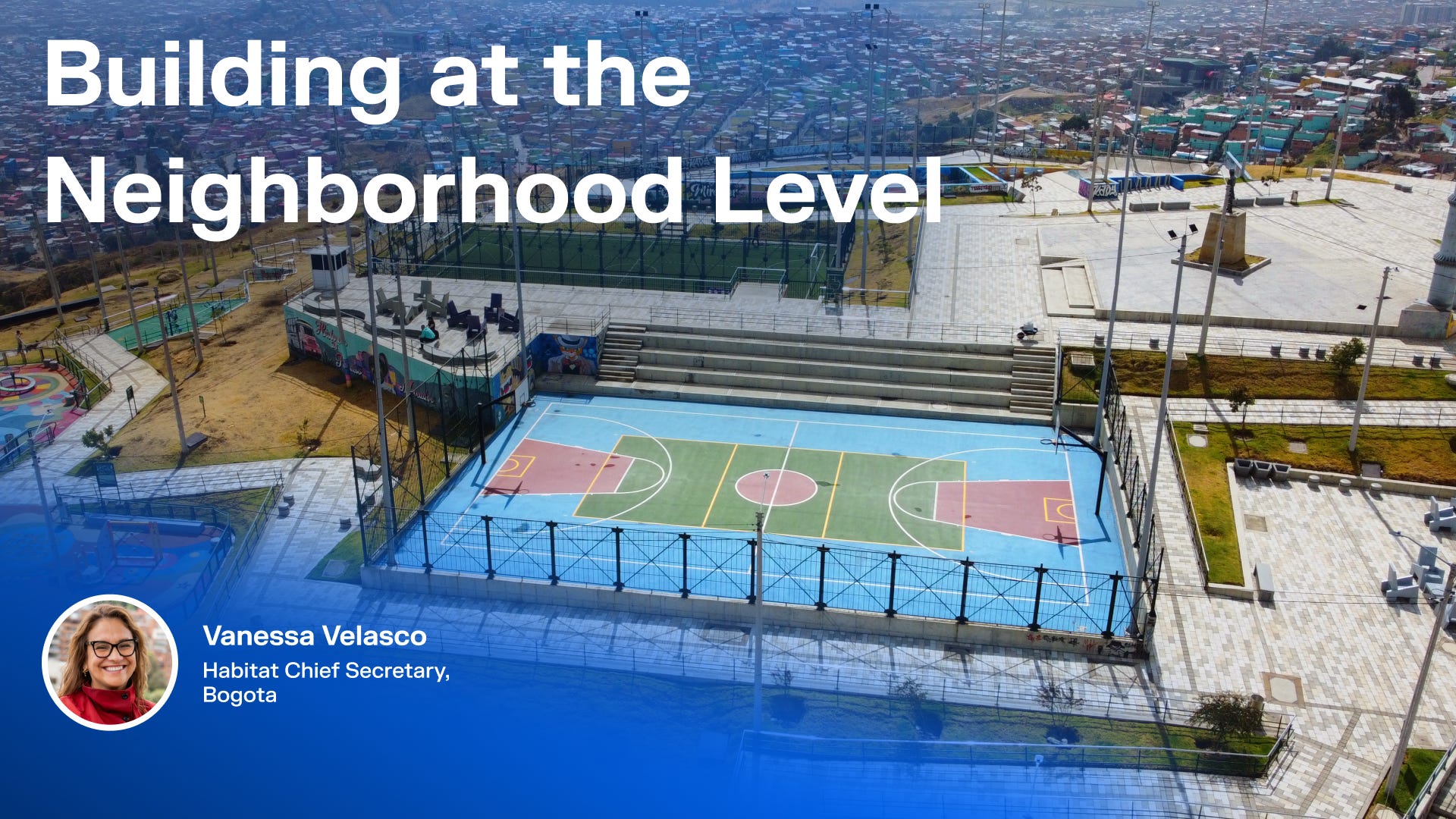
What if our urban planning started not with a metro stop or apartment, but with a neighborhood as the unit of analysis? On latest episode of Fast Forward, guest host and CoMotion Managing Director Tim Gribaudi sits down with Vanessa Velasco, Habitat Chief Secretary of Bogota, to talk about her efforts to address Bogota’s affordable housing through acquisition, home improvement, and rental housing programs. The ambitious plan aims to allocate 75,000 affordable housing subsidies and provide financing incentives to address Bogota’s housing deficit.
Robotaxi regs stall: Waymo has operated autonomous ride-hailing for two years now, but many states and cities in the U.S. are still resisting AVs. The most notable resistance has come in New York, where Mayor Zohran Mamdani has aligned strongly with taxi drivers in opposing autonomous competition. But New York is just one of 26 states that have not adopted laws to allow commercial ride-hailing. Beyond the public’s continued queasiness about safety, labor groups representing drivers have also pressured lawmakers to nix technology threatening their jobs. In Illinois and New York, Waymo has even proposed paying into a fund to support workers displaced by its technology.
Don’t count on a return to low gas prices: The pressure on drivers unleashed by the war on Iran has eased in the past couple weeks, with average gas prices in the U.S. dropping from about $4.50/gallon to $4. But experts say prices are unlikely to return to the pre-war levels below $3 anytime soon despite the announcement of a peace deal intended to re-open the Strait of Hormuz. Shipping companies say it will take weeks to return to pre-war commerce on the strait.
What we’re reading
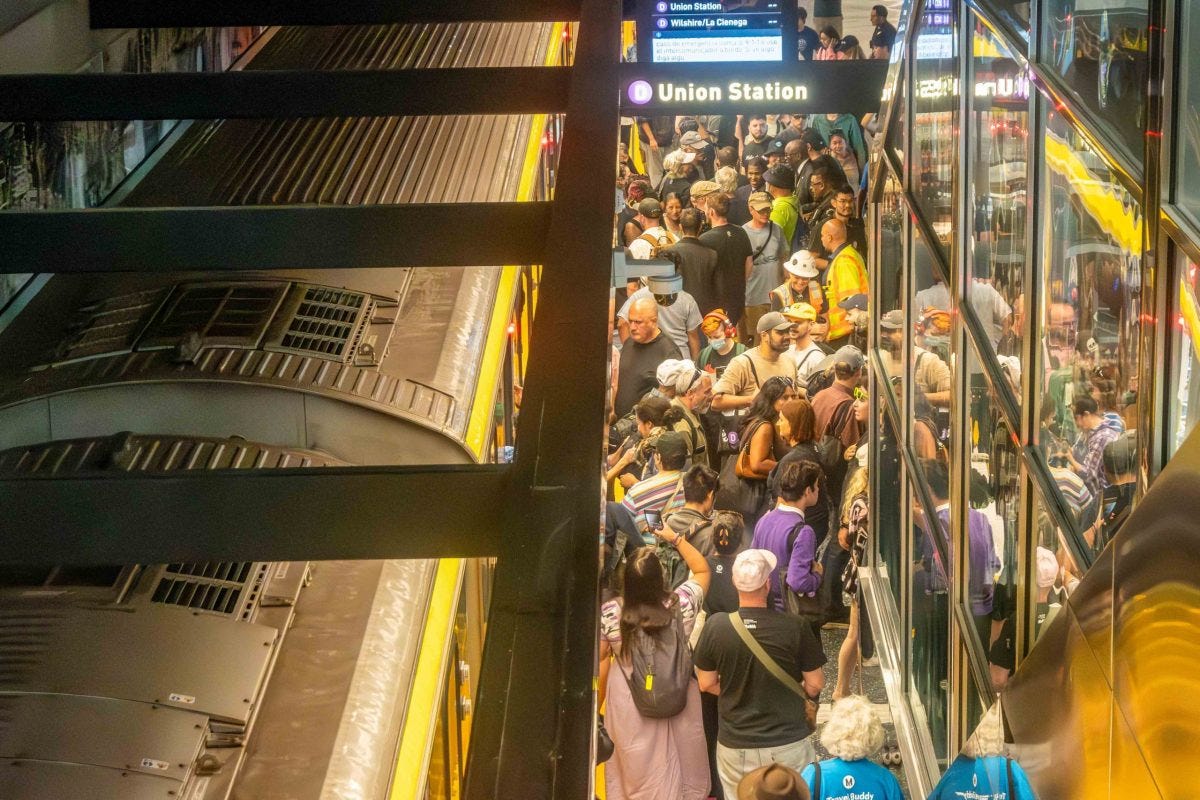
How to build a subway in under a half-century: In a guest column for the LA Times, Payton Rockwood, a grad student at Stanford Business School, celebrates the recent opening of LA Metro’s D Line but points out that the segment was initially funded by voters in 1980 and cost eight times per mile than a comparable project in Madrid. “California has let a patchwork of gatekeepers to make 46-year subways a predictable outcome,” he writes. It doesn’t have to be this way.