Robotaxis & public transit: allies or adversaries?


Save the Date

Join us for CoMotion LA ‘26 this November 18-19: Cities on the Move: Mega-events, AI & Shaping What’s Next — featuring the OMF Summit Track.
Elon Musk has long made clear his feelings about public transit: “It’s painful. It sucks,” he once said, describing his desire to replace it with options that don’t require sitting near a “bunch of strangers.” Fortunately, not everyone in the autonomous vehicle space is nearly as negative about transit. Waymo, for instance, is marketing itself as a critical link to existing transit operations, even offering discounts to San Francisco customers using its robotaxis to connect to a bus or train.
Meanwhile, American AV startup Tensor teams up with a Bulgarian taxi firm to launch robotaxis in Sofia, the latest instance of the Balkans leading the way on AVs. And Dubai angles to become an international testing ground for AVs with a massive new mobility lab for simulating hundreds of different traffic and weather scenarios.
What you need to know
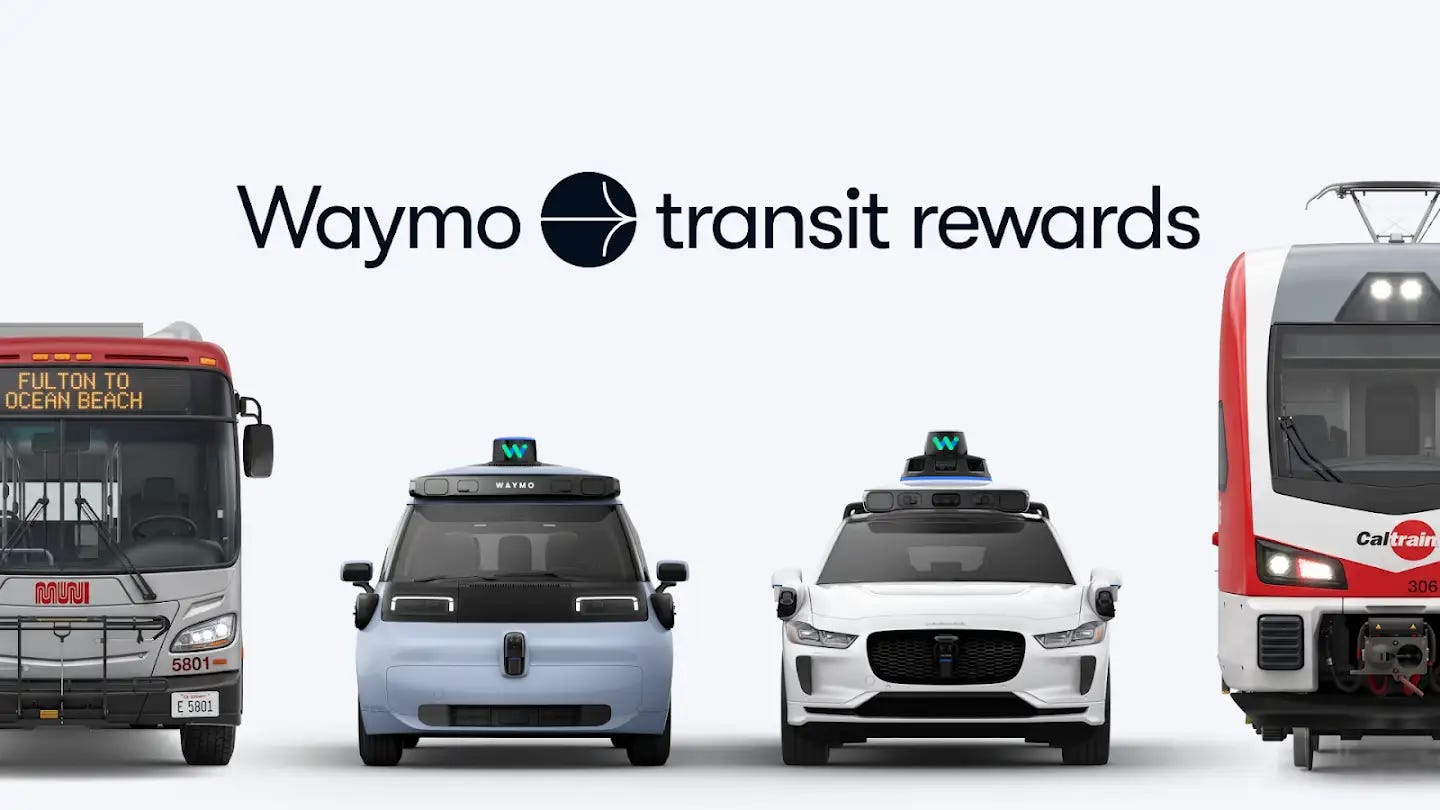
Waymo cozies up to transit in San Francisco: It’s become popular in some circles to claim that robotaxis will render public transit obsolete. But Waymo certainly isn’t acting like it. Alphabet’s autonomous ride-hailing subsidiary is now offering modest discounts to customers in the San Francisco Bay Area if they paid for a public transit trip on the same Visa card within two hours of hailing their ride. What Waymo is actually trying to replace here is not public transit, but private car trips to and from the train station. Help cannot come too soon for the Bay Area’s financially-strapped transit system.
…and dramatically scales up in Texas: In the car-centric Lone Star State, Waymo has increased the size of its fleet by half in just three weeks. It now counts over 1,100 vehicles operating in Austin, Dallas and Houston.
Dubai’s massive mobility lab: The wealthy emirate opens a major mobility lab for testing autonomous vehicle technology under hundreds of different traffic and weather scenarios. Dubai Mobility Labs should prove useful to AV developers that struggle to test out the many different real-world conditions before deploying their vehicles commercially in cities with different climates, laws, and traffic environments. A similar but distinct testing model is Toyota’s Woven City in Japan, which aims to be an actual community that functions as a testing ground for new mobility and renewable energy.
Less than 8 weeks to go!
CoMotion LA ‘26, featuring the OMF Summit Track, brings together the whole mobility ecosystem this November — public and private sector leaders, agencies, innovators, investors, and companies to reshape mobility across land, sea, and air.
Be in the room with mayors, innovative policymakers, technology founders, VC investors — from top companies and organizations from across North America and around the world.
Latest confirmed Speakers:
- Eric Garcetti, Ambassador, Global Climate Diplomacy, C40 Cities; Former Mayor of Los Angeles
- Lee White, Deputy Administrator, NHTSA
- Trevor Thomas, Senior Transportation Planner, City of Santa Monica
- Ben Kemp, Head of Event & Venue Operations, Uber
- Annabel Chang, Director of U.S. State & Local Policy and Public Policy Campaigns, Waymo
- Phil Pierce, City Policy Lead, Zoox
Make it three days with a Mobility Leader Pass and gain VIP access to CoMotion NXT in Long Beach, a new gathering for senior mobility leaders focused on high-level conversation, connection and exchange.
Another robotaxi incursion in the Balkans: Volt Premium Taxi, a Bulgarian cab service, is partnering with Silicon Valley AV developer Tensor to deploy 200 robotaxis in Sofia. This comes just days after a robotaxi collaboration in Zagreb, Croatia (between Uber, Pony.ai and local autonomous driving startup Verne) became the first in Europe to operate without safety drivers. The Volt/Tensor collab plans to eventually scale up to 2,000 robotaxis in the Bulgarian capital.
Hydrogen gets cheaper in Germany: German hydrogen infrastructure company H2 MOBILITY is cutting hydrogen prices by 12–16% at 15 additional German refueling stations, partially in response to revenues from Germany’s greenhouse-gas quota system.
What we’re reading
San Francisco faces the prospect of a transit death spiral: If voters don’t approve the proposed 0.5% sales tax to fund BART, the future of transit in San Francisco is looking very bleak. The picture the Guardian paints is similar to the situation Philadelphia faced on the brink of its own transit apocalypse (which has since been delayed, but not resolved).