Can a tax save San Francisco's transit system?


San Francisco Mayor Daniel Lurie did not campaign as a tax-and-spend progressive in the mold of New York’s Zohran Mamdani, but he is joining a coalition of business, labor and transit advocates in backing an unprecedented “parcel tax” to save the Bay Area’s transit system from devastating cuts. You can expect similar measures to pop up around the country as cities try to figure out how to address the big drop in fare revenue that has resulted from the post-pandemic shift to remote work.
Meanwhile, Uber unveils a new autonomous unit to serve robotaxi services, Archer Aviation partners with Starlink, the Brits are coming around to e-scooters, and a look at why America has fallen behind on EVs.
What you need to know
Uber’s new autonomous solutions unit: The ride-hail giant says its new division, Uber Autonomous Solutions, will be a “comprehensive suite of unique services and capabilities” to support existing and future robotaxi services. As Kirsten Korosec of Tech Crunch puts it, the company wants to be the “Swiss Army Knife” for robotaxis, offering software, data, fleet financing and other tools to the many AV startups it has formed partnerships with in the past few years. Rather than develop AVs itself, Uber is preparing for a world where multiple companies operate autonomous vehicles on the Uber app.
A tax for transit in San Francisco: San Francisco Mayor Daniel Lurie is pushing to put a “parcel tax” on the ballot to raise $150-200 million a year for BART, the Bay Area’s financially strapped transit agency. The tax would apply to all property and be based on square footage. A single-family homeowner with a home under 3,000 square feet would pay $129 per year. Lurie’s support is notable; he is a political moderate who opposes another proposed “billionaire tax” that some worry will drive wealth out of California. As transit agencies around the country cope with enduring post-Covid ridership drops, they will be forced to look for new revenue sources. The only other option is cutting service.
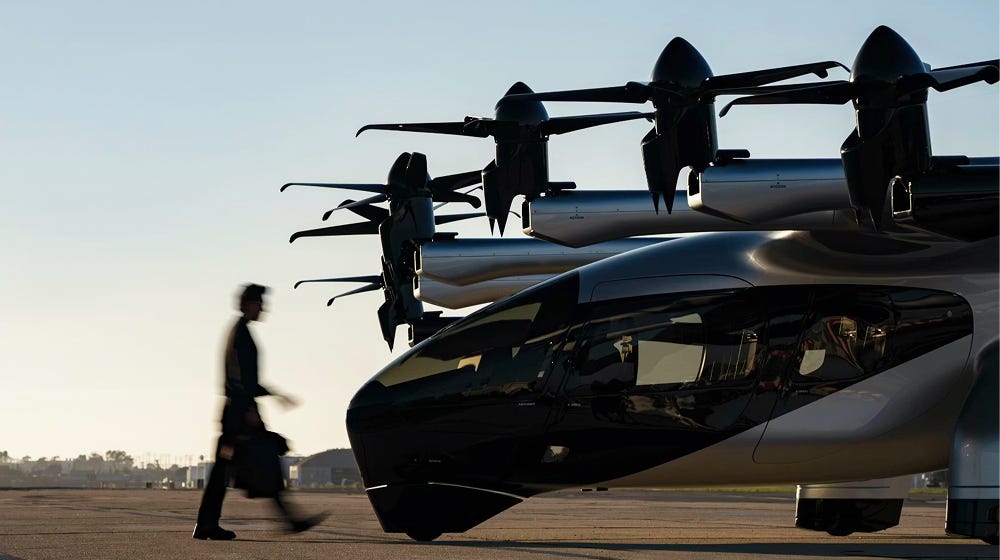
Archer looks to Starlink for autonomy: Archer Aviation becomes the first air taxi developer to integrate Starlink satellite internet into an aircraft. Reliable internet – hopefully more reliable than what is currently offered in commercial air travel – will be a must for air taxi passengers. The announced partnership also said the two companies will collaborate on a “connectivity solution that can help power Archer’s future development of autonomous aircraft.”
Hyundai taps out of eVTOLs: The automaker’s eVTOL subsidiary, Supernal, lays off the great majority of its staff, conceding that it is not close to developing an air taxi to bring to market.
Scooters a hit in London: Transport for London reports that its one-year e-scooter trial has been a success. Demand for scooters rose 50% year-over-year, from 1.3 million to roughly 2 million. The scooters, provided by Lime and Voi, were available for pickup or drop off in 1,600 parking bays across the 11 participating boroughs. There were relatively few parking violations and injuries. The UK has been far more resistant to scooters than most other western countries, but it is now embracing a highly-regulated model – with a limited number of vendors and strict parking requirements – that many scooter companies actually welcome.
The effect of one bike lane: A protected bike lane on 30th Street in San Diego leads cycling trips on that street to jump from 50,000 to 115,000 in one year. So cheap, so simple, so effective!

CoMotion MIAMI ‘26 isn’t just an event, it’s where investors, public agencies and industry partners align on funding, pilots, deployments, and policy. Don’t miss out on the 7th, and most impactful edition yet: Urban Mobility in the Age of AI, on April 28–29.
🚨 Register now and save 50% on your pass. Prices jump on Monday at midnight!
What we’re reading
How Detroit screwed up on EVs: Michael Dunne, an autonomous and electric vehicle industry analyst, runs through the many blunders Detroit automakers made on EVs. Not only did they initially resist the technology, but they significantly underestimated the challenge of transitioning. As a result, America is falling behind the rest of the world, and the industrial consequences extend well beyond cars.