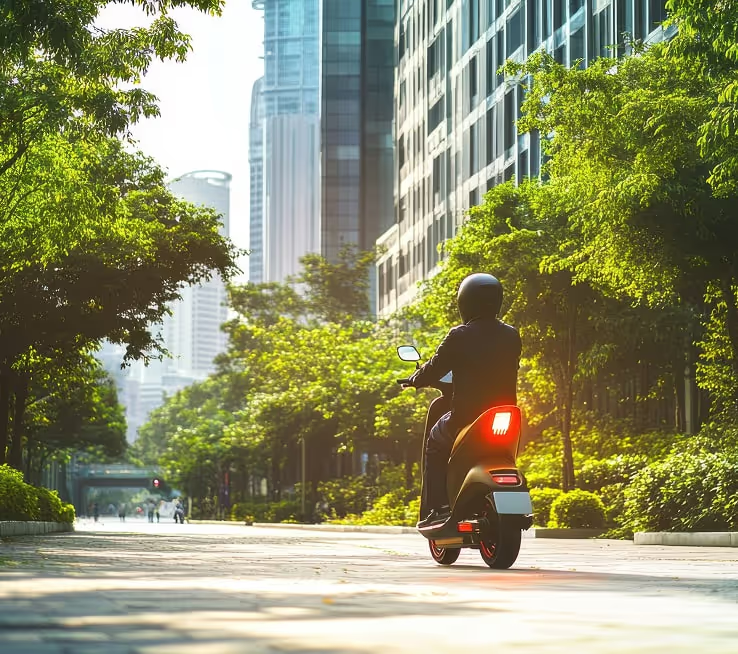
Can scooter economics work?


The world of micromobility has come a long way since the Wild West days of the late 2010s. Many of that era’s original startups vanished, but one of its standouts, Lime, is planning to go public later this year. The question is whether investors believe there is a bright future for scooter-sharing.
Meanwhile, Bot Auto takes credit for America’s first human-free big rig delivery, Porsche gives up on e-bikes and Avride is under investigation for 16 robotaxi crashes. Finally, we’ve got two more exhibits of things the West can learn from China: a super-cheap subcompact EV available for $58/month and walkable neighborhoods built on top of metro depots.
What you need to know
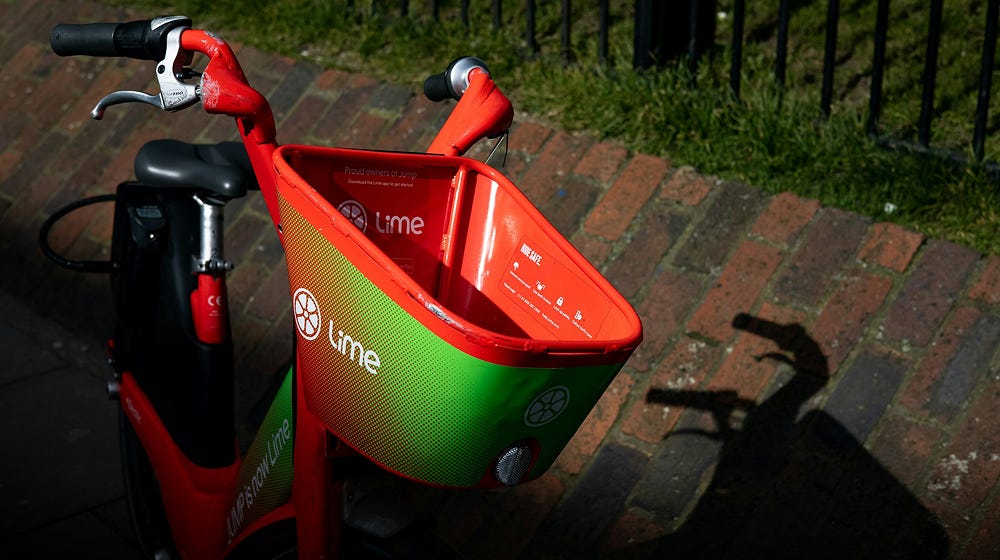
Lime files for IPO: Nine years after its founding, the scooter and e-bike operator aims for a NASDAQ listing to raise hundreds of millions of dollars to help pay down roughly $1 billion of debt, in the absence of which the company says it may be insolvent. It’s not the most inspiring pitch to investors, but the company’s fundamentals do appear to be improving: Lime only lost $59 million last year and $34 million in 2024, down from $122 million in 2023. That one of its biggest backers is Uber might also be a feather in its cap. Micromobility operators that remain have shifted away from the free-for-all approach of the early days in favor of operating in cities that strictly regulate the number of possible entrants.
The first truly driverless big rig haul: While at least four companies have been operating driverless freight trucks in Texas, Bot Auto is the first to complete a delivery with no human on board, a U.S. milestone. The Bot big rig left Houston in the middle of the night and traveled 230 miles to Dallas.
An EV deal you can’t refuse: Chinese automaker Leapmotor is now offering its subcompact EV for lease in Germany for only €49 a month. That’s half the price of the next-cheapest EV lease in the German market (Fiat e500). The low price is made possible in part by Germany’s €3 billion EV subsidy program but also reflects the much lower production costs achieved by Chinese OEMs. Whether LeapMotor, backed by international conglomerate Stellantis (owner of Chrysler and Fiat), can actually profit at such low prices is unclear. The E.U. has been in talks with China to set a minimum price for Chinese vehicles entering the E.U. market. It’s not clear whether that will apply to leases as well.
Feds probe Avride crashes: Avride, the self-driving startup that has partnered with Uber to offer autonomous rides in Dallas, is under investigation by the National Highway Traffic Safety Administration for 16 crashes involving “the competence” of its autonomous driving system.
Porsche ditches e-bikes, batteries: The German automaker, reeling from declining sales, abandons some of its newer ventures, such as a subsidiary that made e-bike drive systems and one that was developing EV batteries.
What we’re reading
China shows what to do with train depots: Planetizen offers an interesting look at how China builds transit-oriented housing developments right on top of metro depots. It’s a model that western transit agencies should consider replicating. In most cases depots are large swathes of land that is fenced in and doesn’t accumulate any value despite being right on a train line. In fact, it’s a major opportunity for new housing and commerce!