Don't forget about Earth travel


Save the Date

CoMotion LA ‘26 is back November 18-19 for a very special 10th edition: Cities on the Move: Mega-events, AI & Shaping What’s Next — featuring the OMF Summit Track.
Explore how major global events and emerging technologies are accelerating mobility innovation. Be in the room with the right people. Get your ticket now to secure the best pricing before rates jump.
Join the likes of LA Metro, SCAG, Open Mobility Foundation, LADOT, Schneider Electric, Alstom, Serve Robotics, Los Angeles World Airports, HNTB, SenSen, Elavon, Zoox, WSP, PayByPhone, Red Hat, LA28, MOVE LA, City of Long Beach, City of West Hollywood, Federal Aviation Administration, Monocle, Tranzito, Cities Today, The Transportation Channel, and many others.
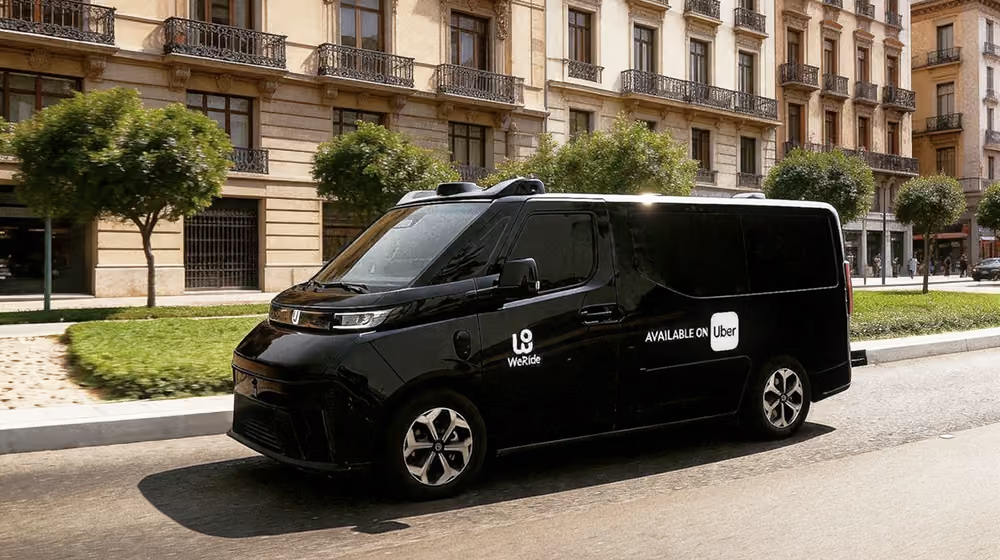
If the SpaceX IPO didn’t make it clear, a lot of people have high hopes about the future of space travel. But in the meantime, we’ve still got things to figure out on Earth. Like where should robotaxis park? Or what taxes should Uber pay? Or why aren’t there high-speed trains running on America’s high speed tracks? And why is seemingly every automaker getting into the utility business?
What you need to know

GM gets into battery storage: Following the lead of Tesla and Ford, General Motors is pulling betting big on battery storage for America’s increasingly strained electric grid. GM will manufacture grid-scale sodium ion batteries in Michigan for use by Peak Energy, a California-based startup that has developed a passively-cooled battery storage system that it says reduces energy costs by 20% compared to conventional systems. TechCrunch’s Tim De Chant points out why automakers are setting their sights on storage: “While EV sales have stagnated in the United States, sales of large, stationary batteries have doubled in the past two years. And they show no signs of stopping.”
Big bucks for humanoids: German startup Neura Robotics raises $1.4 billion in a Series C round backed by Nvidia, Amazon and other tech companies. That is but a sliver of the $55 billion that has been raised for robotics startups so far in 2026 as investors bet on AI transforming manual labor as well as intellectual labor. The fixation on developing human-looking robots, however, has plenty of skeptics.
Higher taxes for UK ride-hail: A UK court rules against Estonian ride-hail company Bolt, finding that the company must apply the UK’s 20% value-added tax to the entire fare, not just the profit margin. The ruling, which cost Bolt $255 million, has implications for Uber, which has similarly been in litigation over $1.3 billion of taxes.
…but no new taxes in Philly: Generating revenue from ride-hail operations has become a political football in cities around the world, most recently in Philadelphia, where the City Council recently rejected a proposal by Mayor Cherelle Parker to impose a new tax on rides to address a school funding shortfall.
Where do Waymos park? In San Francisco, residents of a condo tower are complaining about sharing their parking garage with a fleet of Waymos, some of which have apparently not yet mastered the nuances of garage etiquette. Where robotaxis should go when they’re not collecting fares is one of the great unanswered questions of the dawning robotaxi era. Hopefully dealing with robots that are able to ruthlessly exploit the subtle parking subsidies programmed into our infrastructure will prompt local governments to recognize the tremendous value of the public right-of-way — and to charge accordingly!
Partner content
Don’t get left behind as the renewable fuels economy takes off!
This year’s Monaco Hydrogen Forum moves beyond ambition — focusing on execution, industrial scale, and bankability. We’ll explore the full spectrum of clean hydrogen and its derivatives: ammonia, methanol, SAF, e-fuels, and beyond.
📌 November 30 – December 1, 2026
📍 Hotel Hermitage, Monte-Carlo
Wherever you fit in the energy value chain, as a developer, producer, investor, or end user, this is not an event you’ll want to miss!
What we’re reading
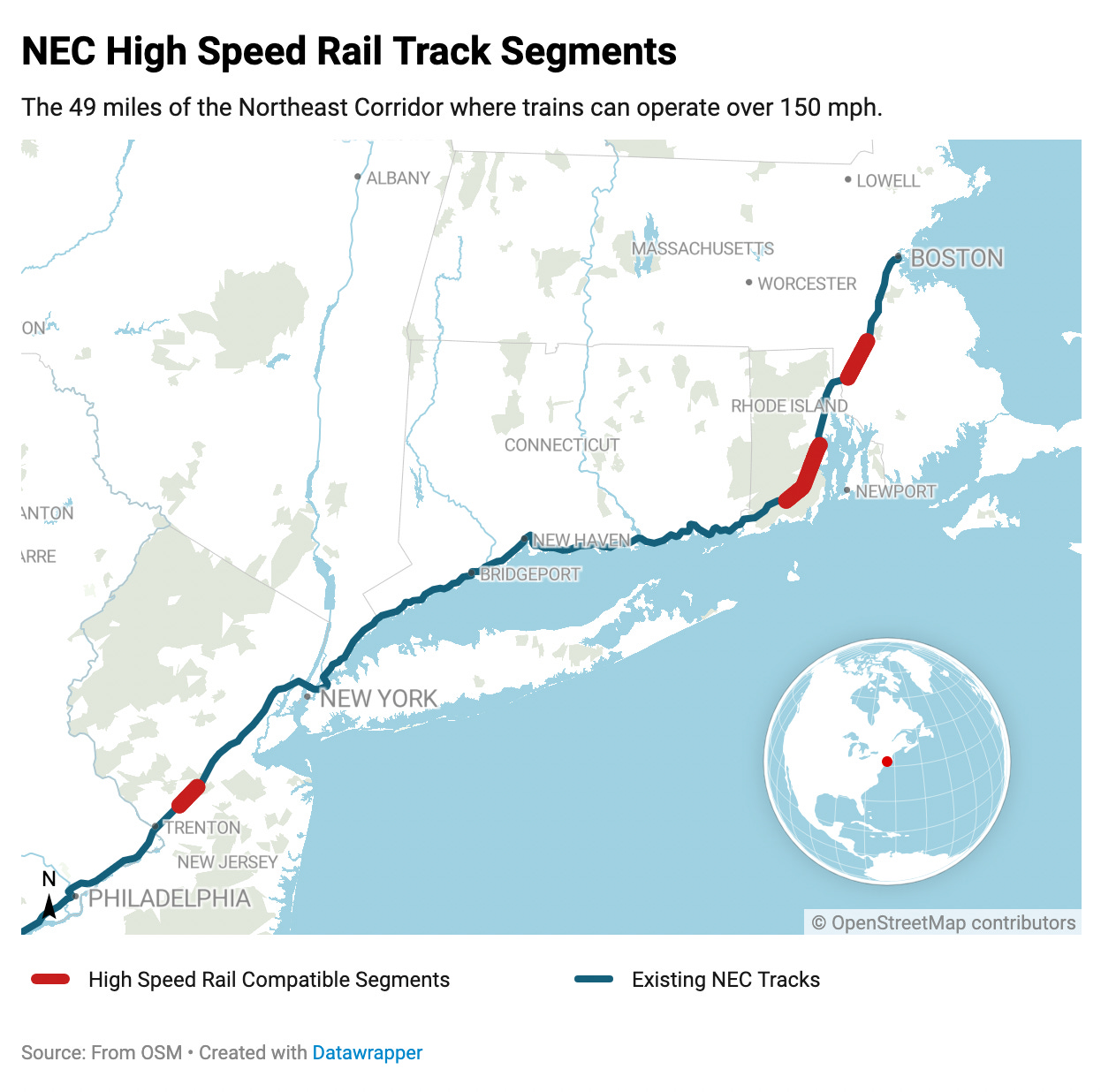
Anatomy of a slow train: Transit wonk Hayden Clarkin looks at why the most popular commuter rail line in the Boston region is so much slower than it should be. Despite the trains running largely on track designed for high speeds, myriad petty obstacles make the service embarrassingly slow. For instance, the platforms are too low and the doors are too narrow; it takes people longer to get on and off.

The planning before a massive sporting event: Reed Alvarado, Vice President of Major Event Development and Infrastructure Advisory for WSP, the global engineering firm, writes about the extensive planning and coordination with transit agencies, utility providers and other government entities that needs to happen before a major event like the World Cup.