What do the primaries mean for urban mobility?


Save the Date

CoMotion LA ‘26 is back November 18-19 for a very special 10th edition: Cities on the Move: Mega-events, AI & Shaping What’s Next — featuring the OMF Summit Track.
Explore how major global events and emerging technologies are accelerating mobility innovation. Be in the room with the right people. Register now and save 50%.
Today we’re taking a look at the elections in California. As the world’s fifth largest economy and capital of the global tech industry, governance in the Golden State is of particular interest to those interested in future mobility. Despite its immense wealth, California has serious problems. Its struggles to build new housing and new transportation systems have made it a poster child for the “Abundance” critique of blue state government.
What you need to know
What will Becera do about the train? There are a number of narratives emerging from the results of the primaries in California and Los Angeles but here at CoMotion we’re focused on the implications for mobility and urbanism. Xavier Becerra, who as the Democratic nominee is now the heavy favorite to be the state’s next governor, has said he wants to “scrap the entire configuration” of the notoriously over budget high-speed rail project to connect Los Angeles and San Francisco but has also promised to “make sure we finish it.” Make of that what you will!
Will Mr. YIMBY replace Pelosi? Scott Wiener, something of an icon for the national pro-housing YIMBY movement, came in first place in the race to replace former House Speaker Nancy Pelosi, who is retiring after 40 years in office. Wiener authored a bill signed into law by Gov. Gavin Newsom to make it easier to build housing in the state, particularly near public transit. But his strong 41% finish on Tuesday is no guarantee he will triumph in November over fellow Democrat Connie Chan, who is backed by the former speaker and as a member of the San Francisco Board of Supervisors has opposed reforms to enable denser forms of housing in single-family neighborhoods.
Make LA Deco again? It’s still too early to say much about the Los Angeles mayoral election, except that a lot of voters are likely unhappy with all of the possible outcomes. With votes still being counted, the only thing clear is that incumbent Mayor Karen Bass will advance to the next round, but it’s not yet clear who will snag second place: Trumpy reality TV personality Spencer Pratt or leftist City Councilmember Nithya Raman. Pratt, who blames Bass for the city’s response to the wildfires that burned down his own home, has become a symbol of frustration with the city’s political establishment, particularly its failure to deal with visible homelessness and urban disorder. Pratt, who like Bass opposed the statewide zoning law that required cities to allow denser housing, said the law produced “prison-like structures” and that under his leadership LA will once again embrace beauty in architecture: “We need to bring Art Deco back,” he said.
Where the Smart Money is Moving with Reilly Brennan
When it comes to mobility, does money even matter anymore? As the frothy days of SPACs and buzzy consumer mobility tech recede, that’s a question on the minds of investors big and small these days. In the latest episode of Fast Forward, host Nick Perloff-Giles chats with Trucks VC founder Reilly Brennan to tackle this issue.

The CoMotion MIAMI ‘26 Impact Report is here!
Explore all the pressing themes and insights from our seventh edition, Urban Mobility in the Age of AI, and take a closer look at:
️⚽️ Moving Millions, exploring critical flexible mobility strategies for host cities preparing for mega-events.
🚆 Open-loop fare payments may be one of transit’s best near-term fixes - planned around how people actually ride.
🚦 How to Manage the Modern Curb, a crowded, high-stakes zone where parking, deliveries, ride-hailing, bikes, dining, and new mobility all compete.
🤖 Strategies for scaling robotaxis, drone delivery, and public AV transit from pilots to everyday service.
🚁 Wing and Walmart’s first public demo in Southern Florida of their game changing drone delivery platform.
🇪🇸 ICEX Spain Trade and Investment delegation featuring the brightest Spanish leaders advancing new mobility solutions and smart infrastructure at scale with the Municipal Transport Company of Madrid (EMT Madrid), NaviLens, Interlight, IDOM and SICE.
🏆 The 2026 Miami-Dade County DTPW's Mobility Champion Awards.
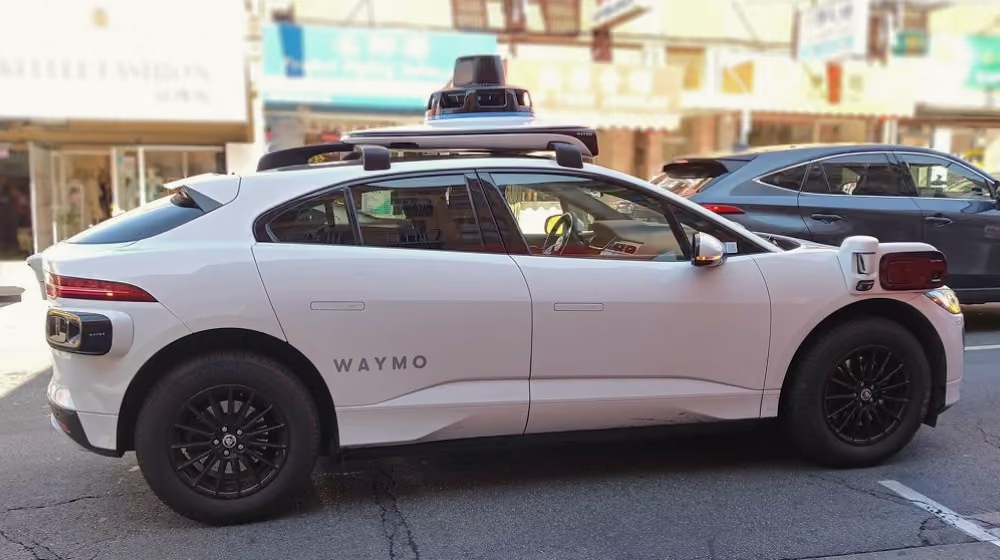
Waymo empty: An analysis of the 86 million miles driven by Waymo in its first 1,000 days of commercial operation in California finds that only 54% of the miles were traveled with a passenger on board. Figuring out “deadheading” will be one of the keys to the robotaxi economy.
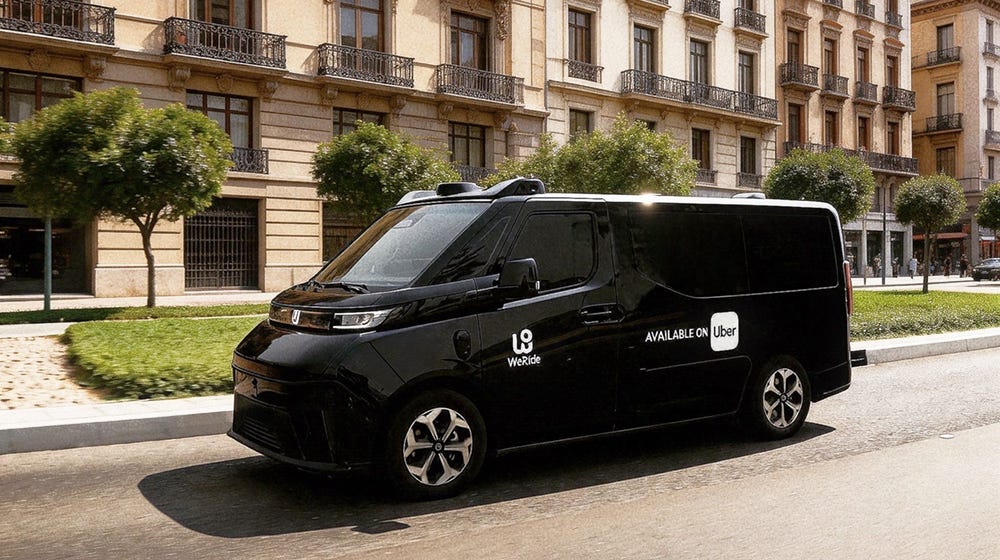
Robotaxis in Madrid: Chinese AV developer WeRide teams up with Uber to launch robotaxis in Madrid later this year. The rollout is backed by the Madrid regional government and rides will initially have a human safety operator on board. Madrid will be WeRide’s 12th market; so far most of its activity has been in Asia and the Middle East.
What we’re reading
Why the Strait of Hormuz matters less everyday: In a column for the New York Times, former Obama trade official Christopher Smart says the world is adjusting to a new reality where the Strait of Hormuz cannot be counted on for energy.