Japan enters the robotaxi era


If there’s one thing to say about Japan, it’s that it does things its own way. Despite its technological prowess, it still loves fax machines. So it’s big news that Japan is opening up to autonomous vehicles. Nuro begins testing its self-driving tech on the streets of Tokyo and, perhaps more importantly, UK autonomous tech startup Wayve announces plans to partner with Nissan and Uber to launch a full-fledged commercial robotaxi service in Japan later this year.
Meanwhile, Nvidia, the chip behemoth powering AI, believes it has the tech (and the capital) to become a dominant AV player and Amazon-backed Zoox announces plans to make its driverless shuttles available on the Uber app in Vegas. And who knows? Maybe someone we’ve never heard of will come out of nowhere and beat them all.
What you need to know
Japan enters the robotaxi age: Wayve, Uber and Nissan announce plans to launch commercial robotaxi services in Tokyo in late 2026. Wayve, the UK startup that recently raised $1.2 billion in a funding round, will equip Nissan Leafs with its AI-powered autonomous software. Passengers will be able to hail the driverless cabs through the Uber app.
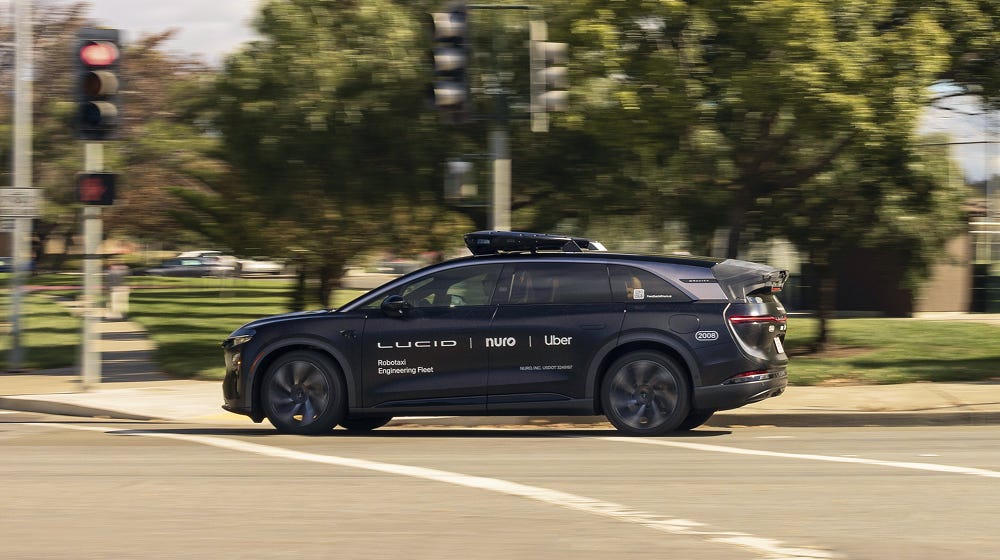
Nuro drives into Tokyo: The autonomous tech startup backed by Nvidia, Uber and SoftBank begins to test Toyota Priuses equipped with its software on the streets of the Japanese capital. The Tokyo tests, said the company, are the “beginning of the compounding benefits of global deployment.” Let’s hope they drive better than they write.
What's Next in Urbanizing China with Lola Woetzel
What’s Next in Urbanizing China with Lola Woetzel: On the latest episode of CoMotion’s Fast Forward podcast, host Nick Perloff-Giles sits down with Lola Woetzel, former head of the McKinsey Global Institute and founding partner at Global6, a leading global advisory firm, to discuss the rapid urbanization in China over the last 20 years and what it portends for the Gulf and beyond.

inDrive’s grocery gambit: inDrive, the Silicon Valley-based company that operates a major ride-hail service across countries in Asia, Africa and Latin America, purchases Pakistani quick commerce startup Krave Mart. inDrive is the most popular ride-hail service in Pakistan; it is a natural candidate to control the blossoming food delivery sector as well.
Zoox hails Uber: Amazon’s AV unit announces a “multi-year strategic partnership” to make its bubbly driverless shuttles available on the Uber app in Las Vegas, assuming federal regulators sign off first. The National Highway Traffic Safety Administration opened a 30-day public comment period this week on Zoox’s exemption applications, which include, wonderfully, a request to skip windshield wipers. It’s Zoox’s first third-party platform deal. For Uber, it’s partnership number 26 or so.
Don’t count out Nvidia: The company powering the AI revolution has serious automotive ambitions. Nvidia automotive chief Xinzhou Wu says the company’s self-driving technology will prove superior to Tesla’s cameras-only approach and that the price of Lidar sensors will eventually fall.
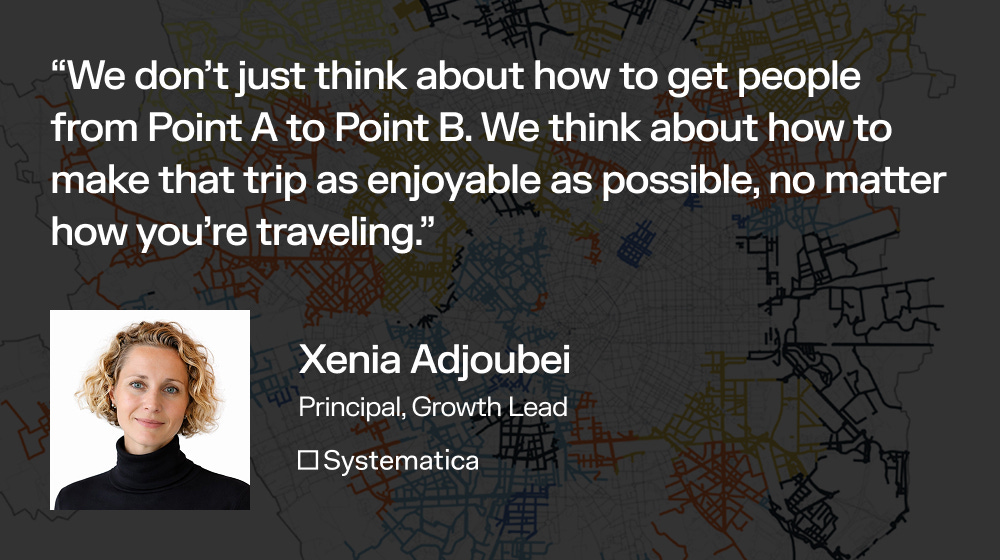
Planning for pleasure: A CoMotion interview with two leaders from Systematica, an international mobility consultancy that champions “user experience” in transportation design. In other words, they believe that speed and safety should not be the only metrics by which infrastructure should be measured. It’s time that we take pleasure and joy into account.
A new leader for the Transportation Channel: The Transportation Channel, a recently-founded media network for all things mobility, names its first president. Selika Josiah Talbott, founder of Autonomous Vehicle Consulting, takes the reins as the channel seeks to expand its global media footprint.
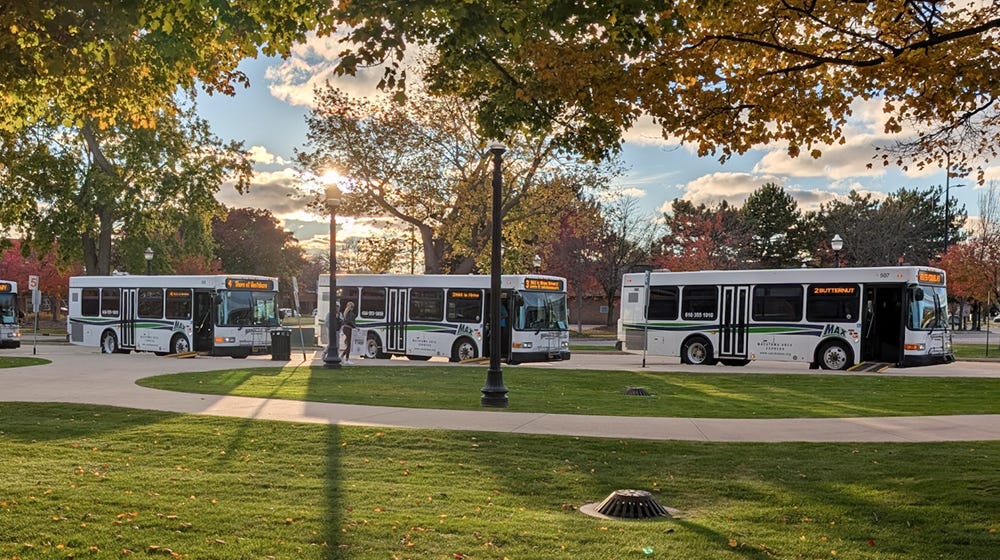
The beauty of the bendy bus: Joshua Woods, a Chicago transit planner, writes an ode to the oft-underappreciated articulated bus. They’re not are the right tool for a specific, well-earned situation: when ridership demand has genuinely exceeded what a standard 40-foot bus can handle and adding more frequency isn’t feasible.
America’s rail regression: The U.S. once had a claim to many of the world’s best urban rail systems. In the past 35 years, America’s rail systems have stagnated as those in other countries have grown. Yoni Freemark describes how America – at every level of government – can get back on track.