Lyft and Tesla’s conflicting visions


Save the Date

CoMotion LA ‘26 is back November 18-19 for a very special 10th edition: Cities on the Move: Mega-events, AI & Shaping What’s Next — featuring the OMF Summit Track.
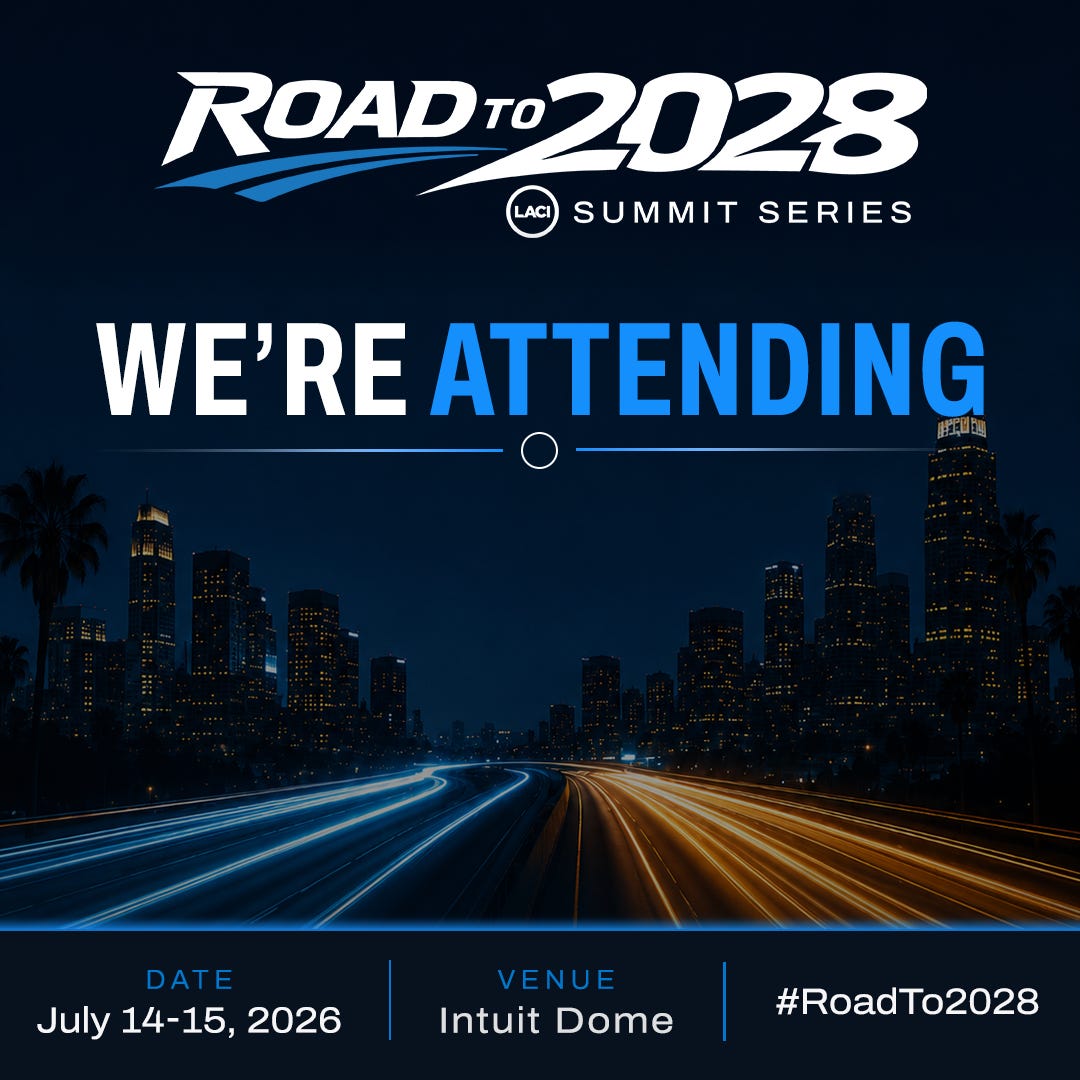
Join LACI at the Road to 2028 Summit!
Wondering what kind of legacy the 2028 Games can leave for all of Los Angeles? LACI’s Road to 2028 is working with leaders from all sectors to accelerate equitable climate action, ensure cleaner air, and increase economic investment by 2028 and beyond.
CoMotion is excited to co-host the Road to 2028 Summit on July 14 and 15--exactly two years to the day before the opening ceremony of the 2028 Games--and urge you to register to attend the Road to 2028 Summit. Let’s all work together to advance cleaner air and healthier communities in LA and beyond.
Co-Chaired by NBA All-Star and entrepreneur Russell Westbrook, the Road to 2028 Summit will convene policymakers, industry leaders, startup entrepreneurs, investors, Team USA athletes, and advocates from the entertainment industry for thought-provoking conversations as LACI works to accelerate investment, innovation, and action ahead of the 2028 Games.
The first 50 CoMotion subscribers who register using the code COMOTION28 will receive 20% off their tickets!
There’s always going to be some tension between safety, affordability and speed. For instance, Lyft won’t allow autonomous vehicles on its platform that rely only on cameras (read: Tesla), perhaps a prudent move given that Tesla itself isn’t confident enough in its technology to deploy its robotaxis more widely. On the other hand, new research indicates that some of the safety measures that drive up costs for American rail projects apparently don’t make anybody any safer. Kansas City, fresh off ending its experiment with free buses, is now equipping buses with facial recognition cameras in hopes of deterring problem passengers. Finally, the U.S. government seemingly can’t make up its mind about whether Chinese-owned EVs present a national security threat.
What you need to know

Lyft rebukes Tesla’s camera-only approach: In a column for Fortune, Lyft CEO David Risher says the company has decided that autonomous vehicles operating on its platform must have a “multi-sensor approach” that includes cameras, radar and LiDAR. This suggests that every robotaxi provider in the U.S. would qualify except Tesla, which is still pursuing a far cheaper camera-only approach to autonomous driving. Risher suggests there could be a future where a vision-only system is safe enough, but currently he believes the redundancy of the additional sensors is critical for safety.
Polestar is banned, but Volvo is OK? The Trump administration bars Polestar, the Swedish brand owned by Chinese automaker Geely, from selling its new EVs in the U.S. under the Connected Vehicle Rule, a 2025 rule that prohibits certain connected vehicle hardware linked to Russia or China. This wouldn’t necessarily be surprising if the same officials hadn’t just last month authorized Volvo, also owned by Geely, to sell EVs in the U.S.
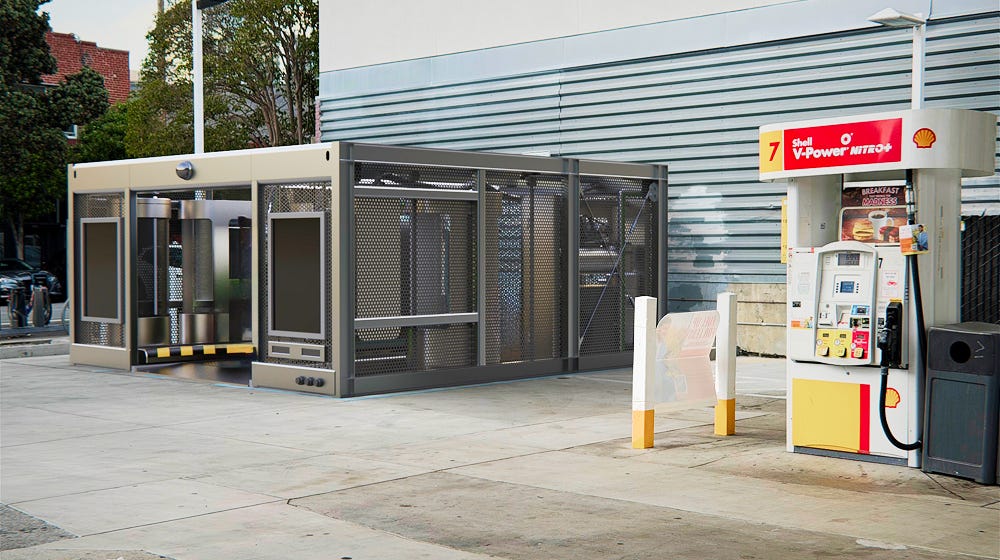
A startup wants to kill deadhead: Aseon Labs, a Redwood, Calif-based startup, is developing autonomous pods to serve as charging, cleaning and inspection sites for robotaxi fleets. The idea is to reduce the amount of miles robotaxis travel to centralized depots to be serviced. This “deadhead” time is viewed as one of the major obstacles to profitability for autonomous ride-hailing. In theory, pods that are dispersed throughout cities and can do much of the work that is now being done by human workers could reduce deadhead time and labor costs.
Join the Leaders Redefining Urban Mobility
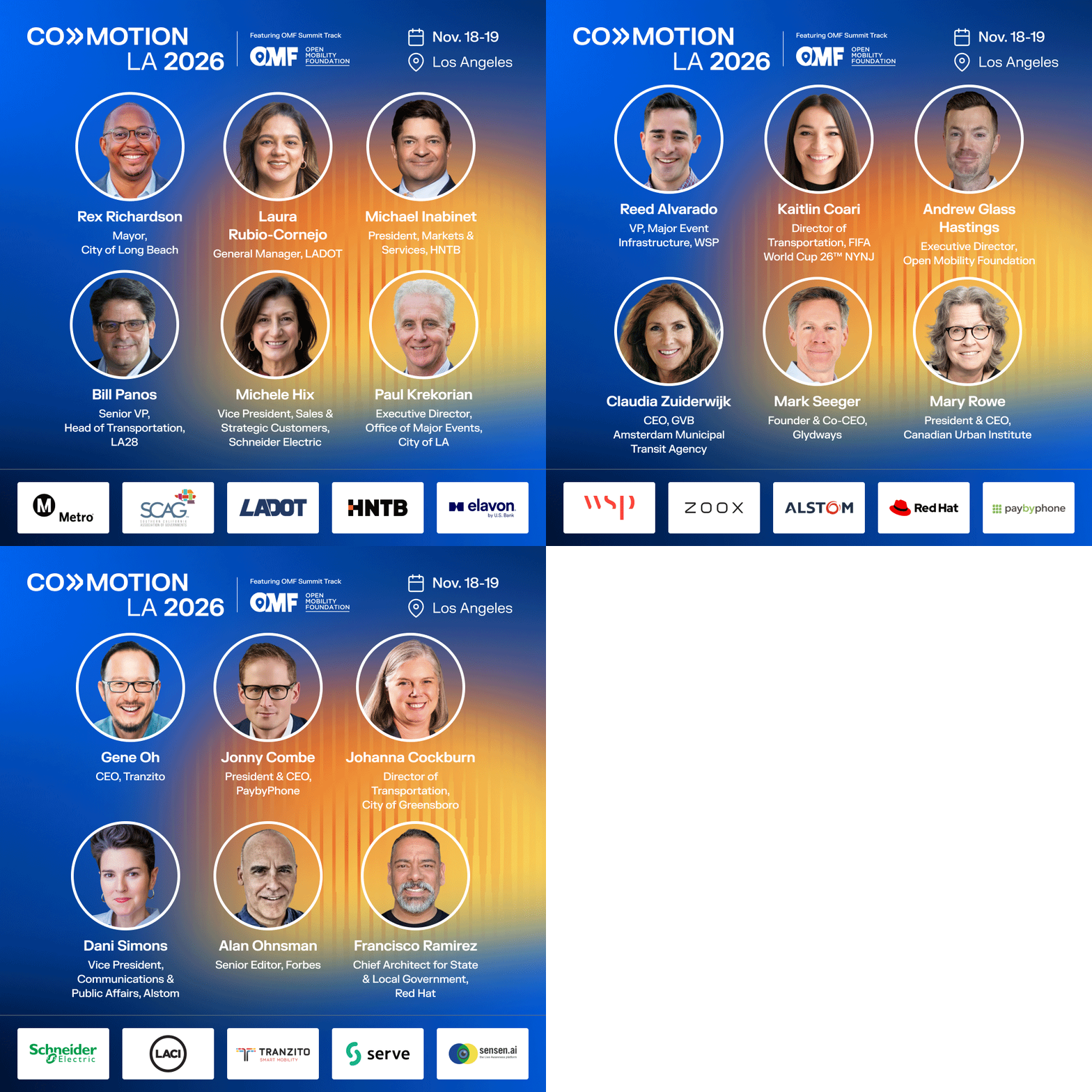
Mark your calendar: CoMotion LA ‘26 — Cities on the Move: Mega-events, AI & Shaping What’s Next — comes to life November 18–19, 2026. Don’t miss the landmark 10th edition, featuring the OMF Summit Track.
Explore the hard questions nobody’s answering yet. Join city leaders, transit authorities, automotive executives, entrepreneurs, and investors in the same room. This is where visions become ventures and ideas become real.
Rub shoulders with LA Metro, SCAG, Open Mobility Foundation, LADOT, Schneider Electric, HNTB, Elavon, Zoox, WSP, LACI, FIFA World Cup 26, LA28, LA World Airports, City of Long Beach, Alstom, PayByPhone, Red Hat, Serve Robotics, SenSen AI, MOVE LA, Federal Aviation Administration, Forbes, Monocle, Tranzito, The Transportation Channel.
Now is the best time to grab a pass: Save $1,000 on your Mobility Leader Pass.
U.S. subways have too many cross-passages: An analysis finds that U.S. subways here have twice as many cross passages — side tunnels that connect with adjacent train tunnels — as their European counterparts with no measurable increase in safety. It’s one of many examples of how transit projects in the U.S. are needlessly expensive.
Facial recognition on buses? The Kansas City Area Transit Authority plans to put security cameras with facial recognition software on its buses, drawing vehement pushback from privacy and civil liberties advocates. One of the stated reasons for the tech is to identify banned riders who might cause problems for employees and fellow riders. In addition to concerns about safety, transit leaders across the country worry that the perception of transit as disorderly or unsafe is a major obstacle to recovering the ridership that was lost during the pandemic.
What we’re reading
America’s walking worries: Bloomberg CityLab takes a look at Sidewalk Nation: The Life and Law of America’s Most Overlooked Resource by Michael Pollack. The book traces the history of sidewalks’ unique legal status — built by cities but often maintained by private citizens — and the perennial question of who gets access (scooters, bikes, protesters etc).