The EPA Just Took Itself Out of Climate Regulation


70 Days To Go!
CoMotion MIAMI ‘26 isn’t just an event, it’s where investors, public agencies and industry partners align on funding, pilots, deployments, and policy. Don’t miss out on the 7th, and most impactful edition yet: Urban Mobility in the Age of AI, on April 28–29.
The Trump administration took a historic swipe against established U.S. environmental policy, insisting the U.S. government does not have the authority to regulate greenhouse gases and that it shouldn’t – because, according to Interior Secretary Doug Burgum, “CO2 was never a pollutant.” California and others will likely sue, giving the courts the final word on the issue.
On a much lighter note, autonomous vehicles may be replacing drivers but they are creating professional door closers. And speaking of new problems – have you ever heard of pauking? It just might be the greatest problem of urban mobility in the 21st century.
What you need to know
Who’s scared of a little gas? The Trump administration revokes the scientific finding that has allowed the U.S. government to regulate greenhouse gases for the past 17 years, most notably carbon dioxide and methane. In a defiant press conference, President Trump and EPA Administrator Lee Zeldin heralded the move as a long overdue liberation of U.S. industry and cast the scientific consensus on the harm of greenhouse gases as a “scam.” Interior Secretary Doug Burgum later said, “CO2 was never a pollutant. When we breathe, we emit CO2. Plants need CO2 to survive and grow. They thrive with more CO2.” How come all those scientists never considered that?
California vows to fight: Gov. Gavin Newsom says he will sue to block the federal government from surrendering its regulatory power on climate change. Even if courts side with the administration, at least one legal expert argues it could empower states to regulate emissions on their own (something previously preempted by federal emissions limits) or take legal action against industry for the effects of pollution.
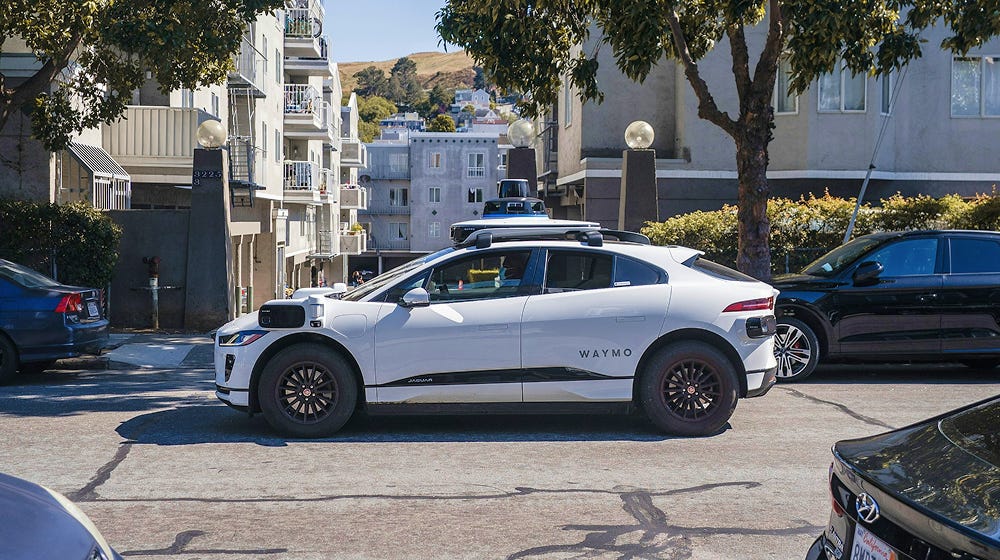
DoorDash closing doors for Waymo: In an age of autonomy, it’s hard to imagine a less likely profession than a door-closer. And yet Waymo is now paying DoorDash drivers in Atlanta to close doors left open by careless patrons. One has to wonder if anyone with a DoorDash account has taken advantage of this to get their own Waymo ride paid for. Take a ride, leave the door open and then get paid to close it a few minutes later.
China's Networked Mobility Revolution with Bill Russo
How Chinese mobility took over the world: In the latest episode of the Fast Forward podcast, host Nick Perloff-Giles sat down with former auto executive and automobility expert Bill Russo of Automobility to discuss just how quickly China caught up to - and surpassed - the rest of the world’s mobility capacity, and what it means for the future of transportation.

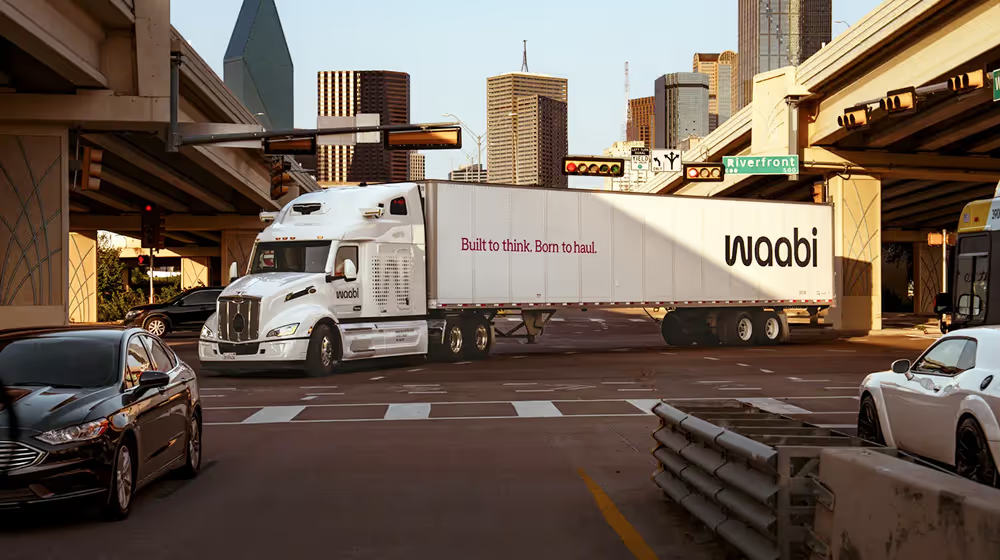
The robots can drive all night: Aurora Innovation’s autonomous trucks are now making 1,000 mile non-stop trips between Fort Worth and Phoenix, surpassing the distance that human drivers are legally allowed to operate a vehicle without a break. Whatever measures a human driver would take to compete (will power, coffee, amphetamines) with this type of endurance would only make the autonomous trucks even safer by comparison.
China ends crazy low EV prices: The Chinese government puts an end to a price war between domestic automakers, barring them from selling new vehicles at below production cost. The rock-bottom prices offered by the likes of BYD, Li Auto and Geely enabled mass EV adoption in China and threatened to undercut established automakers in Japan, Europe and the U.S. However, it came at a cost of tens of billions of dollars to the Chinese companies, which eventually aim to turn a profit. It will be interesting to see how the new prices will compare to EVs made by top global competitors like VW and Tesla.
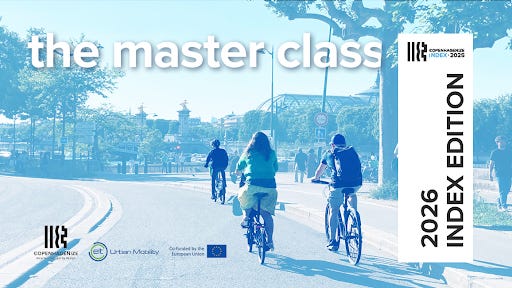
🚲 The Copenhagenize Index-Updated 2026 Master Class Program is live! Data is powerful. Action is better. In 2026, Copenhagenize is launching a new generation of Master Classes built directly on the Copenhagenize 2025 Index – EIT Urban Mobility Edition, designed to help cities turn cycling data into real-world change.
✨ What makes 2026 different
- A fully updated Bicycle Urbanism Essentials curriculum
- Exclusive insights from the world’s top 100 cycling cities
- Practical tools you can apply immediately
- Clear, Index-based next steps - not just inspiration
📍 In person | Paris 🗓️ May 19–21, 2026
A 3-day immersive Master Class where Index learnings are experienced in the 5th most bike-friendly city.
💻 Online | Index Edition 🗓️ April 2026 and October 2026 Three focused sessions, two time zones — built for global participation.
What we’re reading
A debate about free buses: The New York Times publishes a guest column by defense attorney Emily Galvin Almanza, who argues that free buses could help reduce the cost to the legal system of prosecuting fare-beaters. She points to instances of free transit actually reducing costs. In a scorching Twitter rebuke, transit advocate Jarrett Walker says the examples of free transit successes are in car-centric communities where transit ridership is low and fare revenue is not an important part of transit funding. Walker says free buses in New York will lead to reduced service, ultimately harming the very people Almanza is advocating for.