6 Things to Look for in 2026 (and What Surprised Us in 2025)

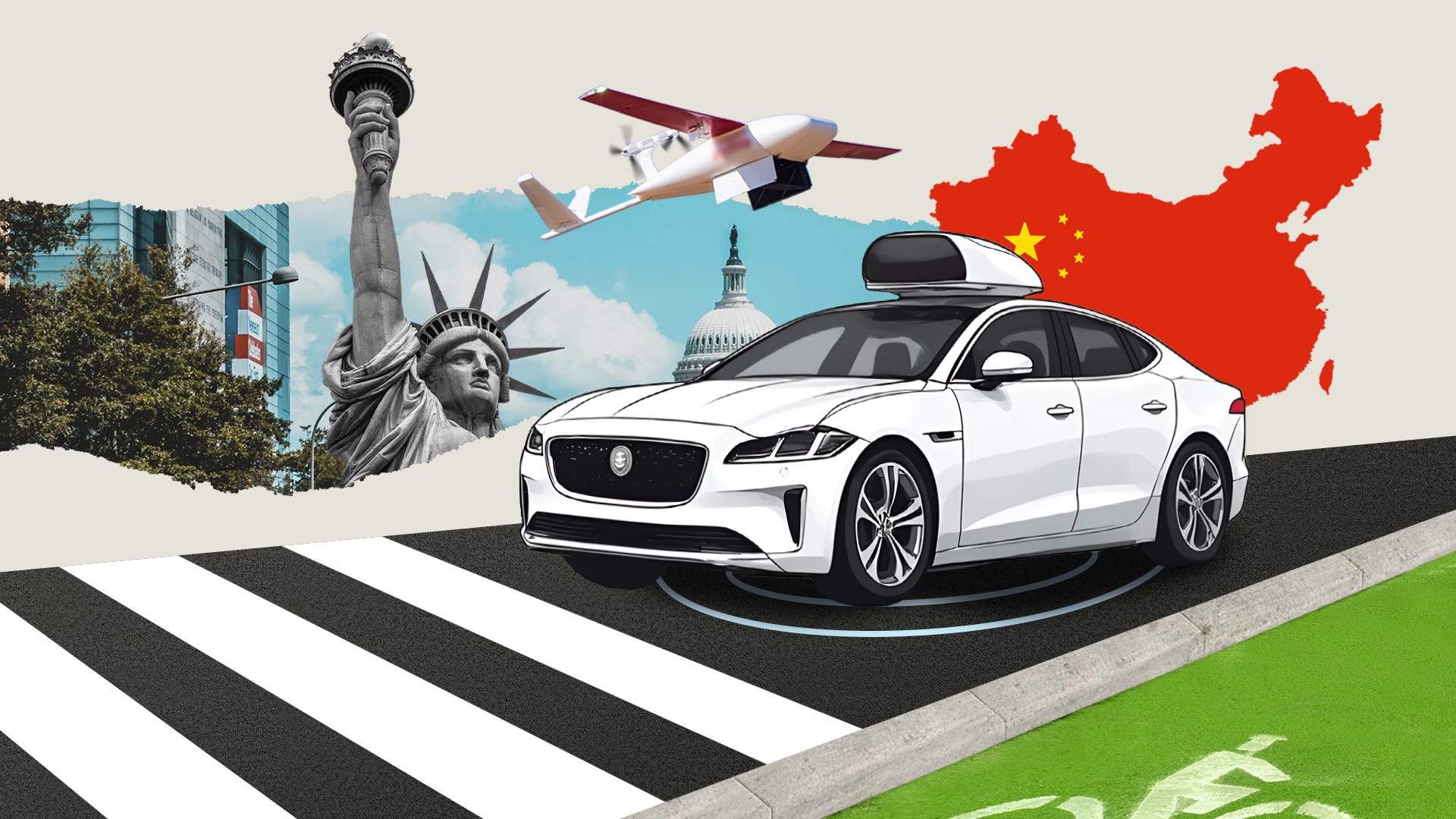
Graphic created by The CoMotion Team
Amidst all the ambient political chaos and uncertainty this last year, as far as mobility was concerned, 2025 was a year where the technological seeds of the past decade finally started to bear fruit. Things like self-driving vehicles and autonomous traffic management leapt from small-scale pilots to regional deployments, money poured into delivery technology’s new attempts at logistics perfection, and battery capacity continued to exceed expectations, driving a revolution in small, lightweight urban vehicles (which we hope will be embraced by regulators going forward). What will 2026 bring? Predictions are hard (especially about the future), but here are the best guesses and prognostications of CoMotion’s media and analytics team, lead by Nick Perloff-Giles.
1. Everyone Can Get a Self-Driving Car and… Nobody Cares?
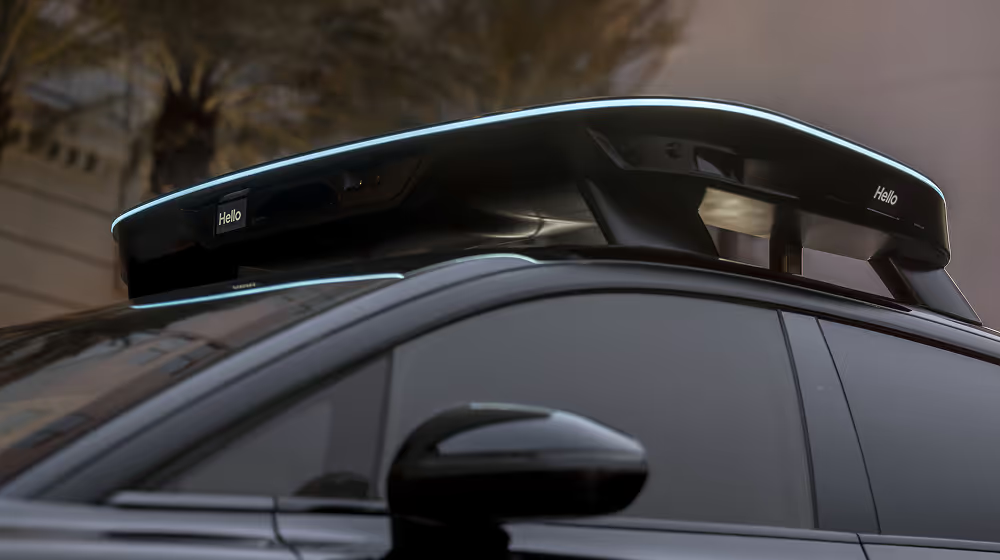
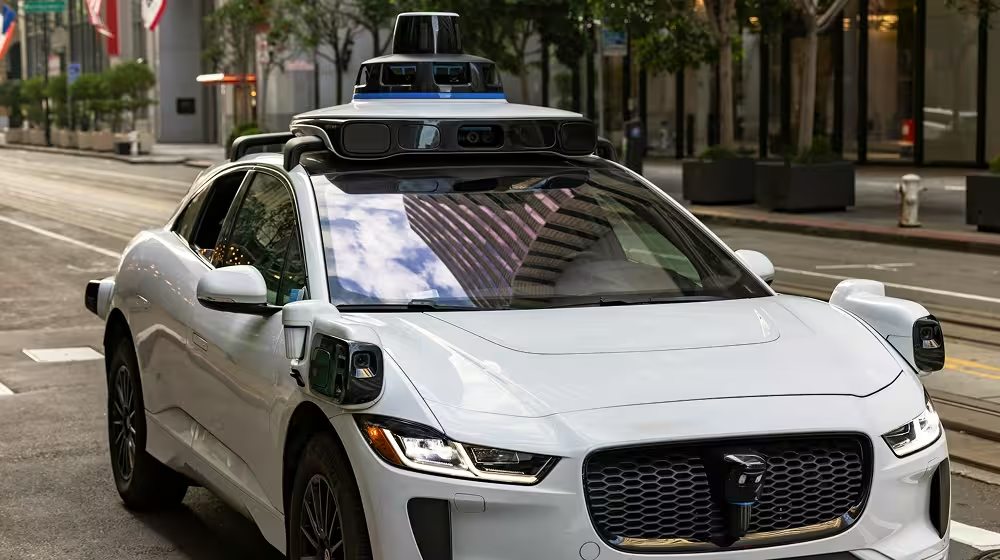
The pace of change in autonomous driving - particularly robotaxis - has been staggering for the last couple of years. In mid-2023, Waymo was delivering about 10,000 rides a week; by the end of 2025, that number was 450,000. That’s about as fast, if not faster, than Uber’s growth in the early 2010s. Given that, one might expect local responses to rhyme with those of the decade prior: a flurry of lobbying from those affected and outright bans on the technology. Instead, Waymo’s entries into cities mirrored their driving style: quiet, unassuming, and efficient.
Maybe lawmakers have learned from those early Wild West days of Uber: in 2025, 67 bills were introduced across all states, to govern autonomous vehicles, most of them establishing broad frameworks for operation. Many are adopting the same pre-emption model applied to Uber and Lyft, meaning cities are hamstrung in applying additional rules. Despite this, reaction from local leaders has been uncharacteristically mild, other than what seem like the usual antics of the San Francisco Board of Supervisors (self-driving safety, it seems, is a less hot-button issue than road closures). Even the near-total failure of the Waymo network during a power outage in San Francisco in December seemed not to provoke much of a response, beyond Waymo’s own public admission of guilt and resolution to improve responsiveness in edge cases.
If robotaxis have flown under the radar, self-driving trucks seem to be blinking on legislator’s screens. Many are proposing outright bans or mandatory human operator requirements for driverless big rigs, spooked by labor unions worried about truck driver jobs and the obvious safety concerns of 80,000-pound vehicles driving themselves, but the economic upside is becoming increasingly undeniable. Unsurprisingly, this sector is thus particularly effervescent: Sweden’s Einride, a leader in autonomous trucking, just raised $100m after completing its first autonomous cross-border delivery; the overall market is now projected to reach $1.5 trillion by 2034.
So: what does 2026 bring for autonomy? It seems clear that broadly speaking, the technology will improve, consumers will continue to adopt it, and applications will become cheaper. But the midterms and increasing malaise around AI’s impact on employment might drive political resistance, and there might be uneven regulatory terrain that emerges, especially as new entrants like Tensor’s Robocar and Tesla’s Robotaxis hit the streets.
2. Public Transit Is Dead, Long Live Public Transit
Let’s check in on some key transportation metrics from 2025 (in the United States, at least): congestion is up, from 43 hours per American to about 49. Cumulative miles traveled in private vehicles? Also up. Same with car ownership. Put simply, Americans bought more cars last year and are using them.
Despite that, public transit usage is also up: it’s reached its highest level since the pandemic, with ridership at about 85% of 2019 levels. Transit’s recovery, however, tends to be both uneven and uncertain. Office occupancy rates are stuck at about half of what they were pre-pandemic, and the ensuing collapse in metro area commuters has meant that big, legacy systems like the Bay Area’s BART and Philadelphia’s SEPTA are facing existential fiscal threats while smaller systems like Alexandria and San Jose’s are recovering quickly, driven mostly by bus riders. With federal pandemic relief ending in 2026, agencies are going to have to make a challenging guess: are we stuck in a world of hybrid work and all-day travel, or are we inching back to normal? In the words of the MTA’s CEO and Chair, Janno Lieber: “Anybody who tells you they know exactly where this is headed is either a dope or they’re lying.”
3. China Has Arrived in Mobility, Whether the US Likes It or Not
You wouldn’t know it walking around the streets of American cities, but China is rapidly becoming the dominant auto manufacturer in the world. In the EU, home of beloved luxury brands like BMW, Chinese carmakers hold nearly 6% of the total European market, and 10% of EV sales. That figure might frankly undersell their growth: at their current rate of growth, they’re slated to sell the majority of new cars in Europe in the next 5 years.
China doesn’t appear worried which of its native companies will be doing the selling. That’s because China has reinvented what a domestic auto industry looks like: rather than a group of car manufacturers à la Big Three, China has onshored the entire EV supply chain, from batteries to powertrains to assembly. Demand might be cooling in China for large manufacturers like BYD - which nevertheless sailed past Tesla in 2025 to become the world’s largest EV manufacturer - but China’s notoriously ruthless internal market (16 EV makers exited through mid-2025, for example) continues to push margins down while generating new entrants. One result: there were about 20 million surplus EVs manufactured in China in 2025, more than the entire passenger car and light vehicle output of the United States. In the words of CoMotion founder John Rossant: “In effect, China is running the world’s largest real-time mobility experiment, absorbing short-term inefficiencies in pursuit of long-term technological sovereignty and global competitiveness.”

Dive into the future of mobility at CoMotion MIAMI ‘26, Urban Mobility in the Age of AI on April 28-29. Register now and benefit from Super Early Bird pricing.
4. The Skies Are About to Fill Up
Last June, amidst the flurry of more bombastic executive orders, the Trump administration quietly passed one with the characteristically orotund title of ‘Unleashing American Drone Dominance’. While the order was quickly overshadowed by more significant and far-reaching executive actions, it has the potential to repopulate the sky with a host of new vehicles and companies.
For a bit of wonky context: commercial drone applications have historically been limited to ‘Beyond Visual Line of Sight’ (BVLOS) regulations, which require operators to apply for a permit any time they fly a drone out of the line of sight of a pilot (typically about 500m). That means any trip that goes around a building or across town would need a specific waiver each time, which can take weeks, if not months to process. Under the new order, the FAA is required to create a comprehensive framework that would allow drones to operate throughout designated areas, regardless of visibility to a pilot. The final rule is expected to be published by February, which would make it one of the most aggressive timelines ever established for major aviation rulemaking. The companies that execute well in 2026-2028 will therefore likely wind up controlling billions in last-mile delivery.
Suffice to say, this represents a sizable opportunity for drone operators and manufacturers, who have leapt at the opportunity to put out technologies that fit the newly slackened rules. The question for 2026, much like the one for autonomous vehicles on the ground, is what the public response will be. Early drone pilots have been met with both interest and annoyance from those on the ground wary of new technology flying (and hopefully not falling) above their heads. Early battles around the risks nearly resulted in a rule requiring drones to have parachutes - what will the next ones yield?
5. Parking Reform Goes Mainstream
2025 was a major year for the usually-sleepy area of parking policy, particularly at the state level. Washington State passed a law capping parking spaces at 0.5 per unit, and eliminated requirements completely for affordable housing, senior care, and childcare. Connecticut and Illinois passed similar, if not more ambitious parking reform measures. Denver eliminated de minimus requirements completely, and even autocentric Los Angeles flirted with the idea.
The bigger story here is about the increasing porousness between academic planning and practical policymaking; the late, great Donald Shoup spent the majority of his career poking holes in the logic of parking-obsessed planners, often to derision, anger, and resistance. But as the crises of congestion and affordability converge, avenues have opened. The broader ‘abundance’ movement has forced retrospection on policies once considered third rails. Beyond more parking reform in cities across America, therefore, we might expect to see things like dynamic curbs and automated enforcement go from wonky ideas to real, on-the-ground applications.
6. The Sidewalk Is the Next Battleground
2026 looks to be awash in delivery-bot coolers on wheels. While autonomy in the form of self-driving cars is still arriving in fits and starts in American cities, it’s widespread when it comes to delivery technology. In 2025, three parallel expansions of delivery technology converged: Starship Technologies secured $50m in a Series C, after posting impressive delivery numbers (9m+ in total). Serve Robotics, of John Mulaney fame, expanded its fleet nearly 20x, from 100 to 2,000 robots on the ground. Doordash announced Dot, becoming the first delivery company since Postmates to vertically integrate its own robotics into its infrastructure.
2026 is therefore less about proof of concept as it is about proof of competition: what do cities do when hundreds of robots tumble through their streets? The devices have rolled under the radar thanks to their nebulous classification (are they pedestrians? Bikes? Burrito taxis?), but they haven’t scaled to the extent that they’ve called much attention to themselves. With Starship bringing its 12,000 robot target to American suburbs, look for ADA challenges and showdowns reminiscent of the scooter wars to emerge.