So is everyone doing AVs now?


If killing the EV tax credit took away one big reason for Americans to look at EVs, starting a war with Iran gave them one big reason to look again. Meanwhile, Rivian becomes the latest automaker to go big on autonomy, this time via a deal to build tens of thousands of fully autonomous vehicles for Uber. There’s also some big public transit news: Chicago Transit Authority becomes the second transit agency to take the Trump administration to court while the other, New York’s MTA, emboldened by gobs of revenue from congestion pricing, forges ahead with the largest railcar purchase in U.S. history.
What you need to know
Interest in EVs soars in America: With gas prices up $1 in just the past month in response to the Iran war, online searches for electric vehicles are up 20%. High gas prices could help reverse the slump in EV sales that followed the termination of EV tax credits in the One Big Beautiful Bill last year. Way back in 2012 an analysis by the American Public Transportation Association found that every 10% increase in gas prices led to a 1.2% increase in public transit ridership. America’s struggling transit agencies could certainly use a few more fare-paying customers.
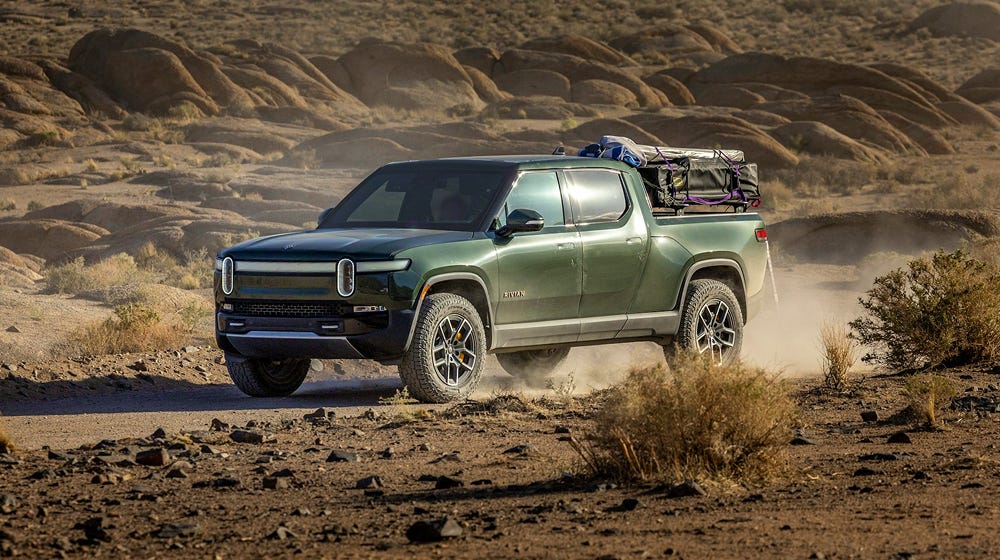
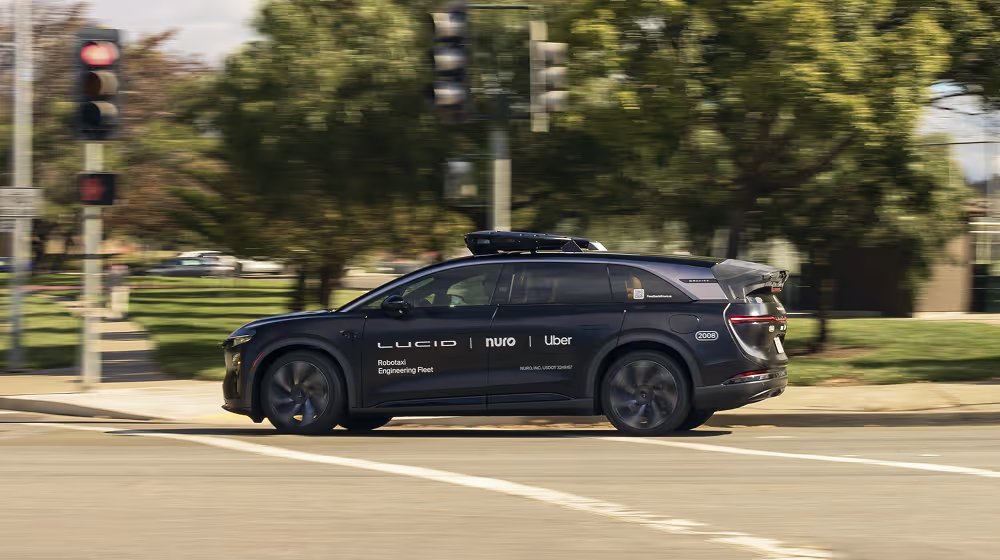
The Rivian/Uber robotaxi adventure: Uber continues its spree of autonomous partnerships, this time inking a deal with EV maker Rivian to build 50,000 robotaxis. The initial investment of $300 million covers an order of 10,000 robotaxis, with plans for Uber to invest up to $1.25 billion if things go well. That’s a big if, though. Like Tesla, however, Rivian appears to view autonomy as do-or-die: it’s scrapping its 2027 profit goals to focus on driverless vehicles. Reilly Brennan, founder of Trucks VC, asks, “Does every OEM now require an AV story, if not a full engineering effort? Likely.”
CTA follows MTA to court: The Chicago Transit Authority sues the Trump administration to reclaim $2 billion to expand its Purple and Red lines. The administration withheld the previously-authorized funds during the government shutdown in October, accusing CTA of engaging in “unconstitutional” diversity, equity and inclusion practices, the same reasoning it used to withhold money from New York’s MTA. Like MTA, CTA is arguing that the decision was politically motivated retribution against blue state governments. Transit agencies around the country that are counting on federal funds for major projects will be watching…
The largest railcar purchase in history: New York’s MTA is soliciting bids to replace 2,930 subway cars — about a third of its aging fleet. Many of those being replaced have been operating since the 1980’s and are frequently breaking down. The $550 million of revenue the MTA netted from the past year of congestion pricing has emboldened it to make billions of dollars in transit investments, and Gov. Kathy Hochul has declared a “transit renaissance.”
Big bucks for bikers: A new report by DoorDash finds that delivery workers on bikes make 10% more per hour than those delivering by car. Bike-based delivery is also growing much faster than delivery overall.

Was PokemonGo just a food delivery play? Over 30 billion images captured by people playing PokemonGo, the augmented reality game that had a moment in 2016, are now being used to train food delivery robots by Coco Robotics.
What we’re listening to
What Do Sustainable Supply Chains Look Like? with Abhilasha Bhola: On this episode, host Nick Perloff-Giles sits down with Abhilasha Bhola, Director of the Auto Supply Chain Campaign at Public Citizen, to discuss their newest report, which identifies the leaders (and losers) in the race for transparency and sustainability in the electric vehicle supply chain.
What we’re reading
A protest penalty for Waymo: The New York Times examines a hazard for Waymo passengers: attacks from Waymo-haters. The autonomous vehicles are trained to stop driving when they are approached by people, a vulnerability exploited by AV adversaries.