Will Big Tech own the autonomous future?


Save the Date

Join us for CoMotion LA ‘26 this November 18-19 for our 10th edition: Cities on the Move: Mega-events, AI & Shaping What’s Next — featuring the OMF Summit Track.
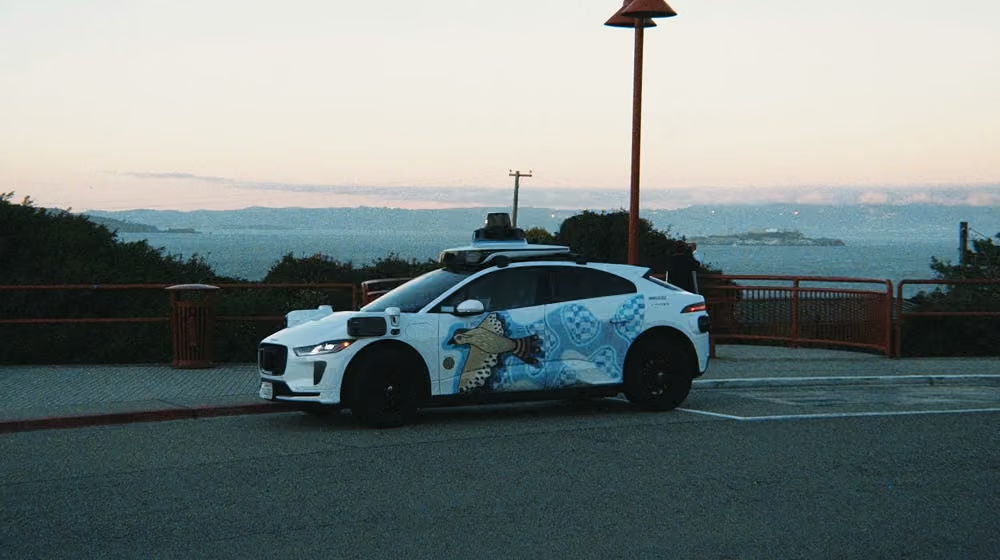
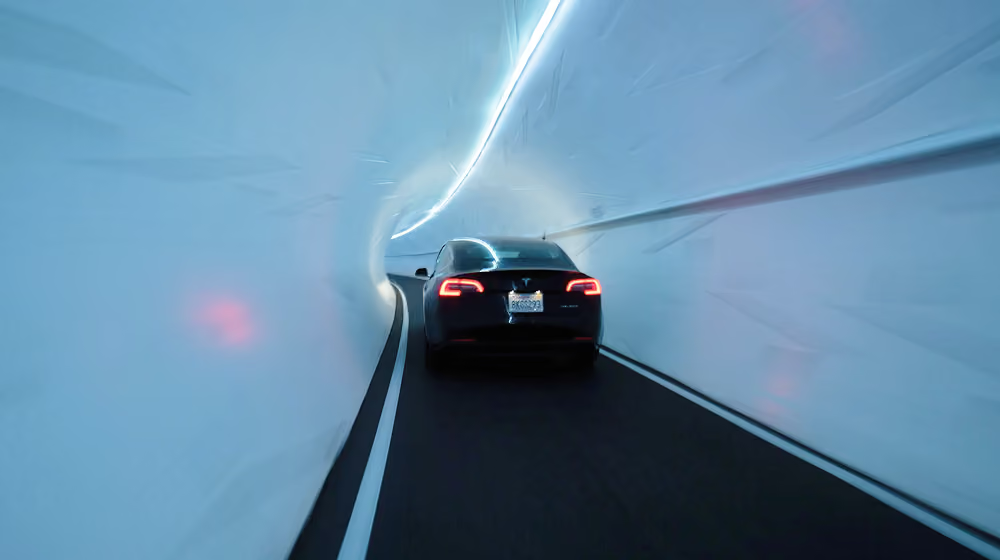
Perhaps the autonomous future won’t be dictated by disrupters like Tesla but by deeply entrenched tech giants like Alphabet and Amazon, whose subsidiaries Waymo and Zoox are leading America’s robotaxi race. The big development in the past week is Zoox getting approval to charge for rides in its purpose-built robotaxi.
Meanwhile, Denver embraces electric tricycles, the U.S. military offers a potential boost to commercial drone development, China’s EV chargers keep getting faster and one of the reddest cities in America wants to go big on public transit.
What you need to know
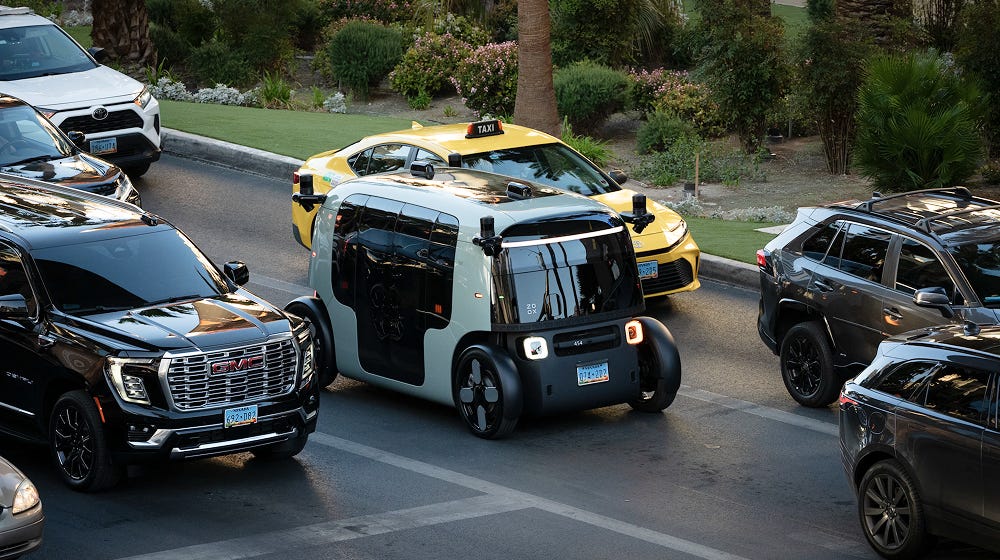
Zoox unleashed: The National Highway Traffic Safety Administration gives the Amazon-owned autonomous driving company the green light to begin charging for rides in its purpose-built autonomous vehicles. The NHTSA granted the company waivers from a variety of auto regulations that require features that aren’t necessary in AVs, such as steering wheels, pedals and windshield wipers. It capped the number of robotaxis the company can deploy to 2,500 a year for the next two years. That may sound like a pretty big number, but Waymo already has 3,500 in operation and is planning to rapidly scale up in the coming months and years.
Things may very well change (looking at you, Tesla), but at this point the dominant players in the robotaxi game are not auto giants but tech giants. In America it’s Alphabet and Amazon and in China the top dog is Baidu. Will the autonomous future be another example of old industries being sidelined or absorbed by Big Tech?
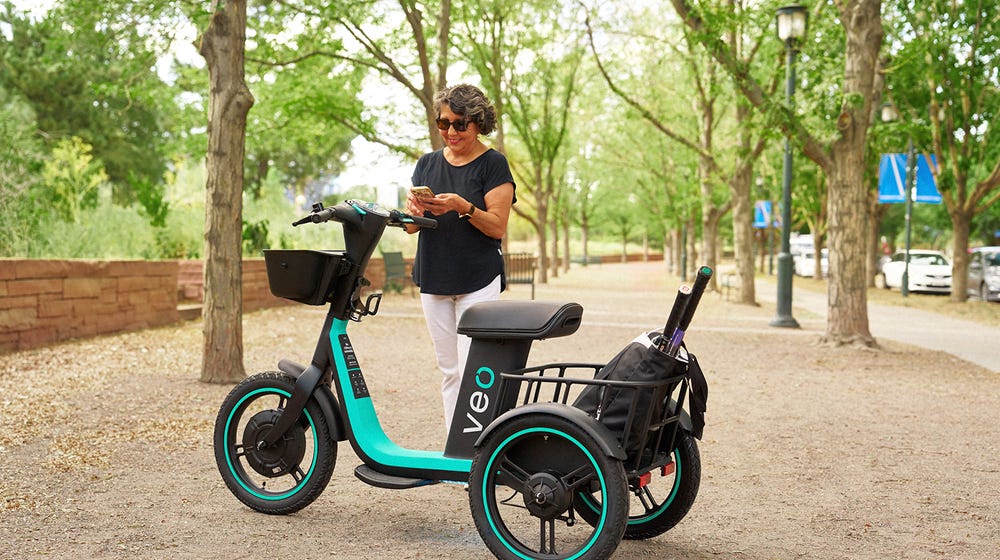
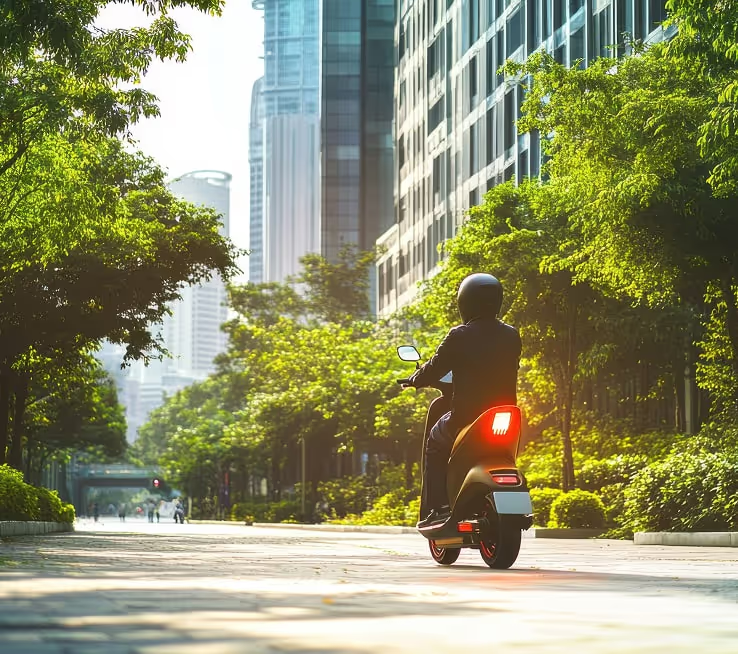
Trikes are not just for tots: Veo deploys electric tricycles in Denver as part of what the Santa Monica-based micromobility operator calls its “accessibility-focused fleet.” Three-wheel vehicles are often attractive alternatives for people with disabilities that make bicycling challenging. The vehicles are equipped with rear baskets that can carry up to 100 lbs, ideal for a quick trip to the grocery store. Denver last year cut Lime and Bird from its shared mobility program in favor of an exclusive deal with Veo. Many more cities are embracing a more intentional, regulated approach to micromobility aimed at filling identified transportation gaps.
🎉 New Partners confirmed!
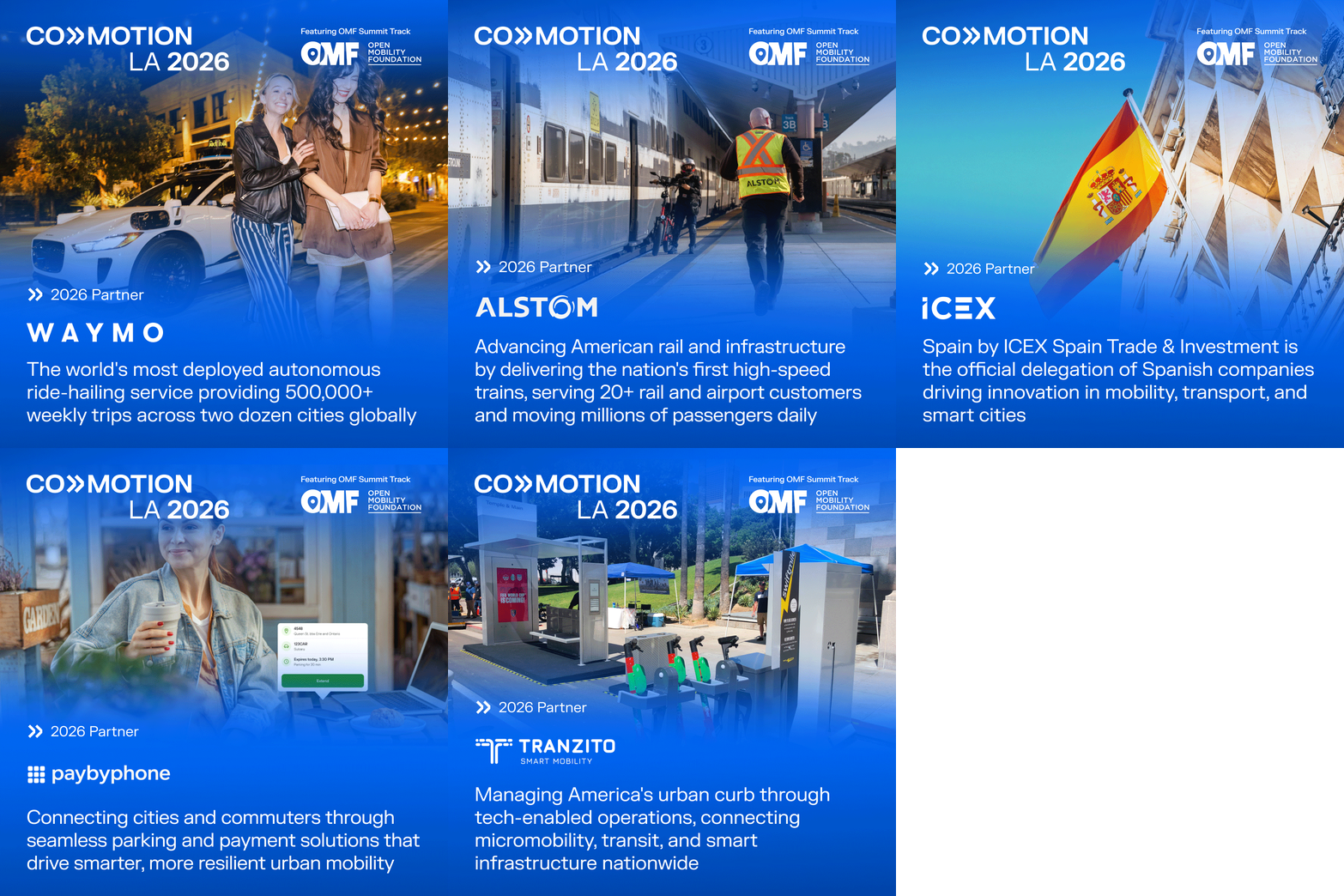
We’re thrilled to have Waymo, Alstom, ICEX, Paybyphone, and Tranzito join us as Partners for the 10th edition of CoMotion LA this November 18 and 19th.
Join the movement in November to hear how:
- Autonomy is optimizing traffic flow and solving last-mile connectivity.
- LA is preparing for one of the world’s largest sporting events, and how mobility lessons from the World Cup can create a lasting urban legacy.
- Public and private sector collaboration is central to unlocking the capital needed for sustainable, large-scale infrastructure projects - and what’s changing.
- Payment systems can seamlessly connect transit, parking, and multimodal travel.
- Real-time data can transform contested curb space into a dynamic, efficiently managed asset for parking, delivery, and micromobility.
🎟 Book before Sep 14 and save 50% on your pass!
Can the DoD give drones a lift? The Defense Advanced Research Projects Agency is launching the Lift Challenge, a weeklong competition for “vertical-lift aviation” that has already attracted 100 competitors. The military is particularly interested in aircraft that can carry heavier payloads than existing drone technology. The Lift Challenge has echoes of competitions the military held for autonomous driving technology two decades ago, which many argue played a crucial role in the development of AVs in the private sector.
China begins measuring charging in seconds, not minutes: In a sign of how far ahead China is in the EV race, BYD claims its Blade 2.0 can go from 10-70% charged in 5 minutes, while rival Geely says its Golden Brick can do the same in 4 minutes and 22 seconds.
An OK transit system: Oklahoma City Mayor David Holt is the rare Republican pushing for a tax to fund public transit, including commuter rail and bus rapid transit. Holt says he wants his rapidly-growing city to avoid the mistakes of other Sunbelt boom towns that tried to cure congestion with ever-expanding highways. If only Holt could convince the Trump administration to start funding transit projects…
👉 Tell us what kind of content you would like to see in our next newsletter!
What we’re reading
The high-speed rail losers: In the Guardian, Christian Wolmar, author of Fast Track: The Extraordinary Story of High Speed Rail, highlights the yawning gap between nations that are successfully expanding and upgrading their rail networks and those that have stagnated due to delays, cost overruns and political obstruction.