Will the transit populists be good for transit?


Save the Date

Join us for CoMotion LA ‘26 this November 18-19 for the 10th edition: Cities on the Move: Mega-events, AI & Shaping What’s Next — featuring the OMF Summit Track.
As pessimism about the cost of living dominates politics across the western world, some political leaders are targeting one of the few daily costs they have direct control over — transit fares. The most recent example comes from the UK, where brand new Prime Minister Andy Burnham announced a cap on bus fares, imitating the popular (though expensive) transit policies he implemented as mayor of Manchester. But commitments to very cheap (or even free) fares make many transit advocates nervous. Good transit costs money, whether or not the passengers are paying.
What you need to know
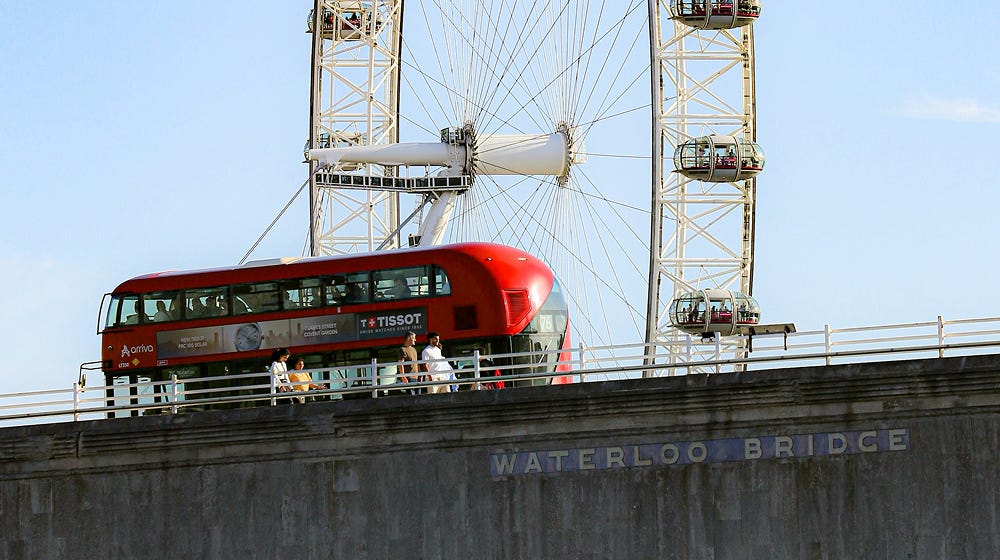
Andy Burnham’s buses: On his third day in office, UK Prime Minister Andy Burnham announces that bus fares in all of England outside of London will be capped at £2 starting in January of 2027, reversing a fare hike approved by his embattled predecessor, Keir Starmer. The fare cap, which is expected to cost the government £500 million in lost revenue, doesn’t apply in Scotland, Wales and Northern Ireland, but the government will allocate money to those countries to reduce fares.
Burnham comes to Westminster after transforming the bus system in Greater Manchester, which he led as mayor for nine years. Until three years ago, Manchester’s buses operated under a largely “deregulated” system in which a variety of private companies determined routes and set fares. Burnham brought all of the operators under the unified, publicly-owned regional Bee Network with unified branding (bright yellow double-deck buses) and a standard fare: £2. The government still contracts with private operators, but it calls the shots now. By two important measures, it appears to have succeeded: ridership and customer satisfaction have both increased. But it has required a big increase in public spending and the public has now taken on liabilities (vehicle ownership) that were previously carried by the private sector. Some argue that there are other models of transit operations in Britain that have proven just as successful, and at a lower cost.
Burnham offers a more moderate flavor of what you might call “transit populism” than New York Mayor Zohran Mamdani, who campaigned on a pledge to eliminate bus fares entirely. However, with no obvious way to recoup the $650-700 million a year in revenue lost from scrapping fares, Mamdani appears to have unofficially conceded what most transit advocates have said repeatedly: free transit will end up being worse transit. Mamdani is instead moving ahead on something that both the transit populists and transit technocrats can get behind: more dedicated bus lanes and better reliability.
Court halts NYC ride-hail law: A federal judge rules strikes down a New York City law prohibiting Uber and Lyft from deactivating drivers without “just cause,” finding it unconstitutional. The law, set to take effect July 28, would prevent ride-hailing companies from exercising reasonable discretion to ensure the safety of their customers in order to protect a “narrow class of drivers,” ruled Judge Gregory Woods, an Obama appointee. This is an ironic twist on the typical battle between ride-hail operators and local governments over safety. In the past, it was often the government imposing what the companies claimed were onerous safety requirements. A decade ago, for instance, Uber and Lyft both left Austin, Tex. after the city required them to fingerprint drivers. They returned after the law changed.
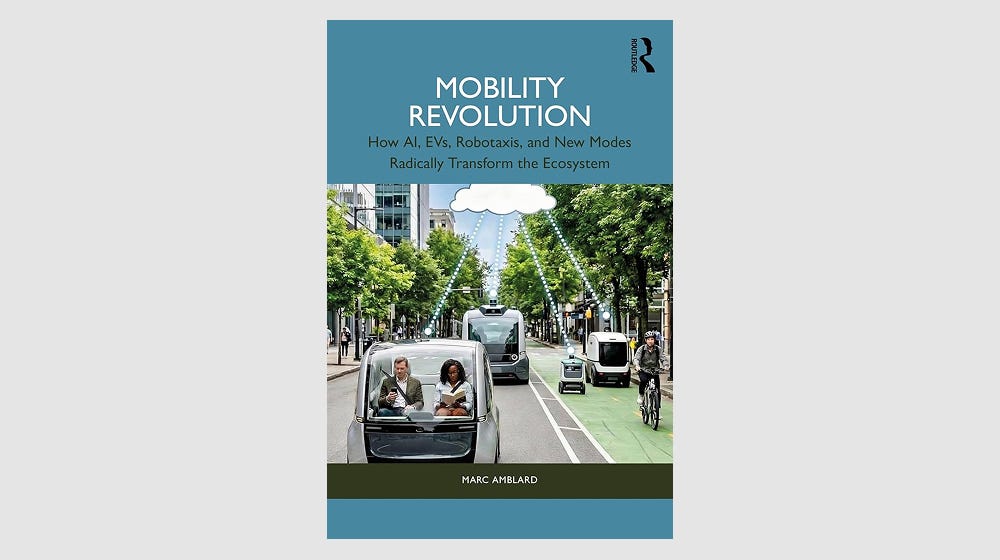
New book on the mobility revolution: Our friend Marc Amblard, a veteran advisor in the automotive and mobility space, has published a new must-read book: Mobility Revolution — How AI, EVs, Robotaxis and New Modes Radically Transform the Ecosystem. The book unpacks the forces driving this historic shift, namely the push for clean mobility, volatile regulations, ambitious startups, geopolitics, and the global power shift toward China. And it comes with a forward by CoMotion Founder & CEO John Rossant! Use promo code MOB26 for 25% off via publisher Routledge.
Where there’s smoke, there’s a recall: Zoox issues a software recall after one of its autonomous vehicles got confused by smoke caused by a nearby fire. The Amazon-backed autonomy player says the incident took place in June but did not reveal where. This is another instance of the challenges that AVs face in dealing with emergency situations, including emergency vehicles.
Who will AI traffic lights prioritize? The town of Petrie, Australia plans to pilot an AI traffic light that will act more like a sophisticated crossing guard, making thousands of decisions a day about whose passage to prioritize at a given moment. This could be an opportunity to make intersections much safer — but only if the AI is told to prioritize safety over vehicle speed.
What we’re reading
The duty of the urban designer to educate: In an op-ed for NextCity, Molly O’Neill Robinson writes that professionally trained urban designers need to do a better job of explaining why certain public spaces fail and others succeed: “The future of urban design won’t be determined solely by how many architects, planners, or landscape architects we educate. It will depend on how many people—inside and outside those professions—learn to think, collaborate, and act as urban designers.”